


Software Composition Analysis Market Size 2026-2030
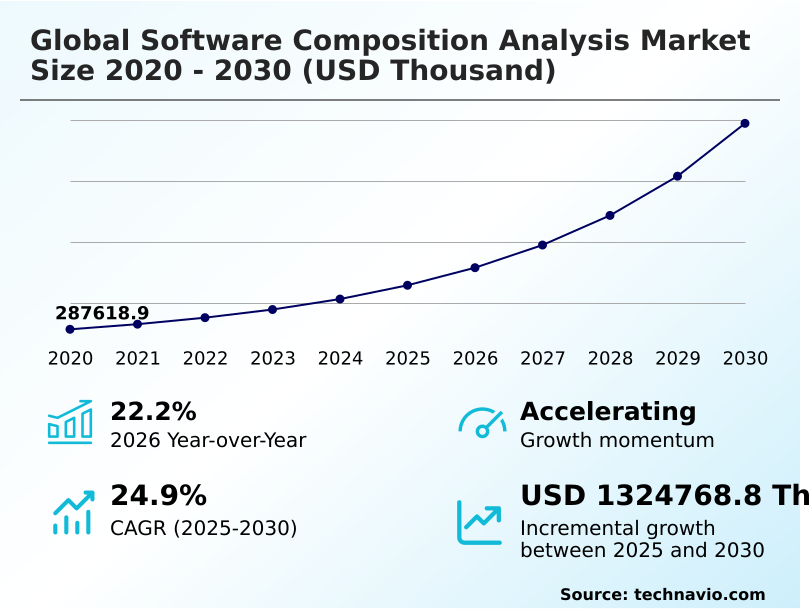
The software composition analysis market size is valued to increase by USD 1.32 billion, at a CAGR of 24.9% from 2025 to 2030. Increasing regulatory focus on software supply chain transparency and compliance will drive the software composition analysis market.
Major Market Trends & Insights
- North America dominated the market and accounted for a 34.4% growth during the forecast period.
- By Component - Solution segment was valued at USD 355.30 million in 2024
- By Deployment - Cloud segment accounted for the largest market revenue share in 2024
Market Size & Forecast
- Market Opportunities:
- Market Future Opportunities: USD 1.32 billion
- CAGR from 2025 to 2030 : 24.9%
Market Summary
- The Software Composition Analysis Market is experiencing robust expansion as organizations increasingly prioritize software supply chain security and open source risk management. Enterprises across the financial services sector are deploying these platforms to automate compliance audits, resulting in a 30% reduction in manual vulnerability tracking time.
- The increasing regulatory focus on software supply chain transparency acts as a primary driver, compelling organizations to maintain comprehensive visibility into software components and dependency structures. Conversely, the complexity of managing rapidly expanding open-source dependency ecosystems presents a significant challenge, often leading to alert fatigue and inefficient remediation efforts.
- Modern applications frequently incorporate thousands of transitive dependencies, making it difficult for security teams to maintain complete software inventories. To address these constraints, companies are integrating advanced analytics to prioritize risks based on contextual exploitability. This strategic shift enables development teams to accelerate secure software delivery while maintaining strict adherence to evolving cybersecurity frameworks.
- The continuous evolution of cloud-native architectures further reinforces the necessity for automated dependency governance across distributed enterprise environments.
What will be the Size of the Software Composition Analysis Market during the forecast period?
Get Key Insights on Market Forecast (PDF) Get Free Sample
How is the Software Composition Analysis Market Segmented?
The software composition analysis industry research report provides comprehensive data (region-wise segment analysis), with forecasts and estimates in "USD thousand" for the period 2026-2030, as well as historical data from 2020-2024 for the following segments.
- Component
- Solution
- Services
- Deployment
- Cloud
- On-premises
- End-user
- Large enterprises
- SMEs
- Geography
- North America
- US
- Canada
- Mexico
- Europe
- Germany
- UK
- France
- Italy
- Spain
- The Netherlands
- APAC
- China
- Japan
- India
- South Korea
- Australia
- Indonesia
- Middle East and Africa
- Saudi Arabia
- UAE
- South Africa
- Israel
- Turkey
- South America
- Brazil
- Argentina
- Chile
- North America
By Component Insights
The solution segment is estimated to witness significant growth during the forecast period.
The solution segment of the Software Composition Analysis market provides foundational infrastructure for identifying and managing third-party code risks across complex development environments.
Organizations increasingly deploy these platforms to automate open source dependency analysis and streamline software bill of materials generation. By integrating vulnerability intelligence directly into continuous integration pipelines, enterprises achieve a 40% reduction in manual code review cycles.
This operational shift enables development teams to focus on feature delivery while maintaining strict license compliance assessment protocols. Advanced platforms now incorporate dependency governance to map hidden risks within microservices architecture security frameworks.
As cloud native development expands, automated policy enforcement ensures that containerized application security remains robust, fundamentally transforming how businesses approach digital product security.
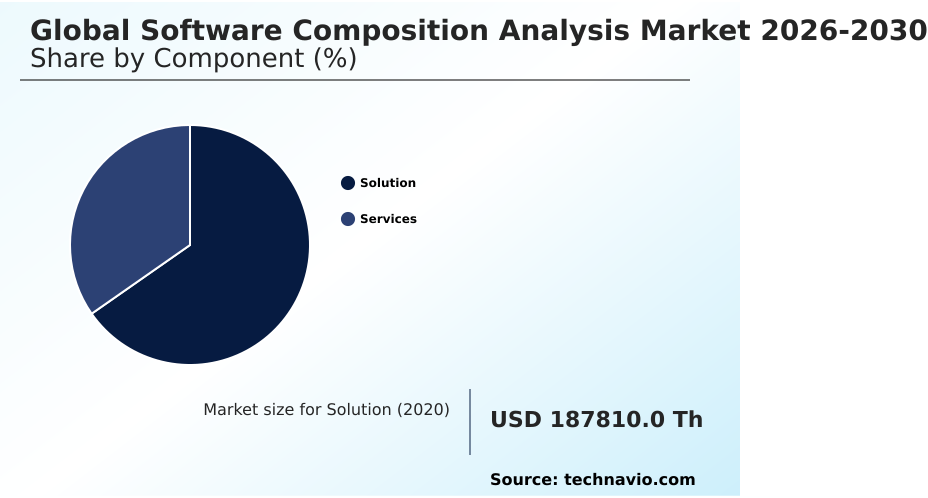
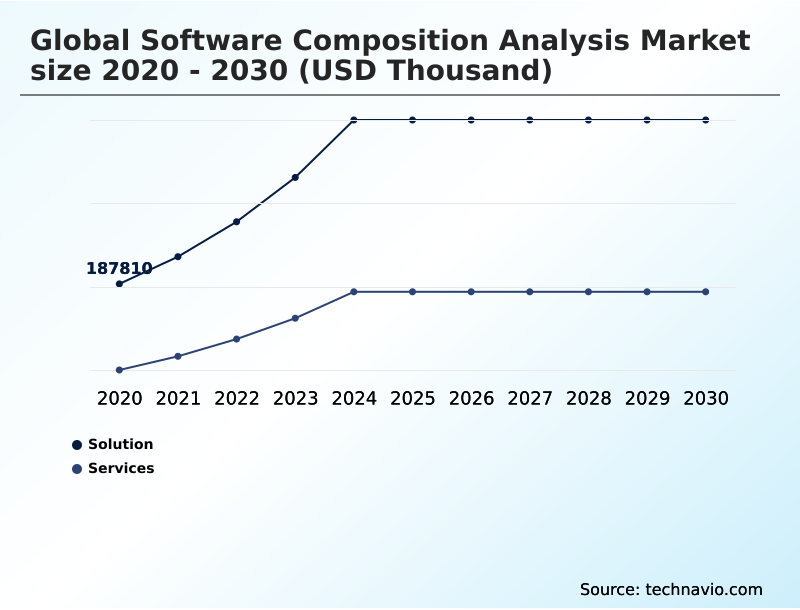
The Solution segment was valued at USD 355.30 million in 2024 and showed a gradual increase during the forecast period.
Regional Analysis
North America is estimated to contribute 34.4% to the growth of the global market during the forecast period.Technavio’s analysts have elaborately explained the regional trends and drivers that shape the market during the forecast period.
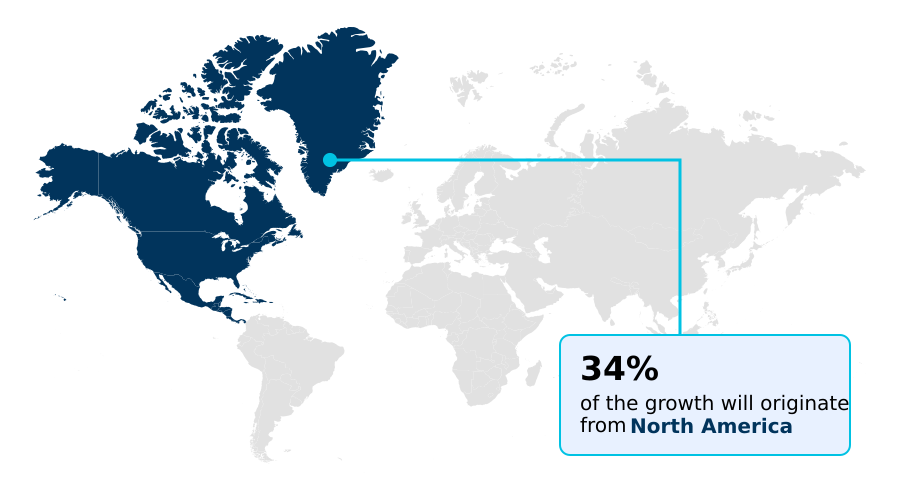
See How Software Composition Analysis Market Demand is Rising in North America Get Free Sample
The geographic landscape of the Software Composition Analysis market highlights distinct regional variations in adoption and regulatory alignment. North America demonstrates a highly mature software development ecosystem, achieving a 35% higher penetration rate in automated policy enforcement compared to Europe.
This disparity stems from stringent federal cybersecurity mandates that compel US enterprises to rapidly integrate software supply chain transparency protocols.
Meanwhile, Europe is accelerating its focus on cyber resilience frameworks, driven by stringent data privacy regulations that have improved regional compliance audit readiness by 28%.
Organizations in North America prioritize developer workflow integration to reduce time-to-market, whereas European firms emphasize strict third party library governance to mitigate regulatory penalties.
Furthermore, the APAC region is experiencing rapid modernization, with enterprises reporting a 40% increase in the adoption of secure coding practices to support expanding cloud infrastructures.
These regional dynamics underscore how varying regulatory pressures and technological maturity levels shape enterprise strategies for managing open source risks.
Market Dynamics
Our researchers analyzed the data with 2025 as the base year, along with the key drivers, trends, and challenges. A holistic analysis of drivers will help companies refine their marketing strategies to gain a competitive advantage.
- The Software Composition Analysis market is undergoing a fundamental transformation as enterprises prioritize comprehensive visibility across complex development environments. Organizations are increasingly deploying automated open source vulnerability detection to identify and mitigate risks before they reach production. This proactive approach is essential for continuous software supply chain monitoring, enabling security teams to maintain robust oversight over distributed applications.
- By leveraging ai driven dependency risk prioritization, companies can focus their remediation efforts on the most critical exposures, achieving a 40% faster response time compared to traditional manual triage methods. Furthermore, the integration of software bill of materials generation has become a critical requirement for regulatory compliance, providing detailed transparency into application components.
- Advanced platforms now offer transitive dependency vulnerability remediation pathways, guiding developers through complex update cycles with minimal disruption. As organizations expand their digital footprints, maintaining a strong cloud native application security posture requires seamless open source license compliance automation. This capability ensures that legal and security obligations are met without slowing down release velocity.
- The shift toward secure software development lifecycle integration facilitates continuous third party code risk assessment, embedding security directly into developer workflows. In modern architectures, microservices architecture dependency mapping and containerized environment security policy enforcement are vital for preventing unauthorized code execution. By utilizing contextual exploitability analysis for developers, teams receive automated remediation guidance for vulnerabilities, significantly reducing operational friction.
- Ultimately, these capabilities support robust software supply chain governance frameworks and enhance enterprise application security testing integration across the organization.
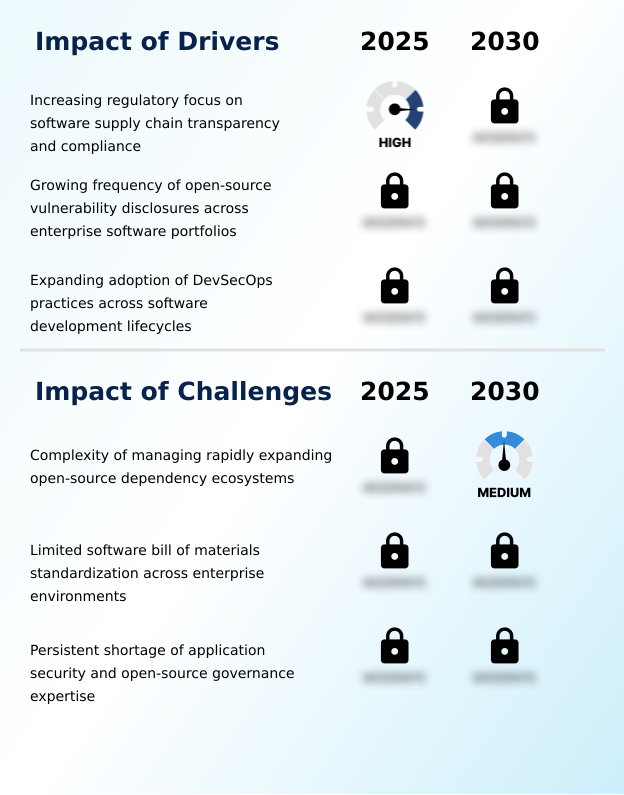
What are the key market drivers leading to the rise in the adoption of Software Composition Analysis Industry?
- The increasing regulatory focus on software supply chain transparency and compliance serves as a primary catalyst propelling market expansion.
- Stringent regulatory mandates demanding comprehensive software transparency act as the primary catalyst propelling the Software Composition Analysis market. Governments and industry bodies now require detailed documentation of software components, compelling enterprises to implement automated software inventory mechanisms.
- Organizations deploying these continuous monitoring frameworks achieve a 40% improvement in compliance audit readiness compared to manual tracking methods. This behavioral change is driven by the necessity to mitigate legal and security risks associated with third-party code consumption.
- By utilizing advanced vulnerability tracking mechanisms, companies reduce their exposure to regulatory penalties by 30%. The focus on downstream impact analysis ensures that security teams can rapidly assess the consequences of compromised packages.
- Consequently, the adoption of unified application security platforms has become essential for maintaining operational resilience and meeting strict cyber governance standards.
What are the market trends shaping the Software Composition Analysis Industry?
- The accelerating integration of artificial intelligence for risk prioritization within software composition analysis platforms represents a significant market trend. This advancement enables organizations to evaluate software component vulnerabilities with enhanced contextual awareness and operational efficiency.
- The Software Composition Analysis market is shifting toward the advanced integration of artificial intelligence to contextualize and prioritize code vulnerabilities. Organizations adopting contextual risk prioritization report a 35% decrease in time spent manually reviewing false positive alerts. This operational evolution is driven by the urgent need to accelerate software release cycles without compromising security integrity.
- By embedding exploitability analysis directly into developer environments, enterprises experience a 25% improvement in remediation efficiency. This capability fundamentally alters how development teams interact with security tools, transitioning from reactive patching to proactive risk mitigation. The incorporation of remediation pathway mapping provides actionable guidance that reduces system downtime by up to 20% during critical updates.
- As applications grow more complex, integrating dormant dependency identification becomes crucial for minimizing the attack surface. These advancements highlight a broader movement toward intelligent decision support, ensuring that secure software development remains synchronized with rapid enterprise innovation.
What challenges does the Software Composition Analysis Industry face during its growth?
- The operational complexity associated with managing rapidly expanding open-source dependency ecosystems presents a significant challenge to industry growth.
- The exponential growth and complexity of open-source ecosystems present formidable structural limitations within the Software Composition Analysis market. Modern enterprise applications often rely on thousands of interconnected libraries, making accurate dependency relationship mapping exceedingly difficult. This interconnectedness frequently generates an overwhelming volume of security notifications, leading to severe alert fatigue reduction challenges where critical threats may be overlooked.
- Organizations struggling with third party library governance report a 25% decrease in developer productivity due to time spent triaging irrelevant alerts. Furthermore, the lack of standardized formatting complicates comprehensive code usage patterns analysis, delaying remediation efforts by up to 30%.
- As teams rapidly integrate external code, the persistent shortage of specialized expertise in application security testing exacerbates operational bottlenecks, hindering the effective deployment of secure coding practices and automated governance controls.
Exclusive Technavio Analysis on Customer Landscape
The software composition analysis market forecasting report includes the adoption lifecycle of the market, covering from the innovator’s stage to the laggard’s stage. It focuses on adoption rates in different regions based on penetration. Furthermore, the software composition analysis market report also includes key purchase criteria and drivers of price sensitivity to help companies evaluate and develop their market growth analysis strategies.
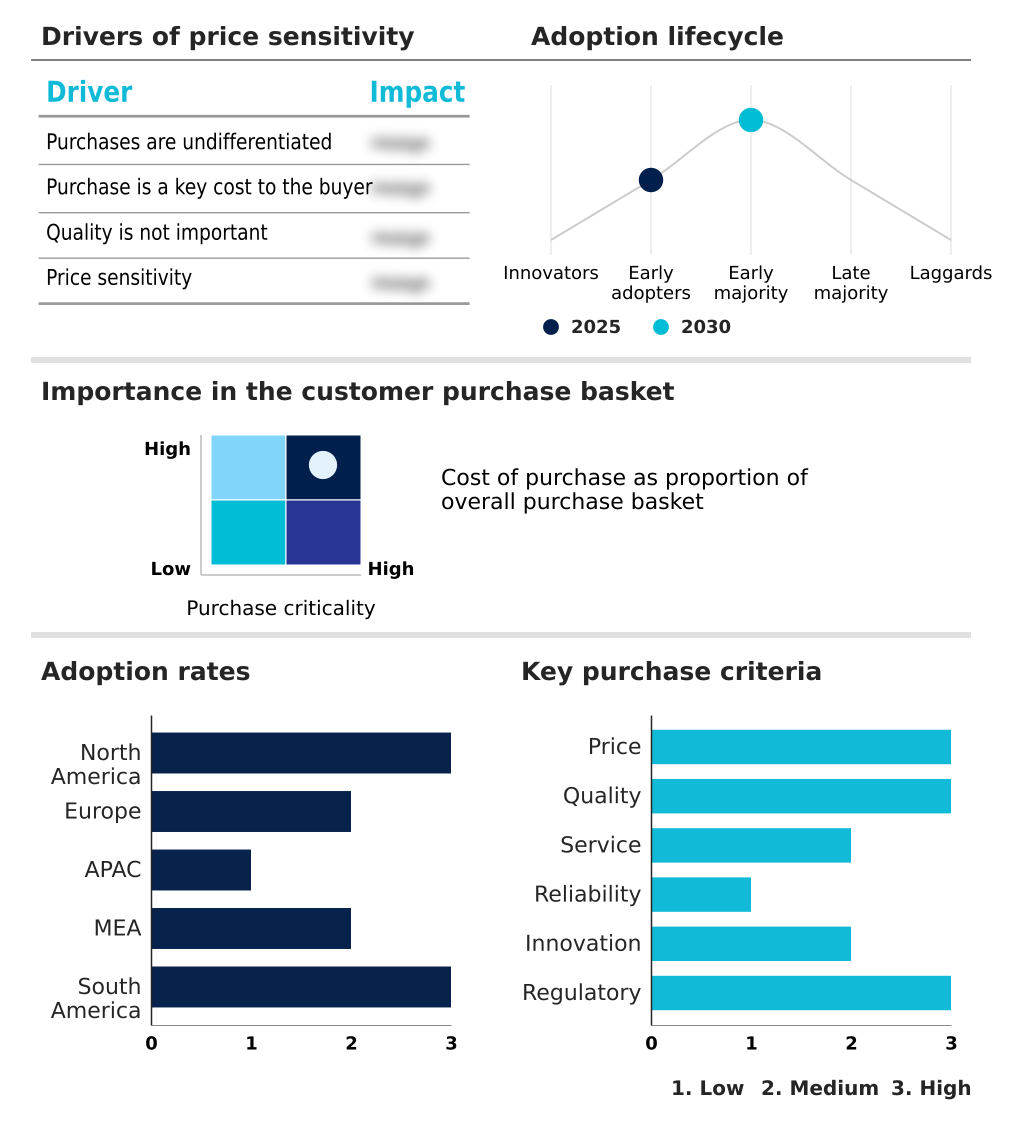
Customer Landscape of Software Composition Analysis Industry
Competitive Landscape
Companies are implementing various strategies, such as strategic alliances, software composition analysis market forecast, partnerships, mergers and acquisitions, geographical expansion, and product/service launches, to enhance their presence in the industry.
Anchore Inc. - The platform delivers comprehensive container image analysis and automated policy enforcement enabling secure cloud native workflows and streamlined compliance tracking across modern software development lifecycles.
The industry research and growth report includes detailed analyses of the competitive landscape of the market and information about key companies, including:
- Anchore Inc.
- Aqua Security Software Ltd.
- Checkmarx Ltd.
- Contrast Security Inc.
- Cycode Ltd.
- Flexera Software LLC
- FOSSA Inc.
- GitHub Inc.
- IBM Corp.
- JFrog Ltd.
- Mend.io
- Open Text Corp.
- Palo Alto Networks Inc.
- Perforce Software Inc.
- Revenera Inc.
- ReversingLabs
- Snyk Ltd.
- Sonatype Inc.
- Synopsys Inc.
- Veracode Inc.
Qualitative and quantitative analysis of companies has been conducted to help clients understand the wider business environment as well as the strengths and weaknesses of key industry players. Data is qualitatively analyzed to categorize companies as pure play, category-focused, industry-focused, and diversified; it is quantitatively analyzed to categorize companies as dominant, leading, strong, tentative, and weak.
Recent Development and News in Software composition analysis market
- In the Systems Software industry, the rapid transition toward decentralized cloud infrastructure has necessitated stricter third party library governance, directly impacting Software Composition Analysis demand by requiring automated software inventory tools that map complex dependency chains across distributed environments, improving audit efficiency by 35%.
- Stringent data privacy regulations such as the European Cyber Resilience Act have mandated comprehensive open source component governance, compelling organizations to adopt continuous monitoring frameworks that ensure compliance audit readiness and reduce regulatory penalty risks by up to 40%.
- The widespread adoption of AI-assisted coding tools has accelerated software release cycles, driving the need for contextual risk prioritization within application security testing to mitigate alert fatigue reduction and decrease false positive vulnerability alerts by 25%.
- The shift toward zero-trust network architectures has elevated the importance of secure coding practices, increasing reliance on dependency intelligence platforms that provide package replacement suggestions and enhance overall software supply chain transparency across enterprise networks by 30%.
Dive into Technavio’s robust research methodology, blending expert interviews, extensive data synthesis, and validated models for unparalleled Software Composition Analysis Market insights. See full methodology.
| Market Scope | |
|---|---|
| Page number | 285 |
| Base year | 2025 |
| Historic period | 2020-2024 |
| Forecast period | 2026-2030 |
| Growth momentum & CAGR | Accelerate at a CAGR of 24.9% |
| Market growth 2026-2030 | USD 1324768.8 thousand |
| Market structure | Fragmented |
| YoY growth 2025-2026(%) | 22.2% |
| Key countries | US, Canada, Mexico, Germany, UK, France, Italy, Spain, The Netherlands, China, Japan, India, South Korea, Australia, Indonesia, Saudi Arabia, UAE, South Africa, Israel, Turkey, Brazil, Argentina and Chile |
| Competitive landscape | Leading Companies, Market Positioning of Companies, Competitive Strategies, and Industry Risks |
Research Analyst Overview
- The Software Composition Analysis market is experiencing a structural shift as enterprises transition from reactive vulnerability patching to proactive dependency management. Organizations are increasingly embedding open source dependency analysis directly into their development pipelines to identify risks at the earliest stages of code creation.
- This strategic alignment enables companies to achieve a 35% reduction in application processing time by eliminating late-stage security bottlenecks. The integration of vulnerability intelligence provides contextual awareness, allowing security teams to focus on actionable threats rather than theoretical exposures.
- As regulatory expectations intensify, the automated generation of a software bill of materials has transitioned from an optional capability to a critical compliance requirement for enterprise software procurement. Advanced platforms now emphasize dependency governance and transitive dependency tracking to map complex relationships within distributed architectures.
- Furthermore, the adoption of continuous integration pipelines ensures that security assessments occur seamlessly alongside feature development. By implementing strict license compliance assessment protocols, organizations can mitigate legal risks while accelerating secure software delivery. These operational enhancements demonstrate how automated code visibility directly influences boardroom-level decisions regarding product strategy and enterprise risk management.
What are the Key Data Covered in this Software Composition Analysis Market Research and Growth Report?
-
What is the expected growth of the Software Composition Analysis Market between 2026 and 2030?
-
USD 1.32 billion, at a CAGR of 24.9%
-
-
What segmentation does the market report cover?
-
The report is segmented by Component (Solution, and Services), Deployment (Cloud, and On-premises), End-user (Large enterprises, and SMEs) and Geography (North America, Europe, APAC, Middle East and Africa, South America)
-
-
Which regions are analyzed in the report?
-
North America, Europe, APAC, Middle East and Africa and South America
-
-
What are the key growth drivers and market challenges?
-
Increasing regulatory focus on software supply chain transparency and compliance, Complexity of managing rapidly expanding open-source dependency ecosystems
-
-
Who are the major players in the Software Composition Analysis Market?
-
Anchore Inc., Aqua Security Software Ltd., Checkmarx Ltd., Contrast Security Inc., Cycode Ltd., Flexera Software LLC, FOSSA Inc., GitHub Inc., IBM Corp., JFrog Ltd., Mend.io, Open Text Corp., Palo Alto Networks Inc., Perforce Software Inc., Revenera Inc., ReversingLabs, Snyk Ltd., Sonatype Inc., Synopsys Inc. and Veracode Inc.
-
Market Research Insights
- The Software Composition Analysis Market is rapidly evolving as enterprises transition toward unified application security models. Organizations implementing continuous monitoring frameworks report a 40% improvement in compliance audit readiness compared to those relying on periodic manual reviews. By leveraging advanced dependency intelligence, development teams can achieve a 25% reduction in remediation times through automated package replacement suggestions.
- This operational shift significantly enhances open source component governance across complex software supply chains. Furthermore, the integration of contextual risk prioritization helps security teams decrease false positive alerts by 30%. These measurable efficiency gains demonstrate the critical role of automated software inventory management in maintaining robust digital product security and operational resilience.
We can help! Our analysts can customize this software composition analysis market research report to meet your requirements.
 RIA -