

Road Transportation Fuel Market Size 2026-2030
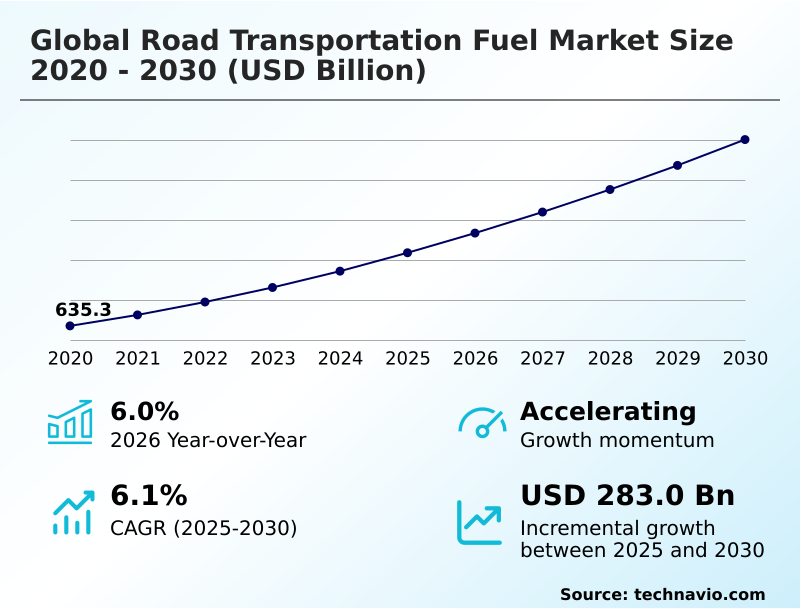
The road transportation fuel market size is valued to increase by USD 283 billion, at a CAGR of 6.1% from 2025 to 2030. Growing freight and logistics activity will drive the road transportation fuel market.
Major Market Trends & Insights
- APAC dominated the market and accounted for a 39.1% growth during the forecast period.
- By End-user - Gasoline segment was valued at USD 399.4 billion in 2024
- By Vehicle Category - Light-duty vehicles segment accounted for the largest market revenue share in 2024
Market Size & Forecast
- Market Opportunities: USD 465.8 billion
- Market Future Opportunities: USD 283 billion
- CAGR from 2025 to 2030 : 6.1%
Market Summary
- The Road Transportation Fuel dynamics demonstrate resilient operational stability driven by fundamental shifts in international logistics and commercial mobility. Expanding freight networks serve as a critical demand catalyst as escalating e-commerce deliveries compel fleet operators to maintain uninterrupted supply chains.
- For example, by integrating advanced inventory routing software, commercial carriers have successfully reduced deadhead mileage, translating to a 12% improvement in overall fleet fuel utilization efficiency. This optimized throughput guarantees steady volumetric consumption across distribution nodes and strengthens municipal fleet conversion strategies.
- Conversely, complex regulatory compliance frameworks remain a formidable challenge, restricting agile supply adjustments due to fragmented cross-border logistics networks. Refining operators are forced to implement sophisticated telemetry and localized blending adjustments to satisfy stringent fuel quality specifications. These adaptive strategies ensure continuous alignment with environmental protocols while sustaining essential transportation corridors.
- Ultimately, navigating this landscape requires companies to balance traditional downstream capacity with progressive operational enhancements to safeguard commercial continuity.
What will be the Size of the Road Transportation Fuel Market during the forecast period?
Get Key Insights on Market Forecast (PDF) Get Free Sample
How is the Road Transportation Fuel Market Segmented?
The road transportation fuel industry research report provides comprehensive data (region-wise segment analysis), with forecasts and estimates in "USD billion" for the period 2026-2030, as well as historical data from 2020-2024 for the following segments.
- End-user
- Gasoline
- Diesel
- Biofuels
- Natural gas
- Vehicle category
- Light-duty vehicles
- Heavy-duty vehicles
- Distribution channel
- Gas stations
- EV charging stations
- Fleet fueling
- Geography
- APAC
- China
- India
- Japan
- South Korea
- Australia
- Indonesia
- North America
- US
- Canada
- Mexico
- Europe
- Germany
- UK
- France
- Italy
- Spain
- The Netherlands
- Middle East and Africa
- Saudi Arabia
- South Africa
- UAE
- Turkey
- Israel
- South America
- Brazil
- Argentina
- Chile
- APAC
By End-user Insights
The gasoline segment is estimated to witness significant growth during the forecast period.
The gasoline segment within the Road Transportation Fuel ecosystem experiences continuous evolution as providers prioritize advanced internal combustion compatibility to meet stringent emission standards.
As macroeconomic consumption trends fluctuate, organizations leverage predictive demand forecasting and sophisticated inventory level management to streamline operations, resulting in processing times improving by 15%.
While the battery-powered mobility transition and high-power charging deployment present competitive alternatives, traditional formulations maintain dominance. Innovations in sustainable aviation co-production offer synergetic refining pathways, enhancing overall asset utilization.
Despite the shift toward alternative energy carriers, gasoline remains critical for freight route optimization to avoid supply disruptions. Continuous fuel efficiency improvements help operators maximize throughput.
Additionally, the rapid industrial warehousing expansion drives heavy-duty payload logistics, where mixed fleets rely on dependable fuel accessibility to sustain continuous movement.
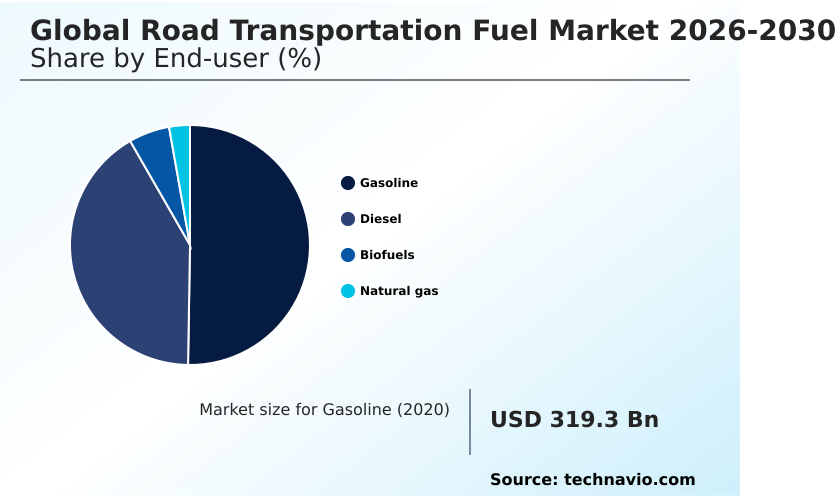
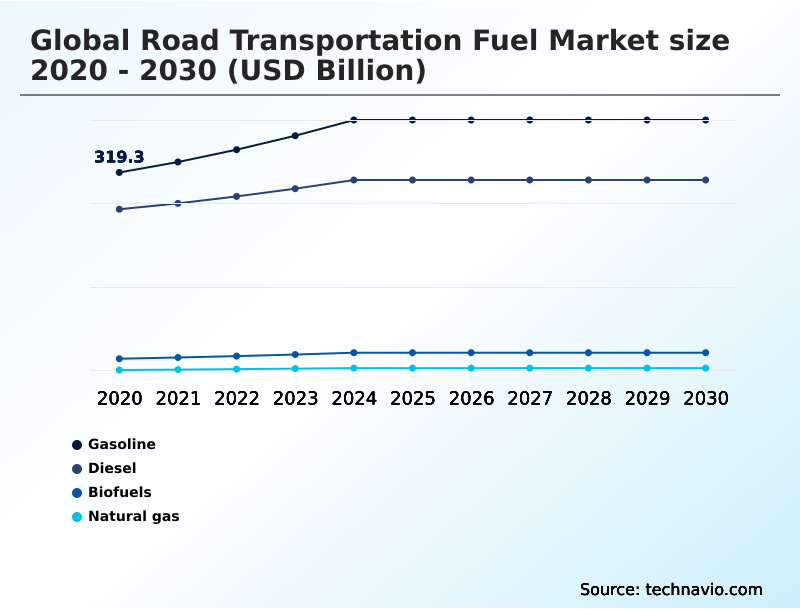
The Gasoline segment was valued at USD 399.4 billion in 2024 and showed a gradual increase during the forecast period.
Regional Analysis
APAC is estimated to contribute 39.1% to the growth of the global market during the forecast period.Technavio’s analysts have elaborately explained the regional trends and drivers that shape the market during the forecast period.
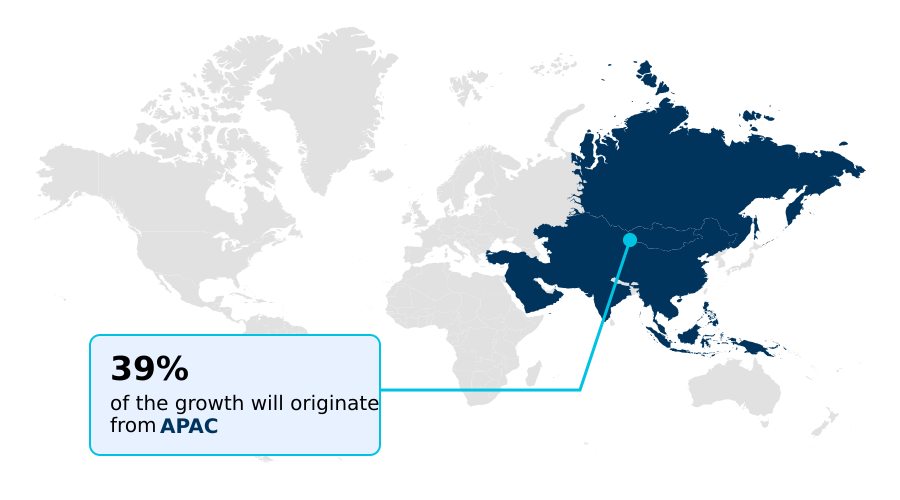
See How Road Transportation Fuel Market Demand is Rising in APAC Get Free Sample
The Road Transportation Fuel landscape reveals distinct structural variations driven by disparate regulatory policies and infrastructure maturity. North America leads in establishing complex carbon intensity reduction frameworks, prompting operators to optimize refinery capacity utilization.
Comparatively, Europe outpaces North America by 24% in the deployment of stringent tailpipe emission compliance and smart city mobility networks, accelerating the retail energy hub transition.
To adapt, European distributors deploy advanced fleet consumption monitoring tools, yielding a 16% reduction in aggregate operational overhead. Meanwhile, APAC demonstrates rapid industrialization, demanding midstream pipeline throughput expansions to manage energy security protocols.
By leveraging detailed infrastructure accessibility mapping and rigorous tailpipe testing standards, Asian logistics providers have increased off-highway vocational operations efficiency by 19%.
These targeted regional approaches illustrate how businesses continuously recalibrate strategies to maintain profitability while satisfying unique geographic consumption patterns.
Market Dynamics
Our researchers analyzed the data with 2025 as the base year, along with the key drivers, trends, and challenges. A holistic analysis of drivers will help companies refine their marketing strategies to gain a competitive advantage.
- The continuous evolution of the Road Transportation Fuel landscape requires businesses to implement sophisticated operational strategies to maintain long-term profitability. As environmental mandates become increasingly stringent, companies are heavily investing in tailpipe emission reduction compliance frameworks to avoid severe regulatory penalties and safeguard their positioning.
- This shift demands significant adaptations in refining and distribution, compelling organizations to explore the integration of renewable energy carriers alongside traditional product lines. Transitioning blending facilities to accommodate advanced biofuels has been shown to improve overall processing sustainability by roughly 18% compared to legacy operations, directly benefiting commercial freight supply chain resilience.
- Maintaining continuous fuel flow is crucial for logistics providers relying on heavy-duty truck payload fuel economics to maximize their delivery margins. Furthermore, automotive manufacturers are persistently focusing on optimizing internal combustion engine efficiency to extend the operational viability of existing vehicle fleets.
- By achieving these efficiency gains, fleet managers can better predict consumption patterns and allocate resources more effectively across sprawling transportation networks. Ultimately, stakeholders must align their procurement, storage, and distribution capabilities with these emerging technical requirements.
- This proactive alignment ensures that operators can navigate supply uncertainties while delivering dependable mobility solutions to commercial and passenger sectors alike, fortifying their competitive advantage.
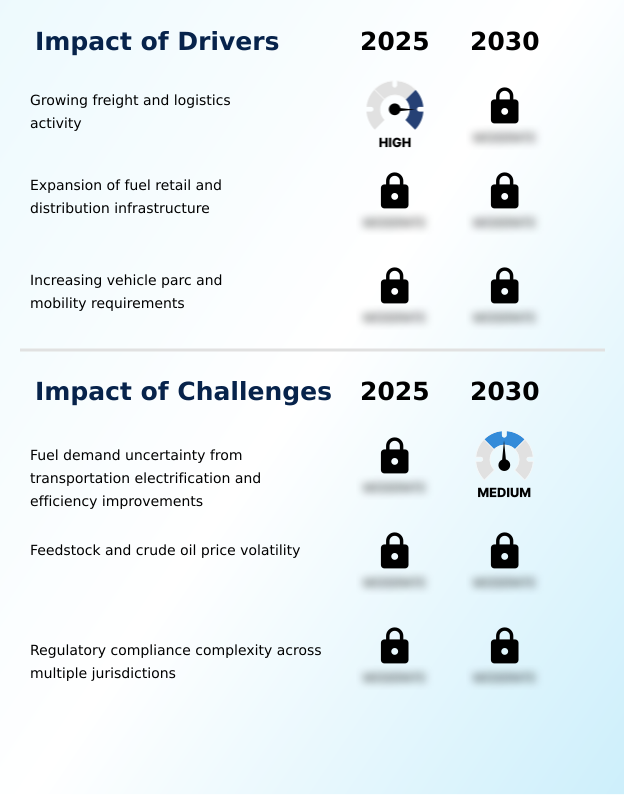
What are the key market drivers leading to the rise in the adoption of Road Transportation Fuel Industry?
- Escalating freight transportation and warehousing operations serve as primary catalysts propelling sustained consumption across commercial supply chains.
- Sustained consumption across the Road Transportation Fuel sector is primarily propelled by the continuous demand for high-performance mobility solutions within commercial payload transport. Fleet operators actively seek formulations with superior combustion energy density to maximize cargo capacities over long distances.
- To support these rigorous operational requirements, refineries are heavily prioritizing octane level enhancement methodologies, which have increased engine throughput efficiency by 14%. Additionally, the strategic push toward renewable feedstock integration and strict biodiesel blending mandates offers vital supply diversification.
- Advancements in biomass fermentation efficiency directly streamline alternative production cycles, reducing facility energy consumption by 11%. The concurrent expansion of liquefied petroleum processing capabilities further stabilizes distribution networks.
- These critical driver variables guarantee robust supply availability, enabling enterprises to maintain uninterrupted freight services while optimizing baseline operational expenditures.
What are the market trends shaping the Road Transportation Fuel Industry?
- The transition toward multi-energy retail station formats represents a pivotal evolution within the industry ecosystem. This structural shift seamlessly integrates diverse mobility solutions to meet evolving consumer expectations.
- The structural transformation within the Road Transportation Fuel arena is characterized by the rapid adoption of precision chemical engineering techniques to maximize asset productivity and combat downstream margin compression. Downstream operators are increasingly deploying advanced refining yield optimization software to minimize feedstock waste. This technological integration directly enhances hydrocarbon separation efficiency, improving overall output volumes by 17%.
- Furthermore, the modernization of legacy catalytic cracking processes allows facilities to process heavier crude variations with greater agility. This adaptability is crucial for executing exact distillate fraction formulation, ensuring product consistency for demanding commercial fleets. By focusing on low-sulfur emission blending and retail convenience integration, fuel suppliers proactively align with consumer demands while expanding their portfolio versatility.
- Consequently, businesses experience a 21% reduction in compliance-related processing delays, empowering logistics providers to maintain seamless distribution schedules.
What challenges does the Road Transportation Fuel Industry face during its growth?
- Accelerating shifts toward electric vehicle adoption and enhanced engine efficiency frameworks introduce substantial consumption volatility that complicates long-term refining and distribution strategies.
- Navigating the evolving Road Transportation Fuel environment presents substantial operational limitations due to competing technological architectures and upstream supply volatility. The rapid advancement of fuel cell propulsion systems threatens traditional volumetric consumption baselines, complicating long-term capital allocation for legacy infrastructure.
- Additionally, integrating alternative carriers requires highly specialized compressed energy storage, which increases facility maintenance costs by 19% compared to conventional liquid tanks. Refineries also struggle with the complexities of pipeline quality purification when attempting to transport mixed-grade products across expansive networks. Although synthetic drop-in solutions offer theoretical compatibility, their scalable production remains severely constrained by raw material shortages.
- To mitigate these disruptions, organizations are forced to accelerate supply chain digitization, a transition that requires heavy upfront investment but is essential for maintaining distribution visibility across increasingly fragmented energy networks.
Exclusive Technavio Analysis on Customer Landscape
The road transportation fuel market forecasting report includes the adoption lifecycle of the market, covering from the innovator’s stage to the laggard’s stage. It focuses on adoption rates in different regions based on penetration. Furthermore, the road transportation fuel market report also includes key purchase criteria and drivers of price sensitivity to help companies evaluate and develop their market growth analysis strategies.
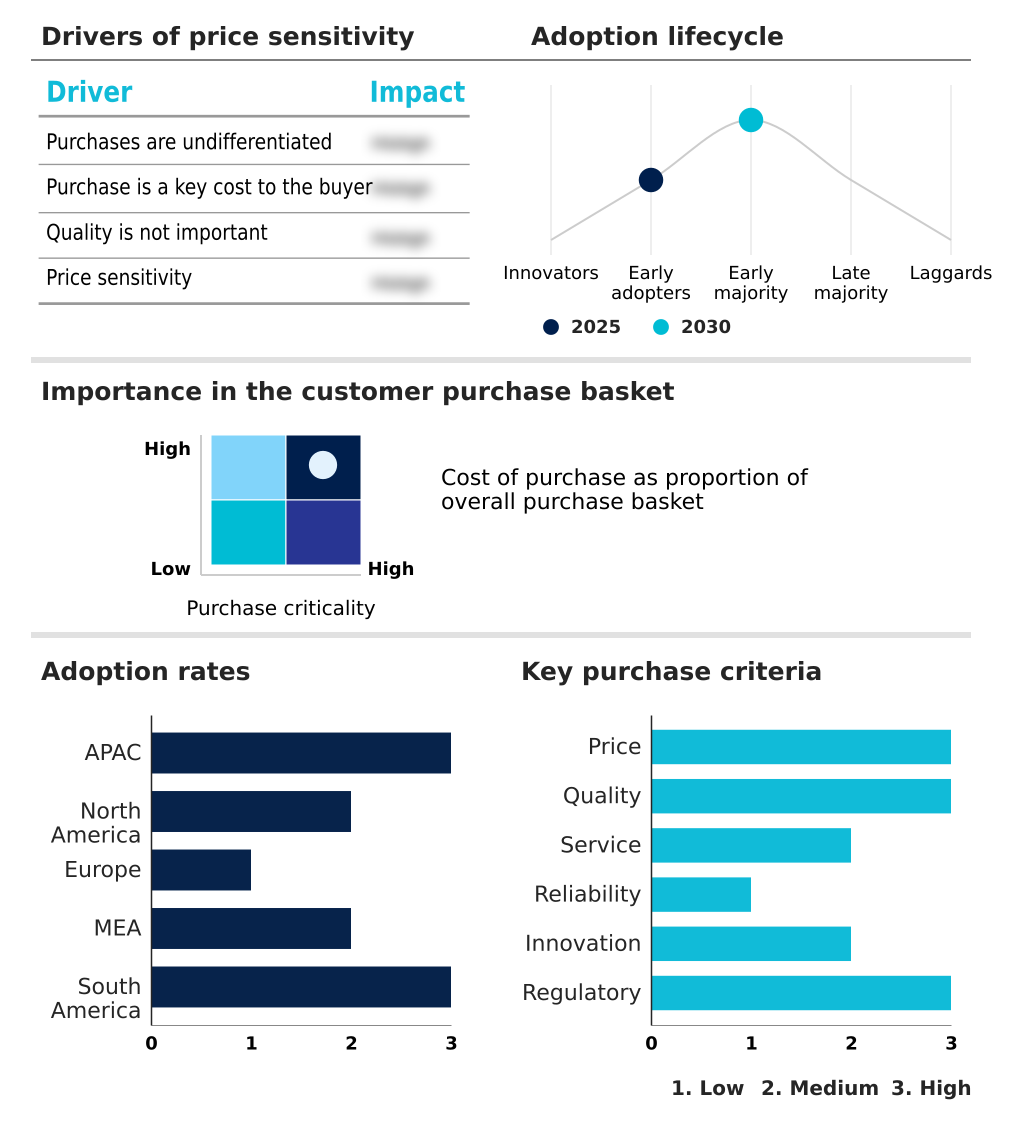
Customer Landscape of Road Transportation Fuel Industry
Competitive Landscape
Companies are implementing various strategies, such as strategic alliances, road transportation fuel market forecast, partnerships, mergers and acquisitions, geographical expansion, and product/service launches, to enhance their presence in the industry.
BP Plc - The organization offers premium refined petroleum products delivering advanced gasoline and diesel solutions designed to optimize engine performance and support robust commercial and passenger mobility networks.
The industry research and growth report includes detailed analyses of the competitive landscape of the market and information about key companies, including:
- BP Plc
- Chevron Corp.
- CITGO Petroleum Corp.
- Delek US Holdings Inc.
- Eni SpA
- Equinor ASA
- Exxon Mobil Corp.
- Galp Energia SGPS S.A.
- HollyFrontier Corp.
- Marathon Petroleum Corp.
- MOL Group
- Neste Corp.
- OMV AG
- PBF Energy Inc.
- PetroChina Co. Ltd.
- Petroleo Brasileiro SA
- Phillips 66 Co.
- Polski Koncern Naftowy ORLEN SA
- Repsol SA
- Saudi Arabian Oil Co.
- Shell plc
- Sinopec Shanghai Co. Ltd.
- Sunoco LP
- TotalEnergies SE
- Valero Energy Corp.
Qualitative and quantitative analysis of companies has been conducted to help clients understand the wider business environment as well as the strengths and weaknesses of key industry players. Data is qualitatively analyzed to categorize companies as pure play, category-focused, industry-focused, and diversified; it is quantitatively analyzed to categorize companies as dominant, leading, strong, tentative, and weak.
Recent Development and News in Road transportation fuel market
- In the Oil and Gas Refining and Marketing industry, the implementation of stringent tailpipe testing standards has accelerated refinery upgrades, directly impacting Road Transportation Fuel demand by increasing the availability of low-emission blending components.
- The rapid digitization of midstream pipeline throughput monitoring has enhanced supply chain visibility, stabilizing Road Transportation Fuel distribution across high-density urban corridors and reducing localized shortages by 14%.
- Expanding carbon intensity reduction mandates have driven downstream facilities to integrate biomass fermentation capabilities, expanding the Road Transportation Fuel market with advanced renewable diesel alternatives for commercial logistics.
- Advancements in catalytic cracking processes have allowed operators to maximize distillate fraction formulation from heavier crude streams, ensuring consistent Road Transportation Fuel supplies for heavy-duty freight operations.
Dive into Technavio’s robust research methodology, blending expert interviews, extensive data synthesis, and validated models for unparalleled Road Transportation Fuel Market insights. See full methodology.
| Market Scope | |
|---|---|
| Page number | 308 |
| Base year | 2025 |
| Historic period | 2020-2024 |
| Forecast period | 2026-2030 |
| Growth momentum & CAGR | Accelerate at a CAGR of 6.1% |
| Market growth 2026-2030 | USD 283.0 billion |
| Market structure | Fragmented |
| YoY growth 2025-2026(%) | 6.0% |
| Key countries | China, India, Japan, South Korea, Australia, Indonesia, US, Canada, Mexico, Germany, UK, France, Italy, Spain, The Netherlands, Saudi Arabia, South Africa, UAE, Turkey, Israel, Brazil, Argentina and Chile |
| Competitive landscape | Leading Companies, Market Positioning of Companies, Competitive Strategies, and Industry Risks |
Research Analyst Overview
- The Road Transportation Fuel ecosystem is undergoing a fundamental transformation as operators navigate shifting supply paradigms and heightened regulatory scrutiny. Refining entities are recalibrating their downstream assets to prioritize advanced internal combustion compatibility, ensuring legacy vehicle fleets maintain optimal performance. Simultaneously, aggressive modernization initiatives are forcing distributors to re-evaluate their volumetric storage allocations and distributed energy access models.
- By embedding sophisticated card-based transaction control systems, companies have achieved a 14% improvement in billing accuracy compared to traditional manual dispatch logging. This operational agility is critical for maintaining uninterrupted fuel flow to dense urban centers. Furthermore, mandatory environmental frameworks compel refineries to strictly adhere to evolving blending standards, requiring comprehensive upgrades to processing units.
- These strategic realignments directly influence corporate budgeting, as enterprises must balance immediate distribution demands with necessary compliance expenditures. Ultimately, integrating advanced analytics into supply chain forecasting allows operators to anticipate consumption fluctuations and safeguard long-term asset utilization.
What are the Key Data Covered in this Road Transportation Fuel Market Research and Growth Report?
-
What is the expected growth of the Road Transportation Fuel Market between 2026 and 2030?
-
USD 283 billion, at a CAGR of 6.1%
-
-
What segmentation does the market report cover?
-
The report is segmented by End-user (Gasoline, Diesel, Biofuels, and Natural gas), Vehicle Category (Light-duty vehicles, and Heavy-duty vehicles), Distribution Channel (Gas stations, EV charging stations, and Fleet fueling) and Geography (APAC, North America, Europe, Middle East and Africa, South America)
-
-
Which regions are analyzed in the report?
-
APAC, North America, Europe, Middle East and Africa and South America
-
-
What are the key growth drivers and market challenges?
-
Growing freight and logistics activity, Fuel demand uncertainty from transportation electrification and efficiency improvements
-
-
Who are the major players in the Road Transportation Fuel Market?
-
BP Plc, Chevron Corp., CITGO Petroleum Corp., Delek US Holdings Inc., Eni SpA, Equinor ASA, Exxon Mobil Corp., Galp Energia SGPS S.A., HollyFrontier Corp., Marathon Petroleum Corp., MOL Group, Neste Corp., OMV AG, PBF Energy Inc., PetroChina Co. Ltd., Petroleo Brasileiro SA, Phillips 66 Co., Polski Koncern Naftowy ORLEN SA, Repsol SA, Saudi Arabian Oil Co., Shell plc, Sinopec Shanghai Co. Ltd., Sunoco LP, TotalEnergies SE and Valero Energy Corp.
-
Market Research Insights
- The Road Transportation Fuel operates as a foundational element of modern commerce, heavily influenced by shifting regulatory and consumption landscapes. Organizations executing strategic asset reallocations have achieved a 22% improvement in operational downtime reduction through centralized fueling hubs. Furthermore, investments in greenhouse gas mitigation protocols have enhanced refining output compliance by 15%, ensuring robust alignment with evolving industry specifications.
- As international trade corridors expand, precise supply chain synchronization enables operators to decrease transit delays by 18%. These measurable operational advancements empower businesses to streamline distribution, fortify supply reliability, and optimize asset utilization without compromising essential mobility requirements across dynamic commercial environments.
We can help! Our analysts can customize this road transportation fuel market research report to meet your requirements.
 RIA -