


Printed Circuit Board (PCB) Market Size 2026-2030
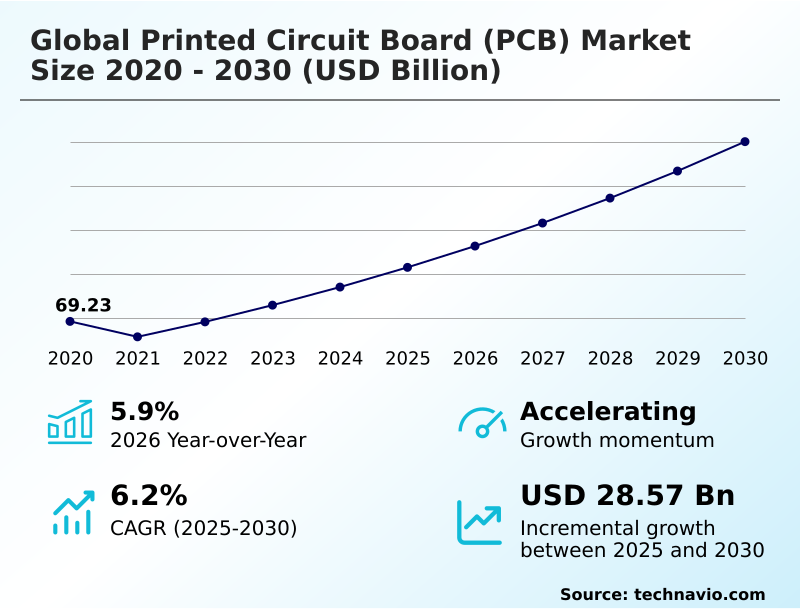
The printed circuit board (pcb) market size is valued to increase by USD 28.57 billion, at a CAGR of 6.2% from 2025 to 2030. Proliferation of AI and high-performance computing infrastructure will drive the printed circuit board (pcb) market.
Major Market Trends & Insights
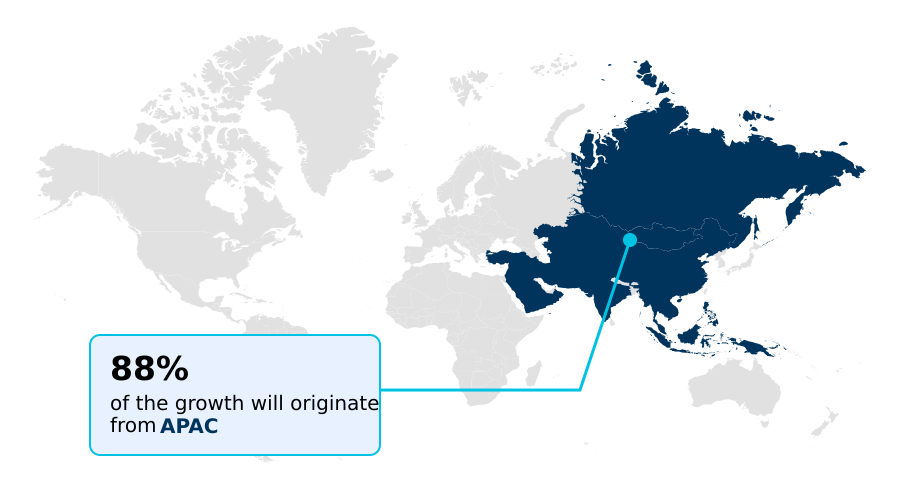
- APAC dominated the market and accounted for a 88.4% growth during the forecast period.
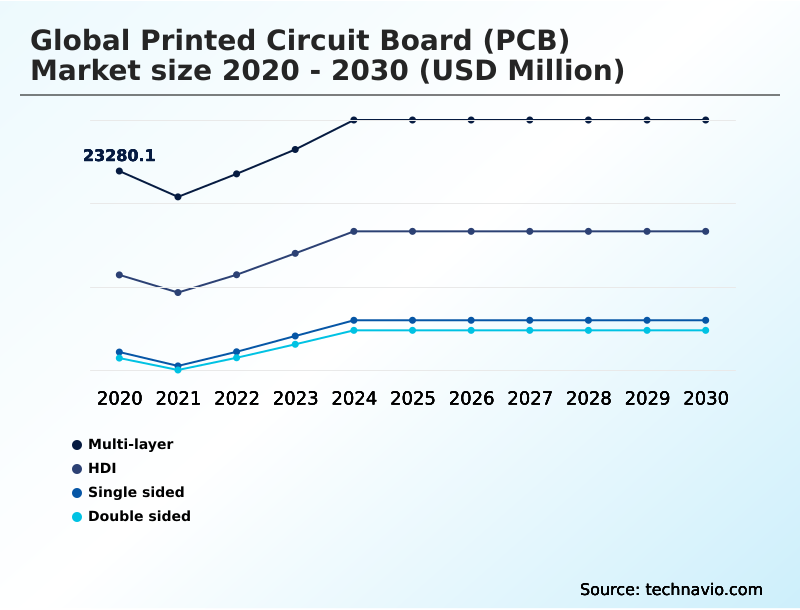
- By Type - Multi-layer segment was valued at USD 25.86 billion in 2024
- By End-user - Communication network infrastructure segment accounted for the largest market revenue share in 2024
Market Size & Forecast
- Market Opportunities: USD 40.85 billion
- Market Future Opportunities: USD 28.57 billion
- CAGR from 2025 to 2030 : 6.2%
Market Summary
- The Printed Circuit Board (PCB) market serves as the physical backbone of the digital world, undergoing a profound transformation driven by the insatiable demand for smaller, faster, and more powerful electronics. This evolution is most evident in the push toward miniaturization and higher performance, necessitating the adoption of advanced technologies like high-density interconnect and multi-layer boards.
- These innovations are critical for emerging sectors such as artificial intelligence, 5G telecommunications, and automotive electrification, where complex circuitry must manage high-speed data and significant thermal loads within compact spaces. For instance, a manufacturer of autonomous vehicle systems must navigate a complex supply chain to source specialized rigid-flex circuits and heavy copper boards that meet stringent reliability standards.
- This requires sophisticated inventory management to mitigate risks from commodity pricing volatility and ensure a steady supply of low-loss laminates. Simultaneously, the industry faces the challenge of integrating sustainable electronics manufacturing practices, balancing high-tech production with environmental responsibility. The convergence of these factors creates a dynamic environment where technical innovation and strategic sourcing are paramount for success.
What will be the Size of the Printed Circuit Board (PCB) Market during the forecast period?
Get Key Insights on Market Forecast (PDF) Get Free Sample
How is the Printed Circuit Board (PCB) Market Segmented?
The printed circuit board (pcb) industry research report provides comprehensive data (region-wise segment analysis), with forecasts and estimates in "USD million" for the period 2026-2030, as well as historical data from 2020-2024 for the following segments.
- Type
- Multi-layer
- HDI
- Single sided
- Double sided
- End-user
- Communication network infrastructure
- IT and peripherals
- Automotive
- Consumer electronics
- Others
- Component
- Integrated circuits
- Capacitors
- Resistors
- Diodes
- Others
- Geography
- APAC
- China
- India
- Japan
- North America
- US
- Canada
- Mexico
- Europe
- Germany
- UK
- France
- Middle East and Africa
- UAE
- Saudi Arabia
- South Africa
- South America
- Brazil
- Argentina
- Rest of World (ROW)
- APAC
By Type Insights
The multi-layer segment is estimated to witness significant growth during the forecast period.
The multi-layer segment is foundational to sophisticated electronic systems, supporting the digital infrastructure expansion and the evolution of telecommunications hardware.
These advanced multi-layer boards are indispensable for high-performance computing ecosystems and advanced driver-assistance systems, where compact design and robust thermal management are critical.
The shift towards sustainable electronics manufacturing is influencing material choices, while the demand for superior signal integrity in high-speed applications is driving innovation. As automotive electrification integration accelerates, the complexity of these boards increases.
The adoption of advanced production techniques, enhancing z-axis connectivity, has improved production yields for high-aspect-ratio designs by over 12%.
This ongoing development ensures multi-layer solutions, including high-density interconnect and substrate-like PCB formats, meet the needs of 5G-advanced infrastructure and sovereign cloud infrastructure.
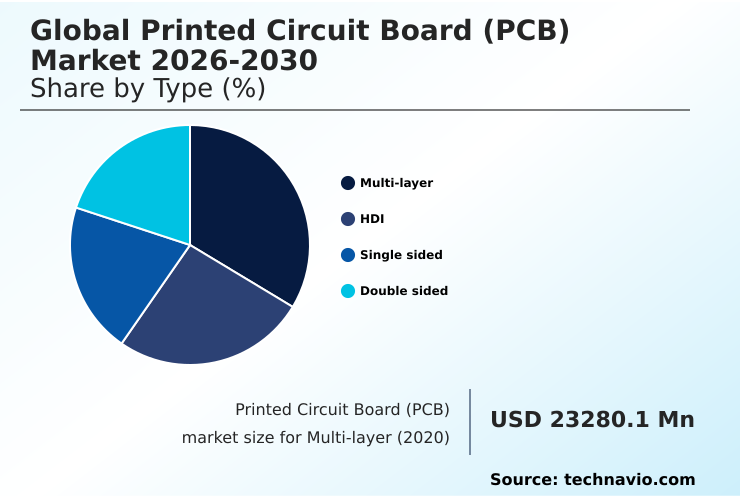
The Multi-layer segment was valued at USD 25.86 billion in 2024 and showed a gradual increase during the forecast period.
Regional Analysis
APAC is estimated to contribute 88.4% to the growth of the global market during the forecast period.Technavio’s analysts have elaborately explained the regional trends and drivers that shape the market during the forecast period.
See How Printed Circuit Board (PCB) Market Demand is Rising in APAC Get Free Sample
The market's geographic landscape is dominated by APAC, which serves as the global manufacturing hub, though North America and Europe are registering higher growth rates of 7.0% and 7.2% respectively, compared to APAC's 6.1%.
North America focuses on high-reliability applications, while Europe leads in industrial and automotive sectors, emphasizing green manufacturing processes and regulatory compliance mandates. This regional specialization creates a complex global supply chain where precision engineering bottlenecks can arise.
Key technologies like flip-chip ball grid array packaging and rigid-flex circuits are seeing investment globally. However, sourcing advanced materials like ceramic-based substrates and low-loss laminates is subject to commodity pricing volatility.
Advanced packaging strategies, including heterogeneous integration, are being developed to overcome these challenges, with automated optical inspection improving yields by over 20% in advanced facilities.
Market Dynamics
Our researchers analyzed the data with 2025 as the base year, along with the key drivers, trends, and challenges. A holistic analysis of drivers will help companies refine their marketing strategies to gain a competitive advantage.
- The strategic implementation of advanced PCB technologies is reshaping product development across high-value sectors. The use of high-density interconnect for AI accelerators is no longer a niche requirement but a standard for achieving the necessary computational density, while the design of a multi-layer PCB for automotive electronics has become a core competency for ensuring vehicle safety and performance.
- The choice of a specific substrate for high-speed data transmission directly impacts the functionality of next-generation networking equipment, where signal integrity for 224 Gbps signaling is a critical benchmark. In parallel, innovations in thermal management in power electronics are enabling more efficient PCB design for electric vehicle powertrains.
- The fabrication process itself is evolving; microvia fabrication for 5G hardware is essential for connectivity, while automated optical inspection for zero-defect manufacturing is crucial for producing reliable medical devices using rigid-flex PCB technology. Furthermore, the industry is balancing performance with responsibility. Sustainable PCB manufacturing practices are being integrated alongside the development of ceramic substrates for high-power applications.
- Adhering to regulatory compliance in the electronics supply chain is as critical as mastering the technical challenges of flip-chip BGA for server processors or the material procurement for high-performance PCBs.
What are the key market drivers leading to the rise in the adoption of Printed Circuit Board (PCB) Industry?
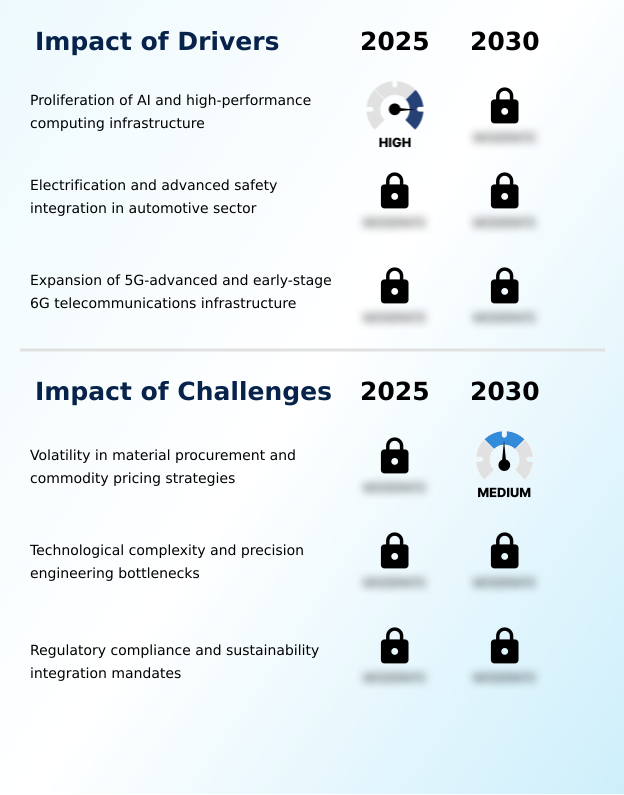
- The proliferation of artificial intelligence and high-performance computing infrastructure serves as a primary driver for market expansion.
- Market growth is fundamentally driven by the need for high-speed networking equipment and critical electronic components for next-generation infrastructure. The expansion of 5G and 6G networks necessitates precision microvia technology and any-layer HDI boards made with halogen-free materials.
- The automotive sector's shift to electric vehicles fuels demand for bio-based resin substrates and designs that adhere to circular economy frameworks.
- In data centers, the adoption of the advanced memory module standard requires more complex boards with energy-efficient circuit designs and high-frequency embedding technology.
- Compliance with new regulations, such as those requiring digital product passports and digital tracking for waste shipments, is also spurring innovation. Implementing these technologies has led to a 20% reduction in material waste for compliant manufacturers.
What are the market trends shaping the Printed Circuit Board (PCB) Industry?
- A global transition toward high-density interconnect and AI-accelerated substrates defines the market's trajectory, driven by the demand for advanced computing power and hardware miniaturization.
- The market is undergoing a significant transformation driven by the adoption of miniaturized electronics design and the expansion of hyperscale data center components. Key trends include the shift toward advanced substrate solutions and high-frequency circuit materials to support next-generation server-grade processors and high-reliability applications in aerospace and defense.
- The proliferation of embedded component technology and sophisticated semiconductor packaging is enabling more powerful devices in smaller form factors. This evolution requires substantial investment in domestic fabrication capacities and advanced manufacturing techniques, such as laser direct imaging and surface mount technology.
- The integration of power electronics into IC substrates has improved energy efficiency in certain applications by up to 10%, while specialized designs for industrial automation reduce system failure rates by 15%.
What challenges does the Printed Circuit Board (PCB) Industry face during its growth?
- Volatility in material procurement and fluctuating commodity prices present a significant challenge to the industry's growth and stability.
- The industry faces significant challenges from manufacturing complexity and supply chain vulnerabilities. Developing high-layer-count backplanes and flip-chip ball grid array substrates for AI servers requires massive capital investment and secure manufacturing processes that are difficult to scale.
- The demand for specialized components for satellite communications systems and the commercial space sector pushes the limits of existing technology, particularly with radiation-hardened substrates. In the industrial automation electronics and automotive sectors, the need for high-voltage power electronics and reliable power distribution boards creates technical hurdles.
- Manufacturers must master advanced techniques like the modified semi-additive process and integrate specialized components such as thick-film and thin-film technologies. Failure to manage these complexities can increase production costs by over 25% and delay product launches.
Exclusive Technavio Analysis on Customer Landscape
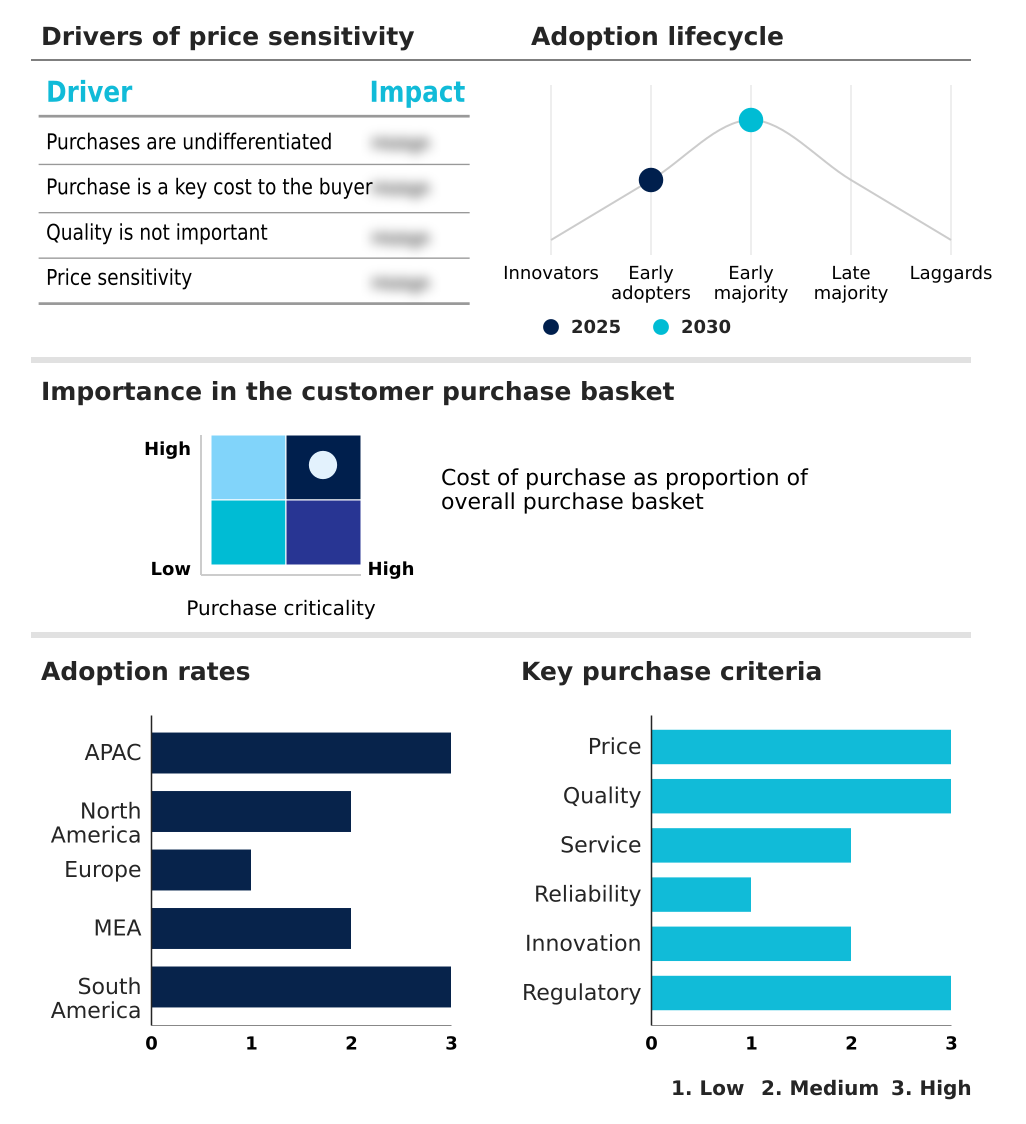
The printed circuit board (pcb) market forecasting report includes the adoption lifecycle of the market, covering from the innovator’s stage to the laggard’s stage. It focuses on adoption rates in different regions based on penetration. Furthermore, the printed circuit board (pcb) market report also includes key purchase criteria and drivers of price sensitivity to help companies evaluate and develop their market growth analysis strategies.
Customer Landscape of Printed Circuit Board (PCB) Industry
Competitive Landscape
Companies are implementing various strategies, such as strategic alliances, printed circuit board (pcb) market forecast, partnerships, mergers and acquisitions, geographical expansion, and product/service launches, to enhance their presence in the industry.
APCT - Manufacturing capabilities include a diverse range of printed circuit boards, encompassing rigid, rigid-flex, and high-density interconnect (HDI) technologies for advanced electronic systems.
The industry research and growth report includes detailed analyses of the competitive landscape of the market and information about key companies, including:
- APCT
- China Circuit Technology Shantou
- Compeq Manufacturing Co. Ltd.
- Daedeok Electronics Co. Ltd.
- Ibiden Co. Ltd.
- Jabil Inc.
- Korea Circuit Co. Ltd.
- Murrietta Circuits
- NOK Corp.
- RayMing Technology Co. Ltd.
- Shenzhen Kinwong Electronic Co
- Shenzhen SenYan Circuit Co
- ShenZhen Wonderful Technology
- Shenzhen Zhongxinhua Electronics
- Sumitomo Electric Industries
- TTM Technologies Inc.
- Victory Giant Technology Co.
- Vishal International
Qualitative and quantitative analysis of companies has been conducted to help clients understand the wider business environment as well as the strengths and weaknesses of key industry players. Data is qualitatively analyzed to categorize companies as pure play, category-focused, industry-focused, and diversified; it is quantitatively analyzed to categorize companies as dominant, leading, strong, tentative, and weak.
Recent Development and News in Printed circuit board (pcb) market
- In May 2025, TTM Technologies Inc. inaugurated a new manufacturing facility focused on producing high-reliability circuit boards for the North American aerospace and automotive markets, reinforcing domestic supply chain capabilities.
- In April 2025, Schweizer Electronic AG introduced an innovative high-frequency embedding technology designed to minimize energy loss in high-performance computing applications, addressing a key challenge in data center efficiency.
- In March 2025, Unimicron Technology Corp. announced the full-scale operation of a new production facility dedicated to fabricating high-layer-count substrates for AI accelerators, meeting the demand from the high-performance computing sector.
- In February 2025, Rogers Corp. launched a new line of circuit materials engineered to improve the performance and reliability of high-frequency automotive radar systems, enhancing the capabilities of advanced driver-assistance systems.
Dive into Technavio’s robust research methodology, blending expert interviews, extensive data synthesis, and validated models for unparalleled Printed Circuit Board (PCB) Market insights. See full methodology.
| Market Scope | |
|---|---|
| Page number | 311 |
| Base year | 2025 |
| Historic period | 2020-2024 |
| Forecast period | 2026-2030 |
| Growth momentum & CAGR | Accelerate at a CAGR of 6.2% |
| Market growth 2026-2030 | USD 28569.7 million |
| Market structure | Fragmented |
| YoY growth 2025-2026(%) | 5.9% |
| Key countries | China, India, Japan, South Korea, Australia, Singapore, US, Canada, Mexico, Germany, UK, France, Italy, Spain, The Netherlands, UAE, Saudi Arabia, South Africa, Egypt, Qatar, Brazil, Argentina and Chile |
| Competitive landscape | Leading Companies, Market Positioning of Companies, Competitive Strategies, and Industry Risks |
Research Analyst Overview
- The market is defined by a rapid convergence of advanced technologies, forcing a strategic realignment in manufacturing and design. The widespread adoption of high-density interconnect, multi-layer boards, and substrate-like PCB architectures is now standard for achieving requisite signal integrity and thermal management. This technological pivot is driven by demands from advanced driver-assistance systems and 5G-advanced infrastructure.
- Boardroom decisions now center on the significant capital investment required for technologies like automated optical inspection and laser direct imaging. Companies are weighing the benefits of in-house development of rigid-flex circuits and ceramic-based substrates against outsourcing, a choice that directly impacts long-term competitiveness.
- The integration of embedded component technology and advanced semiconductor packaging, such as flip-chip ball grid array, necessitates a deeper collaboration across the supply chain. Mastery of surface mount technology on heavy copper boards for power electronics is critical.
- This focus on high-value fabrication is compelling, with firms adopting advanced manufacturing processes reporting a 25% improvement in first-pass yield for complex designs.
What are the Key Data Covered in this Printed Circuit Board (PCB) Market Research and Growth Report?
-
What is the expected growth of the Printed Circuit Board (PCB) Market between 2026 and 2030?
-
USD 28.57 billion, at a CAGR of 6.2%
-
-
What segmentation does the market report cover?
-
The report is segmented by Type (Multi-layer, HDI, Single sided, and Double sided), End-user (Communication network infrastructure, IT and peripherals, Automotive, Consumer electronics, and Others), Component (Integrated circuits, Capacitors, Resistors, Diodes, and Others) and Geography (APAC, North America, Europe, Middle East and Africa, South America)
-
-
Which regions are analyzed in the report?
-
APAC, North America, Europe, Middle East and Africa and South America
-
-
What are the key growth drivers and market challenges?
-
Proliferation of AI and high-performance computing infrastructure, Volatility in material procurement and commodity pricing strategies
-
-
Who are the major players in the Printed Circuit Board (PCB) Market?
-
APCT, China Circuit Technology Shantou, Compeq Manufacturing Co. Ltd., Daedeok Electronics Co. Ltd., Ibiden Co. Ltd., Jabil Inc., Korea Circuit Co. Ltd., Murrietta Circuits, NOK Corp., RayMing Technology Co. Ltd., Shenzhen Kinwong Electronic Co, Shenzhen SenYan Circuit Co, ShenZhen Wonderful Technology, Shenzhen Zhongxinhua Electronics, Sumitomo Electric Industries, TTM Technologies Inc., Victory Giant Technology Co. and Vishal International
-
Market Research Insights
- The market's dynamics are shaped by intense demand from high-performance computing ecosystems and advancements in automotive electrification integration. This pressure drives the need for advanced packaging strategies and heterogeneous integration, with firms adopting green manufacturing processes achieving up to 15% better resource efficiency.
- The expansion of telecommunications hardware and sovereign cloud infrastructure is met with challenges, including precision engineering bottlenecks and commodity pricing volatility. As a result, establishing resilient domestic fabrication capacities has become a key strategic objective, with government support for such initiatives increasing by over 30% in key regions.
- Adherence to new regulatory compliance mandates for sustainable electronics manufacturing is now a critical differentiator, influencing design and material choices across the entire value chain.
We can help! Our analysts can customize this printed circuit board (pcb) market research report to meet your requirements.
 RIA -
RIA -