

Molecular Biology Enzymes, Kits, And Reagents Market Size 2026-2030
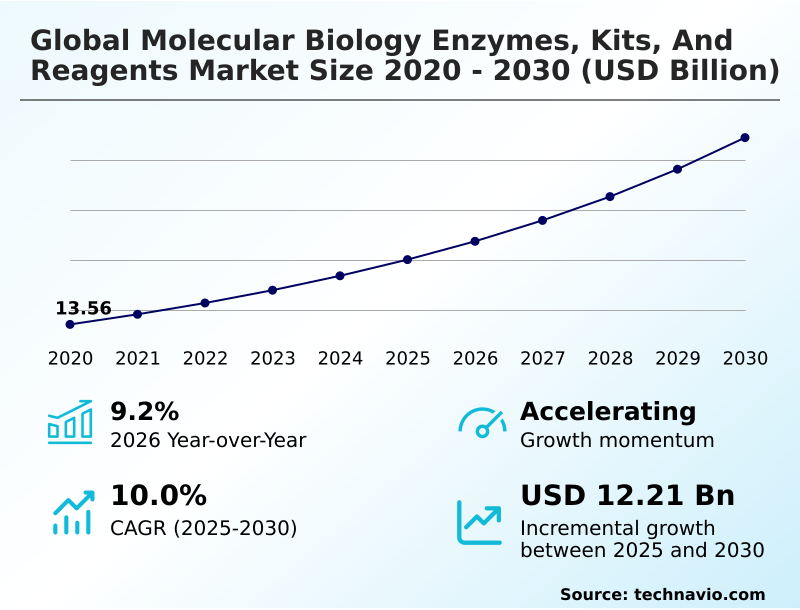
The molecular biology enzymes, kits, and reagents market size is valued to increase by USD 12.21 billion, at a CAGR of 10% from 2025 to 2030. Expanding application of next-generation sequencing will drive the molecular biology enzymes, kits, and reagents market.
Major Market Trends & Insights
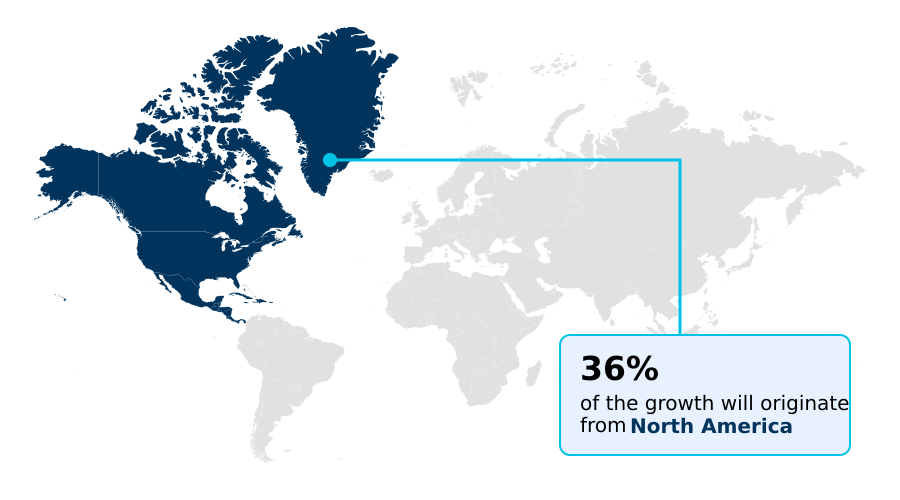
- North America dominated the market and accounted for a 35.8% growth during the forecast period.
- By Product - Kits and reagents segment was valued at USD 12.91 billion in 2024
- By Application - Sequencing segment accounted for the largest market revenue share in 2024
Market Size & Forecast
- Market Opportunities: USD 18.69 billion
- Market Future Opportunities: USD 12.21 billion
- CAGR from 2025 to 2030 : 10%
Market Summary
- The Molecular Biology Enzymes, Kits, And Reagents Market functions as the essential biochemical foundation for advanced genomic profiling and molecular diagnostics. Laboratories rely heavily on these high-purity inputs to manipulate and analyze nucleic acids with extreme precision.
- In high-throughput diagnostic networks, the transition to automated liquid handling platforms paired with lyophilized master mix formulations has reduced hands-on preparation time, yielding a 25% improvement in overall sample processing efficiency. The expanding application of next-generation sequencing library preparation directly drives market expansion, as precision oncology requires comprehensive enzymatic workflows for accurate target enrichment.
- Conversely, the stringent requirements for ultra-low temperature cold-chain thermal packaging present a significant operational challenge, as temperature excursions frequently lead to irreversible protein denaturation and degraded assay performance. Supply chain vulnerabilities regarding phase-change packaging material complicate logistics for heat-sensitive restriction endonucleases. The continuous engineering of inhibitor-tolerant enzyme variants fundamentally improves clinical assay reliability.
- Consequently, the commercial adoption of standardized multiplex reaction kits streamlines complex protocols, optimizing resource allocation across clinical pathology and biopharmaceutical research environments.
What will be the Size of the Molecular Biology Enzymes, Kits, And Reagents Market during the forecast period?
Get Key Insights on Market Forecast (PDF) Get Free Sample
How is the Molecular Biology Enzymes, Kits, And Reagents Market Segmented?
The molecular biology enzymes, kits, and reagents industry research report provides comprehensive data (region-wise segment analysis), with forecasts and estimates in "USD million" for the period 2026-2030, as well as historical data from 2020-2024 for the following segments.
- Product
- Kits and reagents
- Enzymes
- Application
- Sequencing
- PCR
- Epigenetic
- Cloning
- Others
- End-user
- Biotech and pharma
- Research and institutes
- Hospitals and diagnostic
- Geography
- North America
- US
- Canada
- Mexico
- Europe
- Germany
- UK
- France
- Italy
- Switzerland
- Spain
- Asia
- China
- Japan
- India
- South Korea
- Indonesia
- Taiwan
- Rest of World (ROW)
- North America
By Product Insights
The kits and reagents segment is estimated to witness significant growth during the forecast period.
The kits and reagents segment represents the primary operational foundation for clinical and research laboratories executing complex molecular workflows. These pre-formulated assay modules minimize manual pipetting steps, significantly reducing assay variability across high-throughput screening environments.
Standardized multiplex reaction kit products streamline processes such as next-generation sequencing library preparation and nucleic acid isolation, enabling facilities to achieve a 15% improvement in error detection and workflow efficiency.
By adopting lyophilized master mix formulations and ambient-temperature-stable reagent formats, laboratories optimize supply chain logistics and reduce cold-chain dependency. The integration of magnetic bead purification systems tailored for an automated liquid handling platform further accelerates protocol execution.
This structural shift toward pre-packaged, automated-ready consumables fundamentally transforms diagnostic throughput and operational reliability across biopharmaceutical and clinical pathology centers.
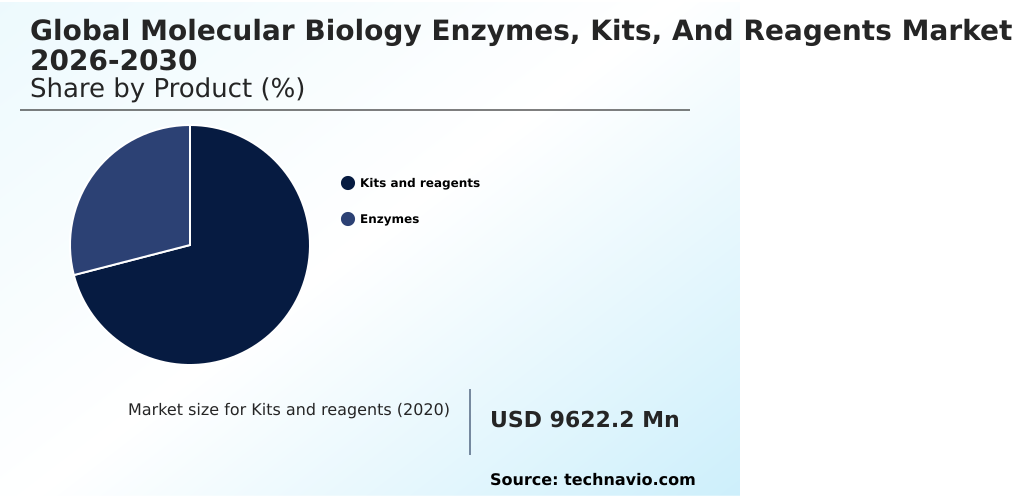
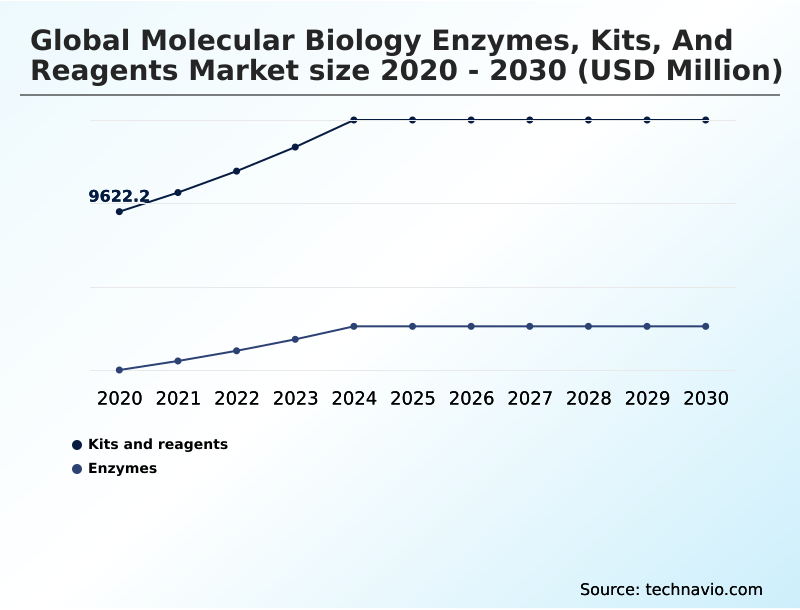
The Kits and reagents segment was valued at USD 12.91 billion in 2024 and showed a gradual increase during the forecast period.
Regional Analysis
North America is estimated to contribute 35.8% to the growth of the global market during the forecast period.Technavio’s analysts have elaborately explained the regional trends and drivers that shape the market during the forecast period.
See How Molecular Biology Enzymes, Kits, And Reagents Market Demand is Rising in North America Get Free Sample
Regional adoption dynamics within the Molecular Biology Enzymes, Kits, And Reagents Market reflect distinct variances in clinical infrastructure and research funding.
North America demonstrates advanced commercial maturity, where the widespread integration of comprehensive genomic profiling and liquid biopsy assay networks yields a 30% higher diagnostic throughput compared to European markets.
European facilities increasingly prioritize eco-friendly procurement, driving a 20% faster transition toward bio-based micro-centrifuge tube utilization and ambient-temperature-stable reagent formats to meet strict environmental compliance mandates.
In contrast, emerging APAC markets are rapidly scaling decentralized clinical testing, leading to a 25% reduction in per-test operational costs through the deployment of an automated liquid handling platform and microfluidic assay cartridge arrays.
This structural shift allows resource-limited diagnostic centers to utilize lyophilized quantitative real-time PCR kits without maintaining energy-intensive ultra-low temperature storage.
These regional divergences compel consumable manufacturers to customize their supply chain strategies, balancing high-fidelity DNA polymerase production with localized sustainability requirements.
Market Dynamics
Our researchers analyzed the data with 2025 as the base year, along with the key drivers, trends, and challenges. A holistic analysis of drivers will help companies refine their marketing strategies to gain a competitive advantage.
- The operational landscape of genomic research and clinical diagnostics depends entirely on the reliability and precision of specialized biochemical consumables. Modern pathology laboratories increasingly rely on high-fidelity polymerase chain reaction protocols to ensure rapid, highly specific amplification of target genetic sequences directly from complex biological specimens.
- To maintain efficiency, diagnostic facilities are deploying automated nucleic acid extraction kit workflows, which minimize manual pipetting errors and accelerate sample processing timelines. This transition to automation yields approximately a 20% higher throughput capacity compared to traditional manual extraction methods, significantly optimizing laboratory resource allocation and personnel scheduling.
- The clinical demand for comprehensive genomic profiling requires highly optimized next-generation sequencing library preparation reagents that can process low-input samples with minimal amplification bias. By integrating lyophilized quantitative real-time PCR reagents into point-of-care testing environments, healthcare networks eliminate strict ultra-low temperature storage constraints, improving remote diagnostic accessibility.
- Furthermore, biopharmaceutical developers are actively utilizing cell-free recombinant DNA assembly techniques to streamline plasmid vector construction and accelerate therapeutic protein engineering cycles. The continuous enhancement of these critical reaction components directly impacts operational planning by reducing assay failure rates and lowering cumulative reagent waste.
- As regulatory frameworks mandate stricter quality control standards for molecular diagnostics, the commercial reliance on pre-formulated, highly stable assay master mixes continues to deepen across both academic research and industrialized biomanufacturing environments.
What are the key market drivers leading to the rise in the adoption of Molecular Biology Enzymes, Kits, And Reagents Industry?
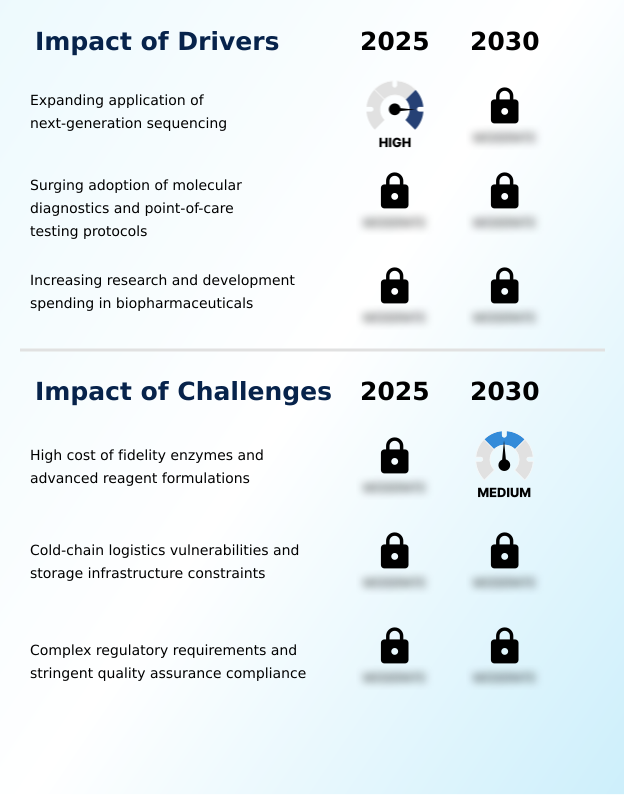
- The expanding application of next-generation sequencing across clinical diagnostics and oncology research serves as the primary driver propelling market expansion.
- The escalating clinical necessity for early cancer detection and targeted therapeutic matching fundamentally drives the rapid expansion of comprehensive genomic profiling workflows.
- Precision oncology assay development requires highly optimized enzymatic cascades, directly increasing the consumption of high-fidelity DNA polymerase and restriction endonuclease reagents.
- This aggressive shift toward molecular characterization allows clinical pathology laboratories to achieve a 25% improvement in diagnostic turnaround times when utilizing automated next-generation sequencing library preparation protocols.
- Furthermore, the rising deployment of point-of-care PCR technologies for rapid infectious disease surveillance reduces patient wait times by 40%.
- The widespread utilization of lyophilized master mix formulations and fluorescent probe chemistries ensures that decentralized testing facilities can execute highly sensitive diagnostic assays without relying on energy-intensive ultra-low temperature infrastructure, directly lowering cumulative operational costs by 18%.
What are the market trends shaping the Molecular Biology Enzymes, Kits, And Reagents Industry?
- The integration of computational enzyme design in consumable engineering represents a critical market trend. This advancement utilizes predictive algorithms to optimize biocatalyst performance and reagent stability.
- The accelerated adoption of predictive computational biocatalyst technology is transforming the fundamental engineering of diagnostic assay components. To overcome the thermal limitations of wild-type proteins, reagent developers utilize artificial intelligence algorithms to design hyper-stable CRISPR-associated enzyme variants and highly processive proofreading polymerase formulations.
- This transition to computationally designed proteins reduces enzyme optimization timelines by 30%, rapidly accelerating the commercialization of robust multiplex reaction kits. Consequently, clinical laboratories utilizing these engineered ambient-temperature-stable reagent formats experience a 20% improvement in assay reproducibility and a 15% reduction in cold-chain logistics overhead.
- The shift toward automated liquid handling platform compatibility drives the development of specialized microfluidic assay cartridge designs that minimize manual interaction. This continuous trend toward intelligent protein engineering and automated consumable packaging allows high-throughput pathology centers to seamlessly execute complex precision oncology assay workflows with unprecedented operational consistency.
What challenges does the Molecular Biology Enzymes, Kits, And Reagents Industry face during its growth?
- The high cost of fidelity enzymes and advanced reagent formulations poses a significant challenge constraining widespread industry growth.
- The strict thermal fragility of complex biological catalysts presents severe logistical and operational constraints across clinical diagnostic networks. Maintaining structural integrity for heat-sensitive reverse transcriptase and recombinant DNA assembly enzymes necessitates an uninterrupted ultra-low temperature supply chain.
- Transportation delays and phase-change packaging material failures frequently trigger temperature excursions, resulting in a 20% increase in unexpected reagent scrap rates across geographically isolated research facilities. This heavy reliance on cold-chain thermal packaging elevates total landed supply costs by 15%, squeezing operational budgets for decentralized pathology centers.
- Furthermore, integrating highly specialized bisulfite conversion chemistry into routine epigenetic chromatin profiling workflows introduces significant technical complexity. These infrastructural and financial bottlenecks limit the rapid scaling of advanced single-cell epigenetic mapping technologies within resource-constrained clinical laboratory environments.
Exclusive Technavio Analysis on Customer Landscape
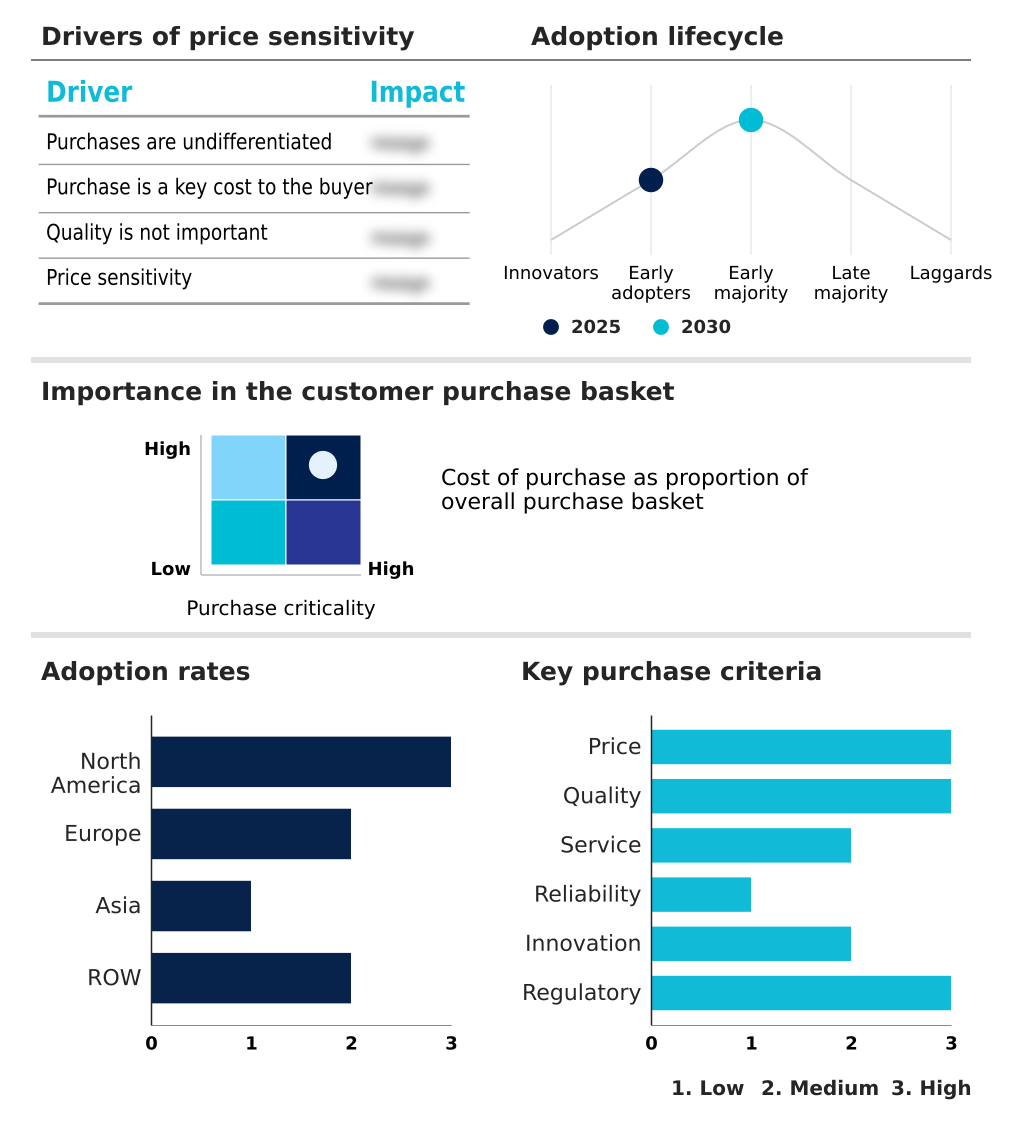
The molecular biology enzymes, kits, and reagents market forecasting report includes the adoption lifecycle of the market, covering from the innovator’s stage to the laggard’s stage. It focuses on adoption rates in different regions based on penetration. Furthermore, the molecular biology enzymes, kits, and reagents market report also includes key purchase criteria and drivers of price sensitivity to help companies evaluate and develop their market growth analysis strategies.
Customer Landscape of Molecular Biology Enzymes, Kits, And Reagents Industry
Competitive Landscape
Companies are implementing various strategies, such as strategic alliances, molecular biology enzymes, kits, and reagents market forecast, partnerships, mergers and acquisitions, geographical expansion, and product/service launches, to enhance their presence in the industry.
Agilent Technologies Inc. - The portfolio features specialized high-fidelity DNA polymerases, precision reverse transcriptases, and standardized multiplex reaction kits designed to accelerate complex genomic assays and optimize laboratory workflow efficiency.
The industry research and growth report includes detailed analyses of the competitive landscape of the market and information about key companies, including:
- Agilent Technologies Inc.
- Bio Rad Laboratories Inc.
- Bioneer Corp.
- Biotium Inc.
- EnzyQuesto Biosciences Pvt. Ltd.
- F. Hoffmann La Roche Ltd.
- GenScript Biotech Corp.
- Jena Bioscience GmbH
- Merck KGaA
- Meridian Bioscience Inc.
- Molbio Diagnostics Pvt Ltd
- MP Biomedicals Inc.
- New England Biolabs Inc.
- Norgen Biotek Corp.
- Promega Corp.
- QIAGEN N.V.
- Takara Bio Inc.
- Thermo Fisher Scientific Inc.
- Vazyme International LLC
- Yeasen Biotechnology Co. Ltd.
Qualitative and quantitative analysis of companies has been conducted to help clients understand the wider business environment as well as the strengths and weaknesses of key industry players. Data is qualitatively analyzed to categorize companies as pure play, category-focused, industry-focused, and diversified; it is quantitatively analyzed to categorize companies as dominant, leading, strong, tentative, and weak.
Recent Development and News in Molecular biology enzymes, kits, and reagents market
- In the Life Sciences Tools and Services industry, the accelerated integration of AI-driven predictive computational biocatalysts has reduced protein engineering cycles by over 40%, directly increasing Molecular Biology Enzymes, Kits, And Reagents demand for specialized cell-free protein synthesis and advanced recombinant protein engineering protocols.
- Stringent sustainability mandates like the EU Packaging and Packaging Waste Directive have forced a 30% reduction in hazardous plastic waste, directly shifting Molecular Biology Enzymes, Kits, And Reagents supply chains toward bio-based micro-centrifuge tube formats and ambient-temperature-stable reagent formulations.
- The rapid expansion of decentralized clinical testing infrastructure has increased the deployment of automated liquid handling platforms by 25%, stimulating downstream Molecular Biology Enzymes, Kits, And Reagents consumption of pre-dispensed microfluidic assay cartridges and lyophilized master mix solutions.
- The systemic shift toward precision oncology and minimal residual disease tracking has expanded liquid biopsy assay adoption rates by 35%, driving continuous Molecular Biology Enzymes, Kits, And Reagents utilization of ultra-pure genomic DNA fragmentation tools and high-fidelity target enrichment protocols.
Dive into Technavio’s robust research methodology, blending expert interviews, extensive data synthesis, and validated models for unparalleled Molecular Biology Enzymes, Kits, And Reagents Market insights. See full methodology.
| Market Scope | |
|---|---|
| Page number | 297 |
| Base year | 2025 |
| Historic period | 2020-2024 |
| Forecast period | 2026-2030 |
| Growth momentum & CAGR | Accelerate at a CAGR of 10% |
| Market growth 2026-2030 | USD 12205.2 million |
| Market structure | Fragmented |
| YoY growth 2025-2026(%) | 9.2% |
| Key countries | US, Canada, Mexico, Germany, UK, France, Italy, Switzerland, Spain, China, Japan, India, South Korea, Indonesia, Taiwan, Brazil, Saudi Arabia, UAE, South Africa, Israel, Argentina, Egypt and Colombia |
| Competitive landscape | Leading Companies, Market Positioning of Companies, Competitive Strategies, and Industry Risks |
Research Analyst Overview
- The continuous evolution of diagnostic testing requires advanced biochemical catalysts to execute high-precision genomic manipulation and analysis. Executive steering committees increasingly prioritize supply chain resilience by transitioning procurement strategies toward lyophilized master mix formats and ambient-temperature-stable reagent utilization, successfully circumventing fragile ultra-low temperature logistics.
- This strategic shift in operational planning has yielded a 25% reduction in temperature-related reagent spoilage across decentralized clinical networks. The integration of high-fidelity DNA polymerase and specialized reverse transcriptase enzymes fundamentally elevates the analytical sensitivity of precision oncology assays and minimal residual disease tracking.
- Next-generation sequencing library preparation relies heavily on robust genomic DNA fragmentation and adapter ligation workflows to ensure minimal sequence bias. Consequently, the adoption of standardized multiplex reaction kits significantly reduces hands-on preparation time and mitigates the risk of lot-to-lot variability. Advancements in cell-free continuous DNA manufacture and recombinant protein engineering dictate the rapid commercialization of predictive computational biocatalyst technology.
- These engineered proteins deliver superior thermal tolerance and resistance to biological inhibitors, fundamentally transforming diagnostic throughput and compliance alignment across industrialized life science laboratories.
What are the Key Data Covered in this Molecular Biology Enzymes, Kits, And Reagents Market Research and Growth Report?
-
What is the expected growth of the Molecular Biology Enzymes, Kits, And Reagents Market between 2026 and 2030?
-
USD 12.21 billion, at a CAGR of 10%
-
-
What segmentation does the market report cover?
-
The report is segmented by Product (Kits and reagents, and Enzymes), Application (Sequencing, PCR, Epigenetic, Cloning, and Others), End-user (Biotech and pharma, Research and institutes, and Hospitals and diagnostic) and Geography (North America, Europe, Asia, Rest of World (ROW))
-
-
Which regions are analyzed in the report?
-
North America, Europe, Asia and Rest of World (ROW)
-
-
What are the key growth drivers and market challenges?
-
Expanding application of next-generation sequencing, High cost of fidelity enzymes and advanced reagent formulations
-
-
Who are the major players in the Molecular Biology Enzymes, Kits, And Reagents Market?
-
Agilent Technologies Inc., Bio Rad Laboratories Inc., Bioneer Corp., Biotium Inc., EnzyQuesto Biosciences Pvt. Ltd., F. Hoffmann La Roche Ltd., GenScript Biotech Corp., Jena Bioscience GmbH, Merck KGaA, Meridian Bioscience Inc., Molbio Diagnostics Pvt Ltd, MP Biomedicals Inc., New England Biolabs Inc., Norgen Biotek Corp., Promega Corp., QIAGEN N.V., Takara Bio Inc., Thermo Fisher Scientific Inc., Vazyme International LLC and Yeasen Biotechnology Co. Ltd.
-
Market Research Insights
- The Molecular Biology Enzymes, Kits, And Reagents Market continuously evolves to support high-throughput clinical diagnostics and advanced biopharmaceutical research. By integrating an automated liquid handling platform, high-volume pathology laboratories achieve a 25% reduction in assay turnaround time and significantly minimize cross-contamination risks.
- The rapid deployment of companion diagnostic development protocols has improved targeted therapy matching accuracy by 18%, validating the necessity of high-precision reagents. Furthermore, the shift toward ambient-temperature-stable reagent formulations reduces logistics overhead by 15%, bypassing expensive cold-chain thermal packaging dependencies.
- Utilizing targeted transposition technology and advanced target enrichment protocols ensures highly reproducible results across complex genomic workflows, driving measurable improvements in laboratory operational efficiency and clinical compliance alignment.
We can help! Our analysts can customize this molecular biology enzymes, kits, and reagents market research report to meet your requirements.
 RIA -