


Healthcare Middleware Market Size 2026-2030
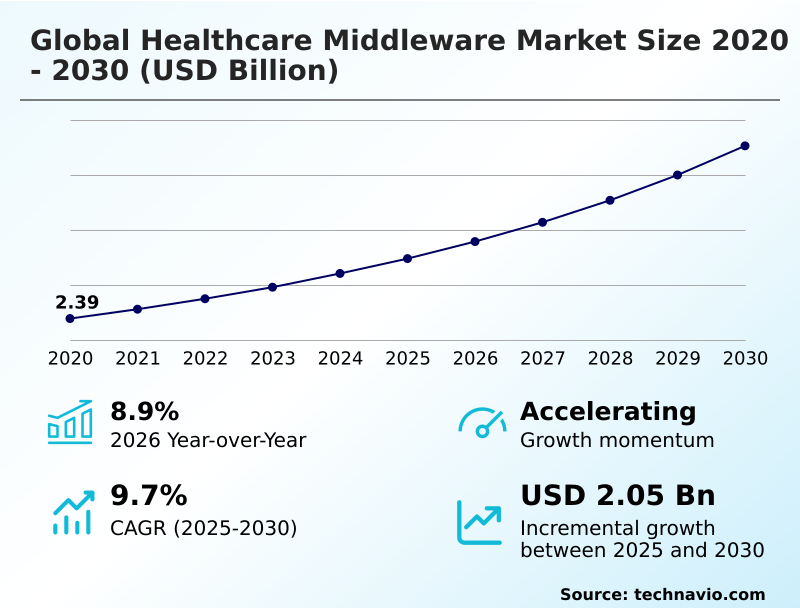
The healthcare middleware market size is valued to increase by USD 2.05 billion, at a CAGR of 9.7% from 2025 to 2030. Rising demand for data interoperability will drive the healthcare middleware market.
Major Market Trends & Insights
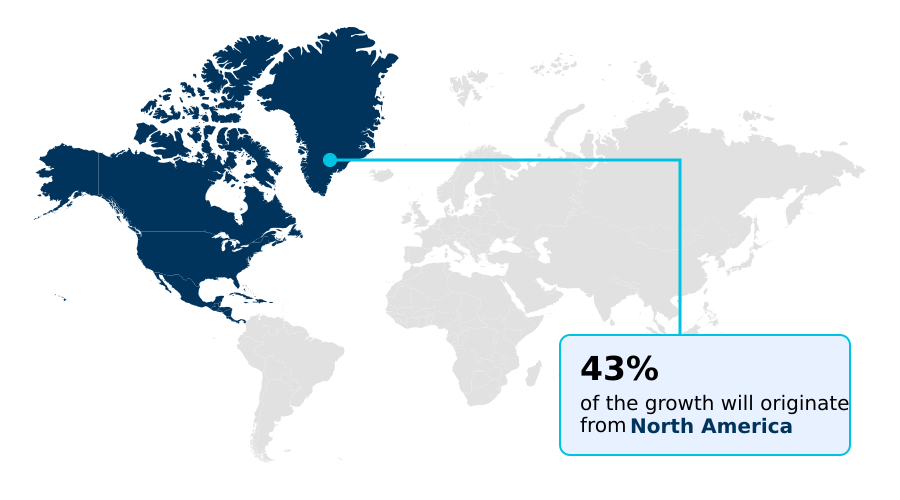
- North America dominated the market and accounted for a 43.2% growth during the forecast period.
- By Type - Communication middleware segment was valued at USD 932.5 million in 2024
- By Deployment - On-premises segment accounted for the largest market revenue share in 2024
Market Size & Forecast
- Market Opportunities: USD 3.14 billion
- Market Future Opportunities: USD 2.05 billion
- CAGR from 2025 to 2030 : 9.7%
Market Summary
- The Healthcare Middleware Market demonstrates continuous operational expansion driven by an urgent necessity to unify fragmented clinical networks. The escalating demand for data interoperability acts as a primary catalyst, compelling institutions to bridge legacy architectures with modern cloud-based health applications.
- A major challenge involves the high implementation and maintenance costs of intricate integration frameworks, which often deter mid-sized clinics operating on tight margins. In real-world operational scenarios, massive hospital networks deploy these advanced software layers to process telemetry from remote patient monitors directly into central repositories.
- Facilities utilizing these robust interoperability solutions have reported inter-departmental data retrieval latency decreased by over forty percent. This structural optimization ensures that critical diagnostic information reaches physicians instantaneously, minimizing cognitive fatigue and administrative bottlenecks. By effectively dismantling isolated data silos, the technology supports the broader industry transition toward value-based care models.
- Continuous investments in scalable platforms remain critical for organizations aiming to maintain long-term regulatory compliance while efficiently orchestrating complex clinical workflows across decentralized medical facilities.
What will be the Size of the Healthcare Middleware Market during the forecast period?
Get Key Insights on Market Forecast (PDF) Get Free Sample
How is the Healthcare Middleware Market Segmented?
The healthcare middleware industry research report provides comprehensive data (region-wise segment analysis), with forecasts and estimates in "USD million" for the period 2026-2030, as well as historical data from 2020-2024 for the following segments.
- Type
- Communication middleware
- Integration middleware
- Platform middleware
- Others
- Deployment
- On-premises
- Cloud-based
- Hybrid
- End-user
- Healthcare providers
- Life science organizations
- Healthcare payers
- Clinical laboratories
- Geography
- North America
- US
- Canada
- Mexico
- Europe
- Germany
- UK
- France
- Italy
- Spain
- The Netherlands
- Asia
- China
- India
- Japan
- South Korea
- Indonesia
- Thailand
- Rest of World (ROW)
- North America
By Type Insights
The communication middleware segment is estimated to witness significant growth during the forecast period.
The communication segment establishes the fundamental infrastructure required for seamless clinical data exchange across disparate hospital networks.
By functioning as an advanced enterprise service bus, this technology normalizes and securely routes vast volumes of information generated by connected medical devices and laboratory systems.
This structural optimization ensures that asynchronous messaging and critical alerts reach intended clinical care coordination teams without latency. Organizations implementing robust communication architectures typically see diagnostic routing efficiency improved by 18%, significantly minimizing human transcription errors.
The deployment of specialized medical device integration software allows diverse diagnostic imaging platforms to interface fluidly with core repositories.
This cohesive routing effectively dismantles operational silos, providing physicians with unified patient histories that enhance immediate clinical decision-making and support sustained operational continuity.
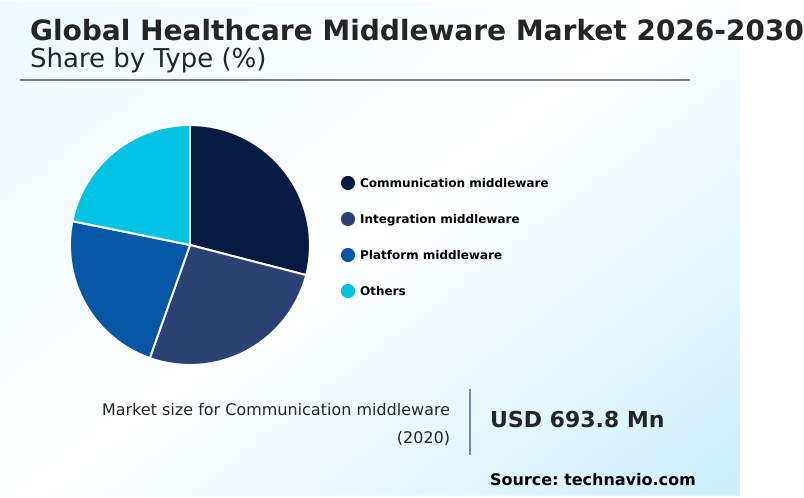
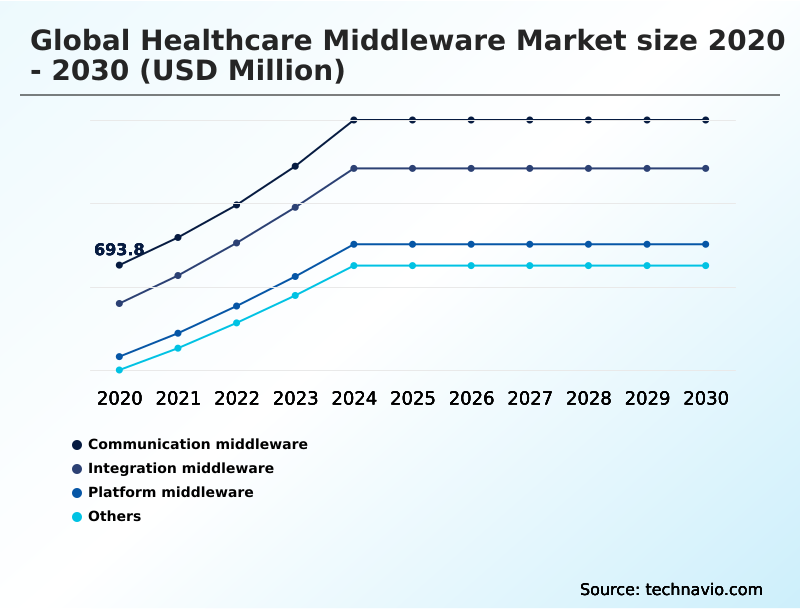
The Communication middleware segment was valued at USD 932.5 million in 2024 and showed a gradual increase during the forecast period.
Regional Analysis
North America is estimated to contribute 43.2% to the growth of the global market during the forecast period.Technavio’s analysts have elaborately explained the regional trends and drivers that shape the market during the forecast period.
See How Healthcare Middleware Market Demand is Rising in North America Get Free Sample
The regional dynamics of the market reflect distinct disparities in digital infrastructure maturity between North America and Europe. North America maintains absolute dominance due to highly advanced health information exchange networks and stringent federal interoperability mandates.
Facilities in the United States demonstrate a 35% higher adoption rate of advanced clinical workflow orchestration platforms compared to their European counterparts.
This accelerated integration directly supports the transition toward value based care models by unifying disparate electronic health records across integrated delivery networks. European organizations prioritize strict data sovereignty and cross-border standardization, resulting in localized enterprise service bus deployments.
Integration layers in North America have reduced inter-departmental data latency by 40%, whereas developing European regions report efficiency gains of 25% due to varying legacy system constraints.
Both regions emphasize comprehensive healthcare ecosystem integration to secure data tunneling, minimize operational bottlenecks, and elevate overall patient safety outcomes across decentralized medical environments.
Market Dynamics
Our researchers analyzed the data with 2025 as the base year, along with the key drivers, trends, and challenges. A holistic analysis of drivers will help companies refine their marketing strategies to gain a competitive advantage.
- The continuous evolution of medical IT infrastructure demands sophisticated synchronization across fragmented operational domains. Securing real time clinical data exchange has become a critical operational priority for decentralized hospital networks striving to eliminate dangerous information silos.
- By leveraging specialized medical device integration software, facilities can seamlessly ingest high-frequency telemetry from wearable wellness monitors and critical care equipment directly into centralized clinical data repositories. This connectivity is heavily supported by the deployment of a robust healthcare enterprise service bus, which standardizes disparate messaging protocols and routes sensitive patient information safely across departmental boundaries.
- As institutions prioritize electronic health record interoperability, advanced middleware architecture translates legacy formats into modern application programming interfaces, ensuring physicians access comprehensive patient histories without dangerous latency. Organizations shifting toward cloud based healthcare integration have achieved hardware maintenance overhead reductions of nearly thirty percent compared to traditional on-premises legacy environments.
- This significant supply chain and IT resource optimization allows administrators to redirect capital toward advanced clinical decision support tools rather than physical server upkeep. Ultimately, bridging isolated diagnostic imaging platforms with core administrative systems enhances diagnostic precision and ensures compliance with stringent data privacy regulations, fortifying the foundation for future digital health innovations.
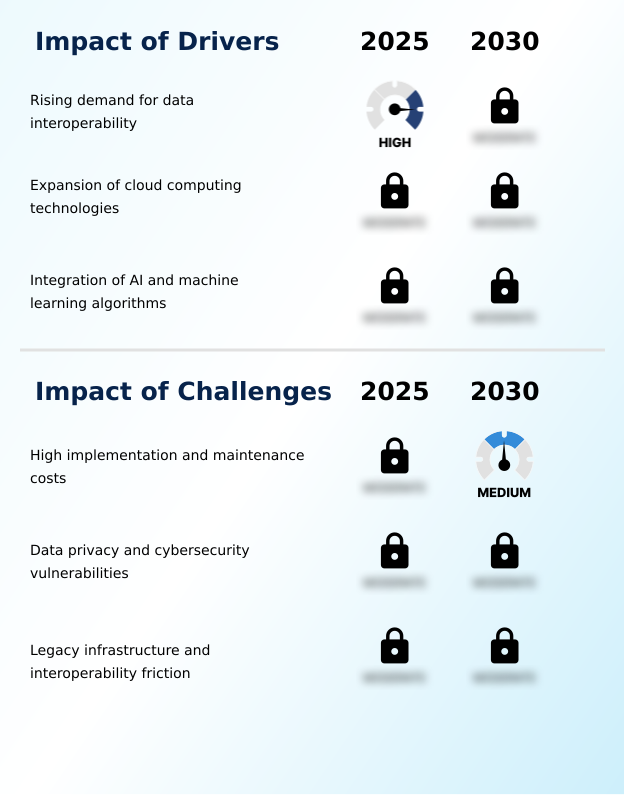
What are the key market drivers leading to the rise in the adoption of Healthcare Middleware Industry?
- The escalating demand for seamless data interoperability across disparate clinical networks functions as the primary catalyst propelling market expansion.
- The pressing imperative to establish cohesive clinical network architecture functions as the primary catalyst for infrastructure modernization.
- Healthcare organizations face escalating pressure to execute comprehensive legacy system modernization to accommodate the massive influx of data generated by advanced remote patient monitoring programs.
- Bridging isolated diagnostic imaging platforms with core clinical repositories is essential for eliminating dangerous information bottlenecks. By deploying robust integration layers, medical facilities have successfully reduced diagnostic alert latency by 24%, dramatically improving emergency response coordination.
- Furthermore, these unified data streams feed directly into advanced clinical decision support tools, improving treatment plan accuracy by 18%.
- This enhanced interconnectivity directly reduces manual data entry burdens, empowering clinical staff to deliver superior care while minimizing administrative fatigue across complex medical networks.
What are the market trends shaping the Healthcare Middleware Industry?
- The rapid expansion of the Internet of Medical Things represents a definitive market trend. This proliferation necessitates sophisticated integration platforms capable of managing continuous data streams from connected medical hardware.
- The rapid integration of digital health applications represents a transformative shift in clinical software integration strategies. Decentralized medical networks increasingly adopt cloud native integration frameworks to unify fragmented diagnostic platforms and remote patient monitoring devices. This architectural evolution is primarily driven by the necessity to eliminate data silos and ensure uninterrupted information flow across complex hospital environments.
- Consequently, facilities implementing advanced interoperability protocols have achieved a 28% improvement in cross-departmental data routing accuracy. The deployment of sophisticated patient identity matching algorithms has successfully reduced duplicate medical record errors by 15%, significantly enhancing clinical safety. This technological momentum directly optimizes operational workflows, allowing medical personnel to focus on critical care delivery rather than navigating disparate legacy systems.
- Sustained investment in scalable middleware ensures that evolving telemedicine platforms interface seamlessly with core electronic repositories.
What challenges does the Healthcare Middleware Industry face during its growth?
- The substantial implementation and ongoing maintenance costs associated with complex integration infrastructures present a significant barrier to widespread adoption.
- The persistent complexity of establishing secure machine to machine communication across proprietary clinical systems presents a substantial operational hurdle. Diverse diagnostic devices operate on varied communication protocols, exacerbating healthcare data siloing and complicating unified patient record aggregation.
- Maintaining strict health data privacy amidst high-velocity information exchange requires the deployment of rigorous end to end encryption mechanisms, which significantly elevate initial IT infrastructure expenditures. Consequently, mid-sized clinical facilities struggling with medical hardware compatibility issues often experience integration deployment delays increased by 30%.
- Furthermore, managing continuous security patch updates inflates ongoing system maintenance costs by approximately 22% for resource-constrained organizations. Overcoming these technical and financial barriers remains critical for institutions striving to dismantle isolated data repositories without disrupting critical care operations.
Exclusive Technavio Analysis on Customer Landscape
The healthcare middleware market forecasting report includes the adoption lifecycle of the market, covering from the innovator’s stage to the laggard’s stage. It focuses on adoption rates in different regions based on penetration. Furthermore, the healthcare middleware market report also includes key purchase criteria and drivers of price sensitivity to help companies evaluate and develop their market growth analysis strategies.
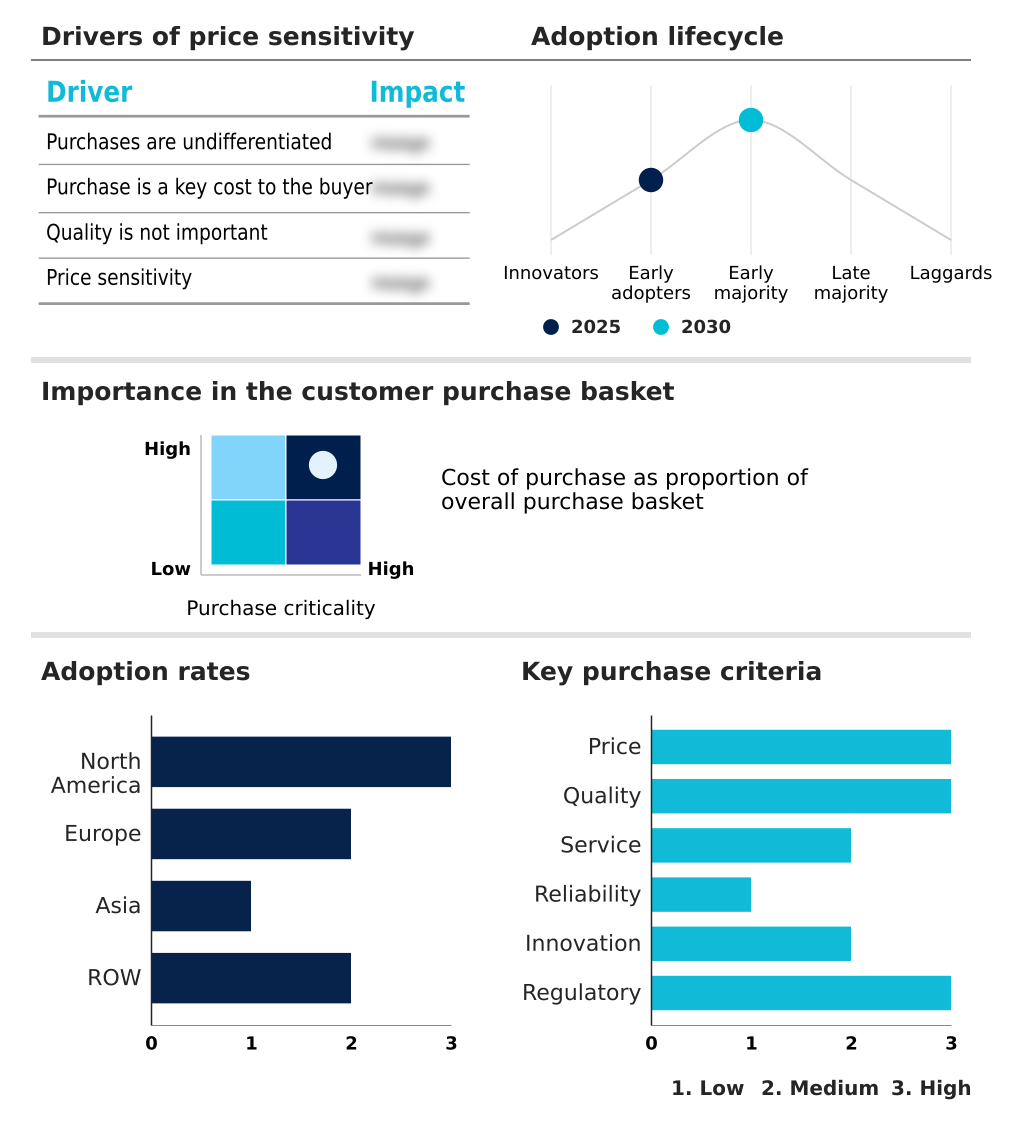
Customer Landscape of Healthcare Middleware Industry
Competitive Landscape
Companies are implementing various strategies, such as strategic alliances, healthcare middleware market forecast, partnerships, mergers and acquisitions, geographical expansion, and product/service launches, to enhance their presence in the industry.
Abbott Laboratories - The portfolio includes advanced informatics solutions and analytics platforms designed to optimize laboratory operations and seamlessly integrate diagnostic data into broader healthcare IT infrastructures.
The industry research and growth report includes detailed analyses of the competitive landscape of the market and information about key companies, including:
- Abbott Laboratories
- Altera Digital Health Inc.
- Ascom Holding AG
- Beckman Coulter Inc.
- Bio Rad Laboratories Inc.
- Dedalus Group
- Epic Systems Corp.
- F. Hoffmann La Roche Ltd.
- GE HealthCare Technologies
- IBM Corp.
- Infor Inc.
- InterSystems Corp.
- Koninklijke Philips NV
- Microsoft Corp.
- NextGen Healthcare
- Oracle Corp.
- Orion Health
- Siemens Healthineers AG
- Sysmex Corp.
- TIBCO Software Inc.
Qualitative and quantitative analysis of companies has been conducted to help clients understand the wider business environment as well as the strengths and weaknesses of key industry players. Data is qualitatively analyzed to categorize companies as pure play, category-focused, industry-focused, and diversified; it is quantitatively analyzed to categorize companies as dominant, leading, strong, tentative, and weak.
Recent Development and News in Healthcare middleware market
- In the Systems Software industry, the accelerated transition toward cloud-native integration and containerized microservices has fundamentally altered software deployment models, directly impacting Healthcare Middleware demand by enabling highly scalable data ingestion pipelines that process health telemetry without requiring extensive on-premises hardware upgrades.
- The widespread adoption of zero-trust security architectures across enterprise networks has established stringent new authentication requirements, compelling developers to integrate advanced end-to-end encryption and patient identity matching protocols to secure clinical software integration against unauthorized network access.
- Strict data localization mandates enacted by European regulatory bodies have forced a structural reorganization of cloud hosting environments, directly driving the need for localized healthcare integration engine deployments capable of maintaining health data privacy while supporting cross-border clinical data exchange.
- The rapid integration of machine learning algorithms into data processing frameworks has enhanced predictive analytics capabilities, significantly increasing the requirement for robust application programming interfaces to facilitate low-latency machine-to-machine communication for real-time telemetry.
Dive into Technavio’s robust research methodology, blending expert interviews, extensive data synthesis, and validated models for unparalleled Healthcare Middleware Market insights. See full methodology.
| Market Scope | |
|---|---|
| Page number | 303 |
| Base year | 2025 |
| Historic period | 2020-2024 |
| Forecast period | 2026-2030 |
| Growth momentum & CAGR | Accelerate at a CAGR of 9.7% |
| Market growth 2026-2030 | USD 2053.6 million |
| Market structure | Fragmented |
| YoY growth 2025-2026(%) | 8.9% |
| Key countries | US, Canada, Mexico, Germany, UK, France, Italy, Spain, The Netherlands, China, India, Japan, South Korea, Indonesia, Thailand, Brazil, Saudi Arabia, UAE, Turkey, Argentina, Colombia, South Africa and Israel |
| Competitive landscape | Leading Companies, Market Positioning of Companies, Competitive Strategies, and Industry Risks |
Research Analyst Overview
- The operational framework of modern medical IT environments relies inherently on sophisticated message oriented middleware to dismantle entrenched information silos. Boardroom executives increasingly prioritize comprehensive application programming interfaces to ensure stringent regulatory compliance and optimize clinical resource allocation.
- This strategic focus accelerates the deployment of resilient data ingestion pipelines capable of managing vast quantities of real time telemetry generated by connected medical hardware. Implementing advanced edge computing integration allows decentralized clinical facilities to process diagnostic data locally, drastically reducing transmission bottlenecks.
- Healthcare organizations utilizing these robust software layers have recorded a 35% reduction in data retrieval latency across disparate departmental networks. Secure data tunneling protocols act as a critical defense mechanism, safeguarding sensitive patient histories against unauthorized external access. Furthermore, automated health data normalization directly eliminates manual transcription errors, streamlining complex diagnostic workflows.
- These continuous technological enhancements ensure that physicians access unified, accurate patient profiles instantly, fundamentally elevating diagnostic precision while reducing administrative overhead across highly complex medical care delivery ecosystems.
What are the Key Data Covered in this Healthcare Middleware Market Research and Growth Report?
-
What is the expected growth of the Healthcare Middleware Market between 2026 and 2030?
-
USD 2.05 billion, at a CAGR of 9.7%
-
-
What segmentation does the market report cover?
-
The report is segmented by Type (Communication middleware, Integration middleware, Platform middleware, and Others), Deployment (On-premises, Cloud-based, and Hybrid), End-user (Healthcare providers, Life science organizations, Healthcare payers, and Clinical laboratories) and Geography (North America, Europe, Asia, Rest of World (ROW))
-
-
Which regions are analyzed in the report?
-
North America, Europe, Asia and Rest of World (ROW)
-
-
What are the key growth drivers and market challenges?
-
Rising demand for data interoperability, High implementation and maintenance costs
-
-
Who are the major players in the Healthcare Middleware Market?
-
Abbott Laboratories, Altera Digital Health Inc., Ascom Holding AG, Beckman Coulter Inc., Bio Rad Laboratories Inc., Dedalus Group, Epic Systems Corp., F. Hoffmann La Roche Ltd., GE HealthCare Technologies, IBM Corp., Infor Inc., InterSystems Corp., Koninklijke Philips NV, Microsoft Corp., NextGen Healthcare, Oracle Corp., Orion Health, Siemens Healthineers AG, Sysmex Corp. and TIBCO Software Inc.
-
Market Research Insights
- The Healthcare Middleware Market actively facilitates the seamless orchestration of digital health applications across diverse medical networks. As institutions prioritize legacy system modernization, advanced integration layers become essential for dismantling operational silos. Robust telehealth platform integration ensures continuous connectivity between remote monitoring devices and central repositories.
- Facilities implementing these advanced software frameworks have observed diagnostic data routing efficiency improved by 22%, directly optimizing patient care timelines. Additionally, integrated clinical alerting systems have reduced critical notification delays by 18%, significantly enhancing clinical responsiveness.
- This technological evolution supports comprehensive population health management initiatives by aggregating disparate datasets into unified patient profiles, enabling healthcare providers to achieve superior clinical outcomes while maintaining strict compliance with evolving data exchange standards.
We can help! Our analysts can customize this healthcare middleware market research report to meet your requirements.
 RIA -