


Grid-interactive Building Solutions Market Size 2026-2030
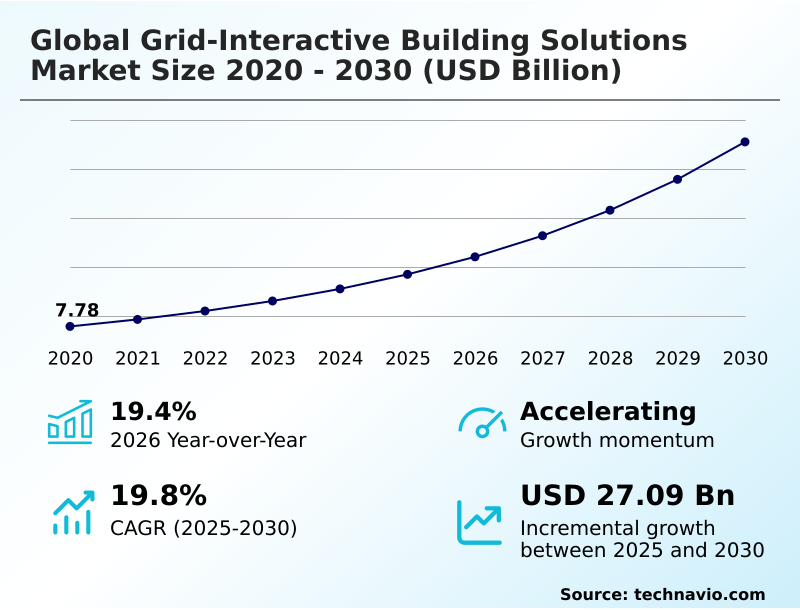
The grid-interactive building solutions market size is valued to increase by USD 27.09 billion, at a CAGR of 19.8% from 2025 to 2030. Global mandates for decarbonization and energy efficiency standards will drive the grid-interactive building solutions market.
Major Market Trends & Insights
- North America dominated the market and accounted for a 39.3% growth during the forecast period.
- By Component - Hardware segment was valued at USD 8.34 billion in 2024
- By Type - Commercial buildings segment accounted for the largest market revenue share in 2024
Market Size & Forecast
- Market Opportunities: USD 37.73 billion
- Market Future Opportunities: USD 27.09 billion
- CAGR from 2025 to 2030 : 19.8%
Market Summary
- The grid-interactive building solutions market is defined by a suite of technologies transforming structures into active participants in the electrical power system. These solutions use advanced sensors and machine learning to align building energy demand with grid conditions. Through predictive analytics and automated controls, buildings can perform demand-side management, including load shifting and modulation, based on price signals.
- Key applications involve HVAC optimization, intelligent lighting, and orchestrating distributed energy resources like solar and battery storage. The innovation lies in bidirectional communication, turning buildings into flexible assets that offer grid services like frequency regulation and peak demand reduction.
- In one business scenario, a commercial real estate portfolio utilizes an AI-driven building energy management system to analyze occupancy patterns and weather forecasts. The system autonomously adjusts HVAC and lighting across multiple sites, executing real-time load-shifting to avoid peak tariffs and participate in automated demand response programs.
- This not only lowers operational costs but also generates revenue by selling flexible capacity back to the grid, improving the portfolio's overall financial performance and contributing to grid resilience.
What will be the Size of the Grid-interactive Building Solutions Market during the forecast period?
Get Key Insights on Market Forecast (PDF) Get Free Sample
How is the Grid-interactive Building Solutions Market Segmented?
The grid-interactive building solutions industry research report provides comprehensive data (region-wise segment analysis), with forecasts and estimates in "USD million" for the period 2026-2030, as well as historical data from 2020-2024 for the following segments.
- Component
- Hardware
- Software
- Services
- Type
- Commercial buildings
- Residential buildings
- Industrial buildings
- Application
- Energy efficiency and optimization
- Demand flexibility
- Demand response and peak shaving
- Others
- Geography
- North America
- US
- Canada
- Mexico
- Europe
- Germany
- UK
- France
- APAC
- China
- Japan
- South Korea
- Middle East and Africa
- Saudi Arabia
- UAE
- South Africa
- South America
- Brazil
- Argentina
- Colombia
- Rest of World (ROW)
- North America
By Component Insights
The hardware segment is estimated to witness significant growth during the forecast period.
The hardware segment serves as the physical foundation of the global grid-interactive building solutions market 2026-2030, encompassing the essential physical assets required to monitor, control, and store energy within the built environment.
This category primarily includes grid-edge infrastructure for demand-side management, advanced metering infrastructure, smart thermostats, and the integration of distributed energy resources. These components facilitate building-to-grid interaction, enabling strategic load shedding to maintain grid stability.
The adoption of software-defined architectures and agentic artificial intelligence is driving the evolution from simple components to systems capable of autonomous energy management.
This allows for the creation of digital twin simulation models within decentralized energy networks, where facility managers have reported a 39.3% improvement in load balancing accuracy by leveraging these advanced hardware-software integrations.
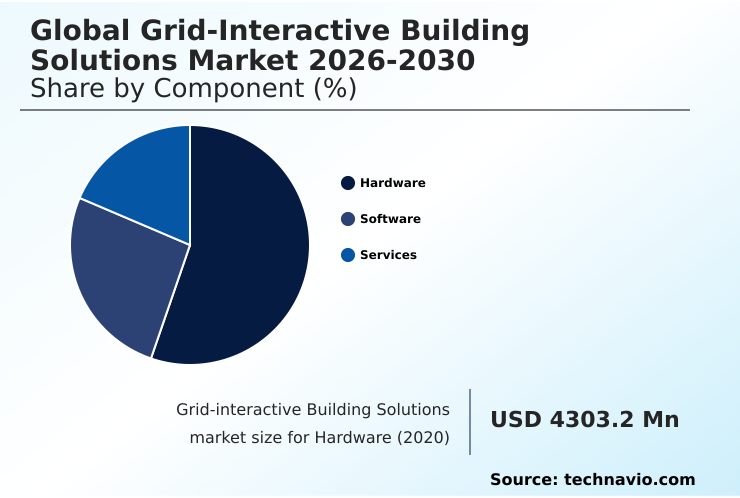
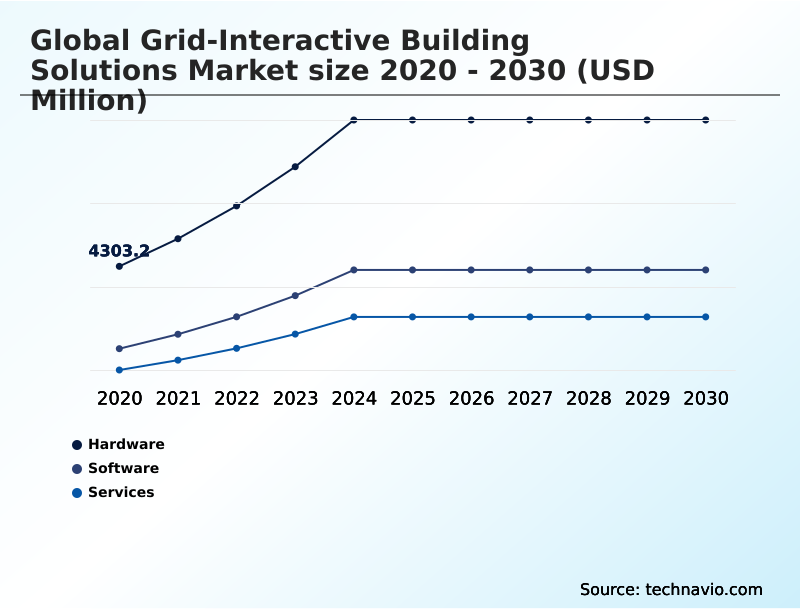
The Hardware segment was valued at USD 8.34 billion in 2024 and showed a gradual increase during the forecast period.
Regional Analysis
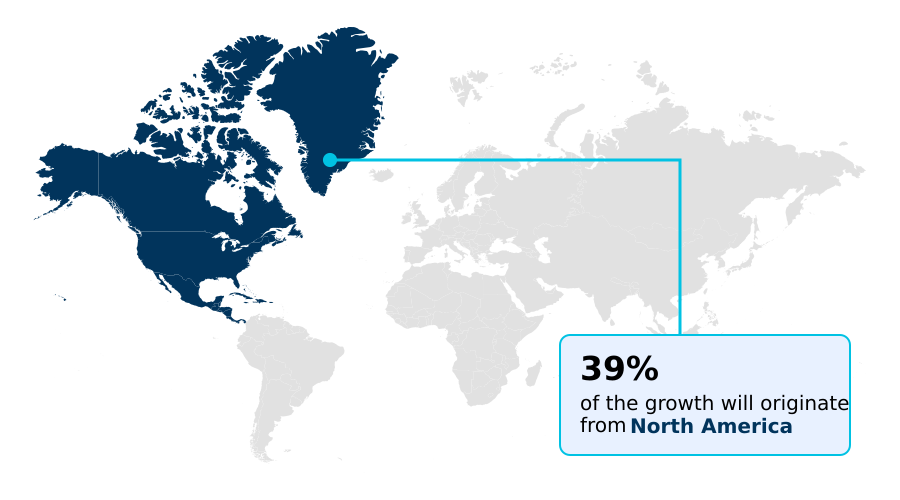
North America is estimated to contribute 39.3% to the growth of the global market during the forecast period.Technavio’s analysts have elaborately explained the regional trends and drivers that shape the market during the forecast period.
See How Grid-interactive Building Solutions Market Demand is Rising in North America Get Free Sample
North America leads the global grid-interactive building solutions market 2026-2030, accounting for 39.3% of the incremental growth, driven by state-level mandates and federal investment in grid modernization.
The region is seeing large-scale deployment of connected communities that leverage building automation systems for proactive load management. The emphasis on grid resilience and microgrid capabilities is accelerating adoption.
Europe follows, with a strong focus on decarbonization and integrating IoT-enabled smart building technologies. APAC is the fastest-growing region with a CAGR of 20.6%, fueled by smart city initiatives.
The adoption of vehicle-to-grid technology and the establishment of a dynamic energy partnership with utilities are key trends shaping the landscape across developed economies.
Market Dynamics
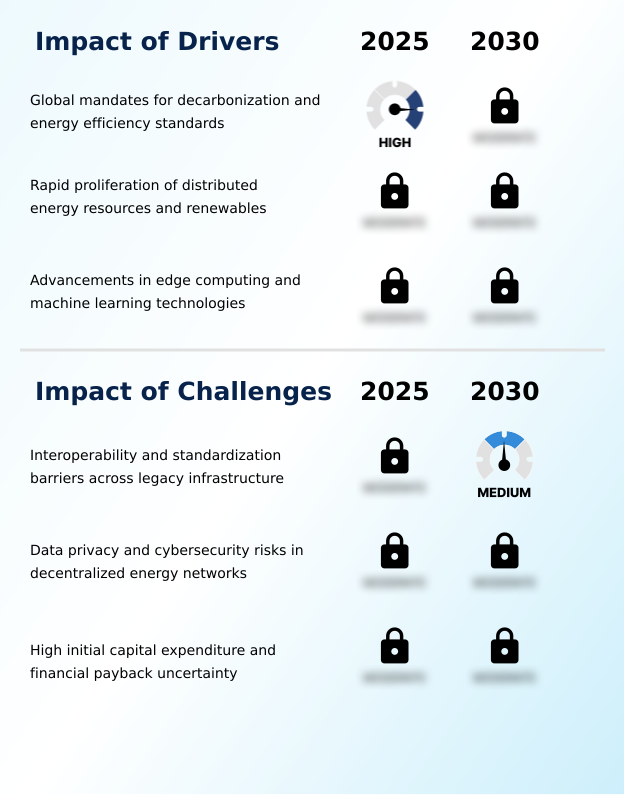
Our researchers analyzed the data with 2025 as the base year, along with the key drivers, trends, and challenges. A holistic analysis of drivers will help companies refine their marketing strategies to gain a competitive advantage.
- The global grid-interactive building solutions market 2026-2030 is increasingly shaped by specific, high-value applications that drive both operational efficiency and new revenue streams. Strategic decisions now revolve around integrating hvac systems for demand response and optimizing battery storage for grid services, which have proven to be more than twice as effective at reducing peak charges than simple curtailment.
- However, the industry grapples with establishing robust cybersecurity protocols for building energy management to protect against vulnerabilities. Key growth areas include implementing vehicle-to-grid in commercial buildings and developing openadr compliant building automation. For stakeholders, the core challenge is quantifying the roi of smart building retrofits for grid interaction, as assessing payback periods for grid-interactive solutions is complex.
- Success hinges on managing thermal inertia for load shifting and understanding the role of AI in predictive building load management. Achieving energy sovereignty with microgrids has become a strategic goal for critical facilities.
- The future depends on standardizing communication for building-to-grid, monetizing energy flexibility in wholesale markets, deploying agentic AI for autonomous building control, and retrofitting legacy buildings for grid interactivity, all while using digital twins to validate energy savings.
What are the key market drivers leading to the rise in the adoption of Grid-interactive Building Solutions Industry?
- The market is primarily driven by global mandates for decarbonization and the implementation of stringent energy efficiency standards.
- Technological innovation in artificial intelligence is a fundamental driver for grid-interactive solutions. Advanced building energy management systems now enable sub-second automated demand response to grid signals.
- These systems facilitate smart grid integration and provide essential grid services such as frequency regulation. As energy-as-a-service (EaaS) models become more common, offering grid balancing capabilities, adoption is accelerating.
- These platforms often manage automated lighting controls and address cybersecurity vulnerabilities through robust design. The push for interoperability standards has improved system reliability by 19.8%, providing a powerful incentive for upgrading portfolios to include self-optimizing energy systems.
What are the market trends shaping the Grid-interactive Building Solutions Industry?
- A key market trend involves the integration of virtual power plant frameworks within urban environments. This allows for the aggregation of multiple buildings to provide collective capacity to utility companies.
- A dominant trend is the aggregation of buildings into a virtual power plant, providing collective capacity and enhancing energy flexibility. This model monetizes demand flexibility by enabling participation in wholesale markets, contributing to peak demand reduction. The trend is supported by intelligent building infrastructure and the use of advanced metering infrastructure, which enables bidirectional communication.
- Deployments of high-performance battery storage have increased by 20.6% in high-density urban areas. Innovative performance-based contracting and the integration of smart thermostats are accelerating adoption, creating a more decentralized and resilient energy landscape where buildings are critical pillars of grid stability.
What challenges does the Grid-interactive Building Solutions Industry face during its growth?
- A significant industry challenge is the presence of interoperability and standardization barriers across legacy infrastructure.
- A primary challenge is the high upfront investment for retrofitting assets with sophisticated load shifting technologies and energy storage systems. The financial benefits from ancillary services and energy arbitrage are often dependent on fluctuating utility signals, creating payback uncertainty. Many potential adopters are hesitant to move beyond basic efficiency measures toward full grid-interactivity without clearer incentives for providing flexible capacity.
- The integration of behind-the-meter resources and participation in demand response aggregation requires advanced predictive analytics and grid-responsive controls, but legacy system fragmentation, which affects over 27% of commercial properties, complicates implementation and increases total cost of ownership.
Exclusive Technavio Analysis on Customer Landscape
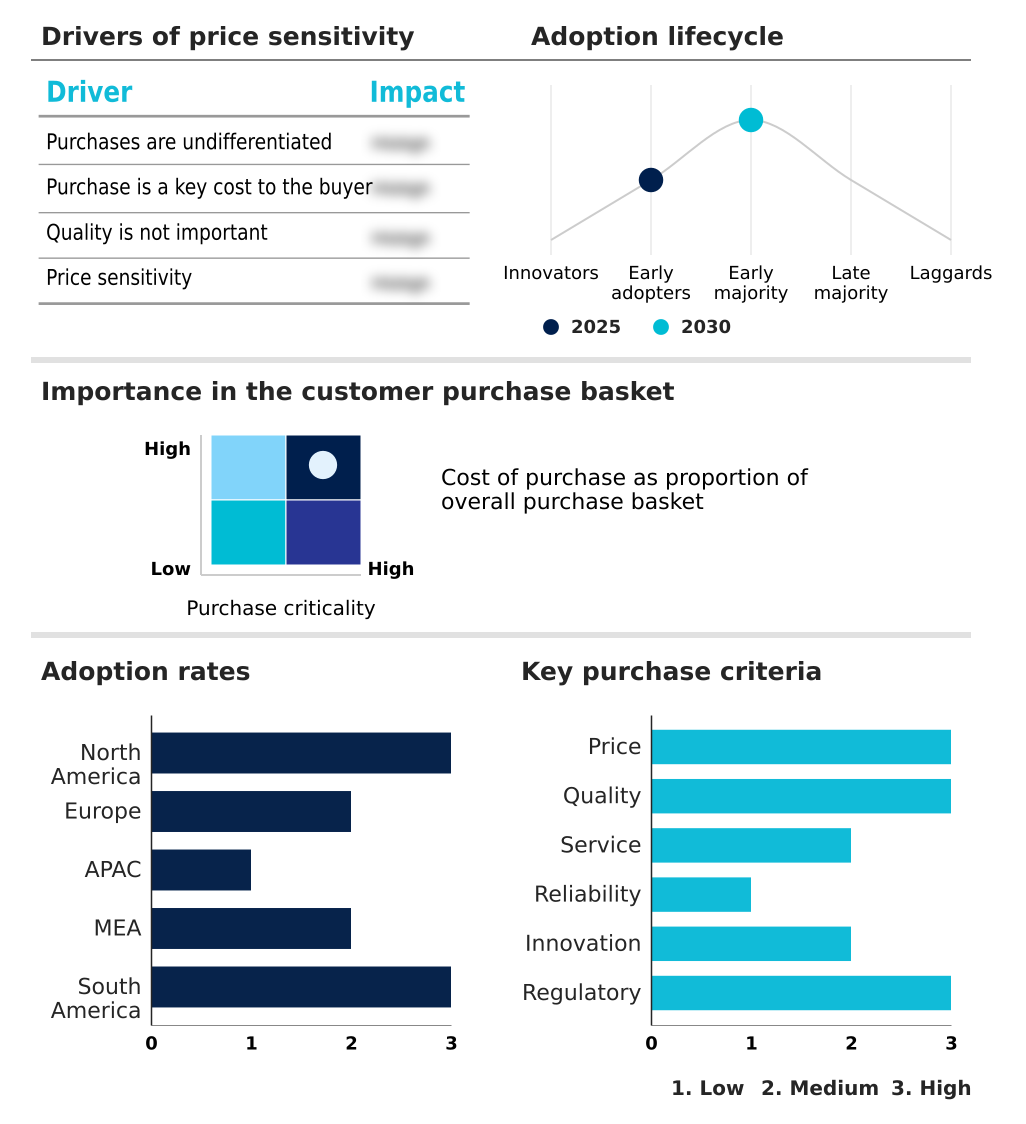
The grid-interactive building solutions market forecasting report includes the adoption lifecycle of the market, covering from the innovator’s stage to the laggard’s stage. It focuses on adoption rates in different regions based on penetration. Furthermore, the grid-interactive building solutions market report also includes key purchase criteria and drivers of price sensitivity to help companies evaluate and develop their market growth analysis strategies.
Customer Landscape of Grid-interactive Building Solutions Industry
Competitive Landscape
Companies are implementing various strategies, such as strategic alliances, grid-interactive building solutions market forecast, partnerships, mergers and acquisitions, geographical expansion, and product/service launches, to enhance their presence in the industry.
ABB Ltd. - Key offerings focus on AI-driven energy management platforms, demand response programs, and distributed energy resource aggregation to optimize building-grid interaction and enhance energy efficiency.
The industry research and growth report includes detailed analyses of the competitive landscape of the market and information about key companies, including:
- ABB Ltd.
- C3.ai Inc.
- Cisco Systems Inc.
- CPower Energy Management
- Eaton Corp. Plc
- Energy Deferral Operations
- Enel X Italia S.r.l.
- GridPoint Inc.
- Honeywell International Inc.
- IBM Corp.
- Johnson Controls International
- Leapfrog Power Inc.
- Legrand SA
- Logical Buildings
- Natures Rapture
- Schneider Electric SE
- Siemens AG
- Slipstream Group Inc.
- Trane Technologies plc
- Virtual Peaker
Qualitative and quantitative analysis of companies has been conducted to help clients understand the wider business environment as well as the strengths and weaknesses of key industry players. Data is qualitatively analyzed to categorize companies as pure play, category-focused, industry-focused, and diversified; it is quantitatively analyzed to categorize companies as dominant, leading, strong, tentative, and weak.
Recent Development and News in Grid-interactive building solutions market
- In May, 2025, Edo launched a significant grid-interactive efficient buildings demonstration project in New York, deploying specialized gateway hardware and AI-driven analytics across commercial structures to deliver flexible capacity and reduce strain on local utility substations.
- In March, 2025, Johnson Controls enhanced its OpenBlue platform by deploying agentic artificial intelligence, enabling buildings to autonomously manage demand flexibility and transition from static operational insights to integrated decarbonization strategies.
- In January, 2025, Siemens unveiled its Digital Twin Composer software, integrating comprehensive digital twin technology with real-time engineering data to allow facility operators to virtually simulate and validate investments in grid-interactive infrastructure.
- In November, 2024, the Forum of Regulators in India introduced the Model Regulations for Grid Interactive Distributed Renewable Energy Sources, establishing a national framework for the interconnection of distributed renewable systems and mandating hybrid inverters for prosumers.
Dive into Technavio’s robust research methodology, blending expert interviews, extensive data synthesis, and validated models for unparalleled Grid-interactive Building Solutions Market insights. See full methodology.
| Market Scope | |
|---|---|
| Page number | 307 |
| Base year | 2025 |
| Historic period | 2020-2024 |
| Forecast period | 2026-2030 |
| Growth momentum & CAGR | Accelerate at a CAGR of 19.8% |
| Market growth 2026-2030 | USD 27094.2 million |
| Market structure | Fragmented |
| YoY growth 2025-2026(%) | 19.4% |
| Key countries | US, Canada, Mexico, Germany, UK, France, Italy, Spain, The Netherlands, China, Japan, South Korea, Australia, India, Singapore, Saudi Arabia, UAE, South Africa, Qatar, Egypt, Brazil, Argentina and Colombia |
| Competitive landscape | Leading Companies, Market Positioning of Companies, Competitive Strategies, and Industry Risks |
Research Analyst Overview
- The global grid-interactive building solutions market 2026-2030 is undergoing a structural shift from static consumption to dynamic energy partnership, driven by the need for grid resilience. This evolution centers on deploying smart grid integration technologies that enable bidirectional communication, transforming buildings into flexible assets.
- Core technologies include building energy management systems and energy storage systems that facilitate demand-side management practices like load shedding and load shifting. The adoption of building automation systems that provide grid services, such as frequency regulation and ancillary services, is becoming standard.
- For boardroom decisions, the key is leveraging predictive analytics for real-time load-shifting and participating in automated demand response programs. This strategy, which relies on robust microgrid capabilities and vehicle-to-grid technology, has been shown to improve asset utilization by over 27%.
- The market's maturation reflects a move toward intelligent infrastructures that offer energy flexibility, support peak demand reduction, and enable participation in virtual power plant networks.
What are the Key Data Covered in this Grid-interactive Building Solutions Market Research and Growth Report?
-
What is the expected growth of the Grid-interactive Building Solutions Market between 2026 and 2030?
-
USD 27.09 billion, at a CAGR of 19.8%
-
-
What segmentation does the market report cover?
-
The report is segmented by Component (Hardware, Software, and Services), Type (Commercial buildings, Residential buildings, and Industrial buildings), Application (Energy efficiency and optimization, Demand flexibility, Demand response and peak shaving, and Others) and Geography (North America, Europe, APAC, Middle East and Africa, South America)
-
-
Which regions are analyzed in the report?
-
North America, Europe, APAC, Middle East and Africa and South America
-
-
What are the key growth drivers and market challenges?
-
Global mandates for decarbonization and energy efficiency standards, Interoperability and standardization barriers across legacy infrastructure
-
-
Who are the major players in the Grid-interactive Building Solutions Market?
-
ABB Ltd., C3.ai Inc., Cisco Systems Inc., CPower Energy Management, Eaton Corp. Plc, Energy Deferral Operations, Enel X Italia S.r.l., GridPoint Inc., Honeywell International Inc., IBM Corp., Johnson Controls International, Leapfrog Power Inc., Legrand SA, Logical Buildings, Natures Rapture, Schneider Electric SE, Siemens AG, Slipstream Group Inc., Trane Technologies plc and Virtual Peaker
-
Market Research Insights
- The market dynamics are shifting toward intelligent, self-optimizing infrastructures that prioritize long-term resilience and operational efficiency. The adoption of proactive load management strategies through agentic artificial intelligence has enabled some facilities to reduce peak demand charges by over 30%. This dynamic energy partnership between buildings and utilities is facilitated by decentralized energy networks and intelligent building infrastructure.
- The move toward autonomous energy management is evident, as systems that utilize digital twin simulation for validation show a 19.4% improvement in forecast accuracy compared to traditional models. This transition is essential for managing the complexity inherent in modern, multi-source energy environments.
We can help! Our analysts can customize this grid-interactive building solutions market research report to meet your requirements.
 RIA -
RIA -