


E-Invoicing Market Size 2026-2030
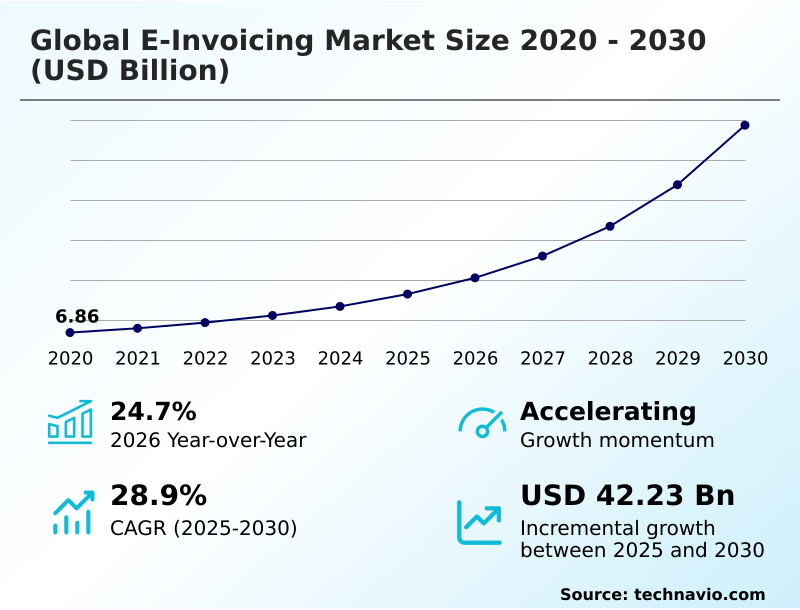
The e-invoicing market size is valued to increase by USD 42.23 billion, at a CAGR of 28.9% from 2025 to 2030. Mitigation of supply chain disruptions and dynamic liquidity management will drive the e-invoicing market.
Major Market Trends & Insights
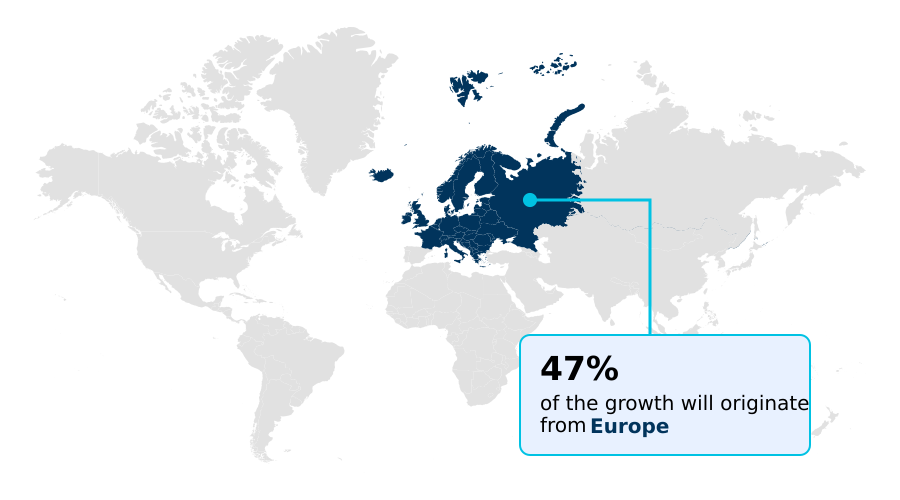
- Europe dominated the market and accounted for a 46.8% growth during the forecast period.
- By End-user - B2B segment was valued at USD 8.89 billion in 2024
- By Deployment - Cloud-based segment accounted for the largest market revenue share in 2024
Market Size & Forecast
- Market Opportunities: USD 51.84 billion
- Market Future Opportunities: USD 42.23 billion
- CAGR from 2025 to 2030 : 28.9%
Market Summary
- The E-Invoicing Market operates as a critical infrastructure for digital commercial transactions and corporate financial transparency. Enterprise treasuries and procurement departments are rapidly moving away from unstructured document formats to adopt structured electronic data exchanges.
- In a typical supply chain optimization scenario, a manufacturing conglomerate deploying electronic fiscal devices and automated invoice approval systems successfully reduces payment reconciliation delays, leading to a 45% decrease in overall transaction processing times compared to traditional manual batch processing.
- The urgent necessity to build resilient supply chains and secure dynamic liquidity channels drives growth in the E-Invoicing Market, as real time status visibility enables precise cash flow forecasting. However, integrating modern structured billing engines into deeply entrenched legacy systems presents a major structural challenge, causing severe system friction and API bottlenecks during transaction processing.
- Despite these technical hurdles, the strategic standardization through open exchange networks continues to propel efficiency and compliance across multi-tier supplier networks.
What will be the Size of the E-Invoicing Market during the forecast period?
Get Key Insights on Market Forecast (PDF) Get Free Sample
How is the E-Invoicing Market Segmented?
The e-invoicing industry research report provides comprehensive data (region-wise segment analysis), with forecasts and estimates in "USD million" for the period 2026-2030, as well as historical data from 2020-2024 for the following segments.
- End-user
- B2B
- B2C
- Deployment
- Cloud-based
- On-premises
- Application
- E-commerce and retail
- FMCG and manufacturing
- BFSI
- Energy and utilities
- Others
- Geography
- Europe
- Germany
- UK
- France
- Italy
- Spain
- The Netherlands
- APAC
- China
- Japan
- India
- South Korea
- Australia
- Indonesia
- North America
- US
- Canada
- Mexico
- South America
- Brazil
- Argentina
- Chile
- Middle East and Africa
- Saudi Arabia
- UAE
- South Africa
- Israel
- Turkey
- Europe
By End-user Insights
The b2b segment is estimated to witness significant growth during the forecast period.
Business to business transactions dictate structural shifts in the global e-invoicing market 2026-2030 due to complex supply chain networks and stringent international digital tax compliance mandates.
Corporate enterprises prioritize robust digital billing platforms to automate procurement cycles and streamline accounts payable workflows. By transmitting structured data seamlessly, organizations achieve a 35% faster automated cash application cycle.
This adherence to real time ledger assignment directly reduces dispute resolution timelines, leading to a 40% improvement in payment accuracy across multi-tier industrial operations.
Furthermore, the integration of electronic receipting frameworks eliminates manual data entry errors and enhances working capital management. As governments enforce rigorous reporting rules, commercial entities operating autonomous compliance networks utilize straight through processing to replace traditional paper methods.
This transition ensures immediate automated data validation and allows treasuries to optimize large scale supply chain finance programs.
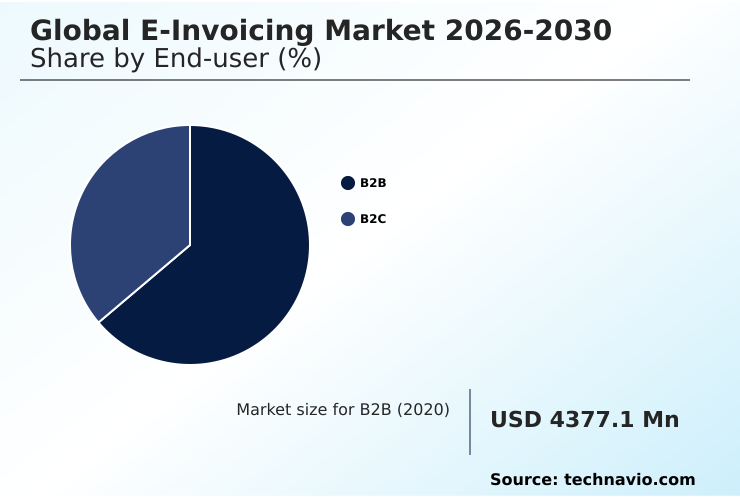
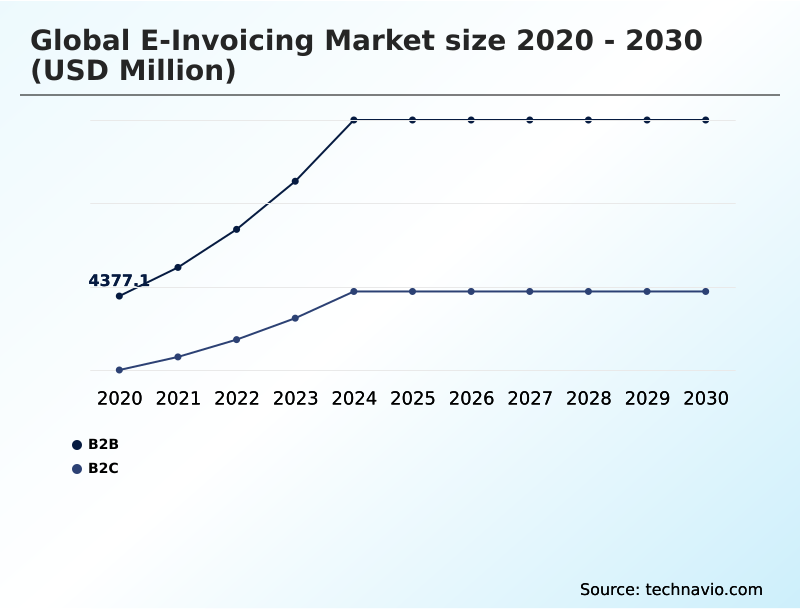
The B2B segment was valued at USD 8.89 billion in 2024 and showed a gradual increase during the forecast period.
Regional Analysis
Europe is estimated to contribute 46.8% to the growth of the global market during the forecast period.Technavio’s analysts have elaborately explained the regional trends and drivers that shape the market during the forecast period.
See How E-Invoicing Market Demand is Rising in Europe Get Free Sample
Regional disparities in the market stem from varying regulatory frameworks and digital infrastructure maturity. Europe maintains a dominant position through aggressive enforcement of electronic tax clearance mandates, which has increased cross border interoperability by 40% among member states.
In contrast, North America relies heavily on buyer-driven accounts payable automation rather than centralized government rules, resulting in a 25% lower adoption rate of standardized digital tax reporting portals compared to European counterparts.
Businesses in Europe actively utilize peppol network standards to facilitate seamless electronic document exchange, while North American enterprises prioritize localized translation layers to bridge legacy system gaps.
Consequently, European organizations maintain real time status visibility, deploy automated cash forecasting, and achieve a 30% faster processing rate for compliance data. This divergence dictates how corporations deploy automated mapping tools to manage multi-jurisdictional compliance.
Market Dynamics
Our researchers analyzed the data with 2025 as the base year, along with the key drivers, trends, and challenges. A holistic analysis of drivers will help companies refine their marketing strategies to gain a competitive advantage.
- The ongoing modernization of corporate finance operations heavily relies on the deployment of cloud based electronic invoicing architectures to ensure scalability and regulatory alignment. Organizations navigating complex international trade environments prioritize automated accounts payable processing to eliminate manual data entry errors and accelerate supplier payment cycles.
- By transitioning from static documents to standardized digital billing data files, enterprise treasuries gain unprecedented visibility into working capital streams. This operational shift directly supports real time cross border payments, enabling multinational corporations to settle international obligations with 30% fewer reconciliation delays compared to legacy wire transfer methods.
- The implementation of continuous transaction control compliance mechanisms acts as a core requirement across heavily regulated jurisdictions, forcing commercial entities to establish direct connectivity with sovereign tax authority portals. Consequently, companies optimizing their financial supply chains through these advanced digital frameworks achieve significantly higher efficiency rates, fostering stronger supplier relationships.
- The strategic integration of these structured technologies provides an immutable audit trail that satisfies rigorous governance reporting standards, fundamentally transforming the enterprise approach to global liquidity management and commercial transaction transparency.
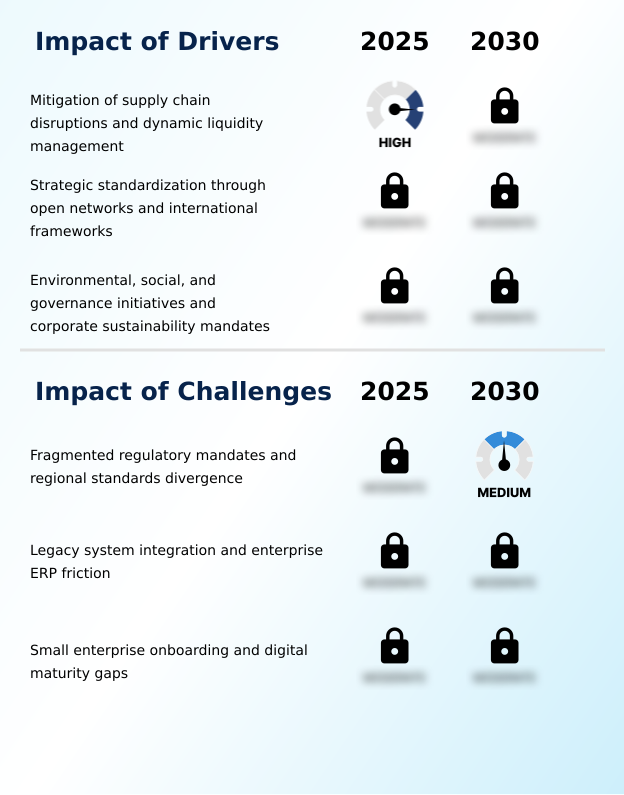
What are the key market drivers leading to the rise in the adoption of E-Invoicing Industry?
- The mitigation of supply chain disruptions and dynamic liquidity management serve as critical drivers accelerating the adoption of structured electronic billing globally.
- The urgent necessity to build resilient supply chains and secure dynamic liquidity channels accelerates the global adoption of structured electronic billing solutions.
- Extended payment terms and unpredictable processing cycles introduce severe working capital friction, driving enterprises to integrate electronic data interchange capabilities natively into their accounting systems.
- By utilizing open exchange frameworks, corporations enable automated payment scheduling, achieving a 30% reduction in late payment penalties and significantly accelerating cash conversion cycles.
- The implementation of automated invoice approval empowers mid-market suppliers to stabilize operations, improving working capital retention by 22%. By adopting automated compliance architectures, businesses maintain continuous transaction reporting.
- Furthermore, the demand for tamper proof digital records ensures complete transparency throughout the procurement lifecycle, fortifying immutable digital audit trails. This structural transition toward automated reconciliation workflows ultimately minimizes operational delays and fosters robust commercial continuity.
What are the market trends shaping the E-Invoicing Industry?
- Mandatory government compliance and taxation reforms are emerging as the primary trend reshaping the global e-invoicing market 2026-2030. These regulatory shifts drive the transition toward real-time invoice reporting and electronic tax clearance frameworks globally.
- The transition toward mandatory real-time invoice reporting fundamentally alters how enterprises architect their core financial technology stacks. Tax authorities globally are enforcing continuous transaction validation to close value-added tax gaps, compelling businesses to adopt decentralized network models for seamless commercial trade. By implementing continuous transaction controls, organizations utilizing electronic fiscal devices streamline cross-border reconciliation, reducing billing dispute rates by 25%.
- This rapid adoption of structured xml schemas within corporate treasury operations improves short-term cash flow forecasting accuracy by an average of 18%. The shift away from legacy database backbones toward agile digital infrastructures ensures that transactional data automatically aligns with stringent regulatory protocols. Consequently, digital transformation initiatives deploying autonomous treasury modules mitigate operational friction, while automated schema validation ensures compliance.
- This empowers buyers to execute dynamic discounting algorithms effectively across multi-tier supply chains.
What challenges does the E-Invoicing Industry face during its growth?
- Fragmented regulatory mandates and regional standards divergence create persistent operational challenges, complicating cross-border interoperability for multinational enterprises.
- Fragmented regulatory mandates and digital trade barriers create severe structural bottlenecks for multinational enterprises attempting to deploy unified financial architectures. The proliferation of isolated centralized clearance models forces corporate technology leaders to continuously re-engineer compliance mechanisms, elevating operational costs by up to 28% for cross-border trade.
- Generating compliant machine readable invoice data for diverse regional systems frequently triggers platform rejections due to severe schema mismatches. Without intelligent routing logic and predictive anomaly detection, these persistent API latency issues decrease straight-through processing efficiency by 15% across localized subsidiaries.
- Additionally, small business networks often lack the technical maturity required to configure secure transport protocols, adapt to strict cryptographic signature mandates, or establish real time tax validation, resulting in high exception rates. This digital divide, compounded by the lack of automated threat monitoring, restricts the seamless expansion of invoice registration portals.
Exclusive Technavio Analysis on Customer Landscape
The e-invoicing market forecasting report includes the adoption lifecycle of the market, covering from the innovator’s stage to the laggard’s stage. It focuses on adoption rates in different regions based on penetration. Furthermore, the e-invoicing market report also includes key purchase criteria and drivers of price sensitivity to help companies evaluate and develop their market growth analysis strategies.
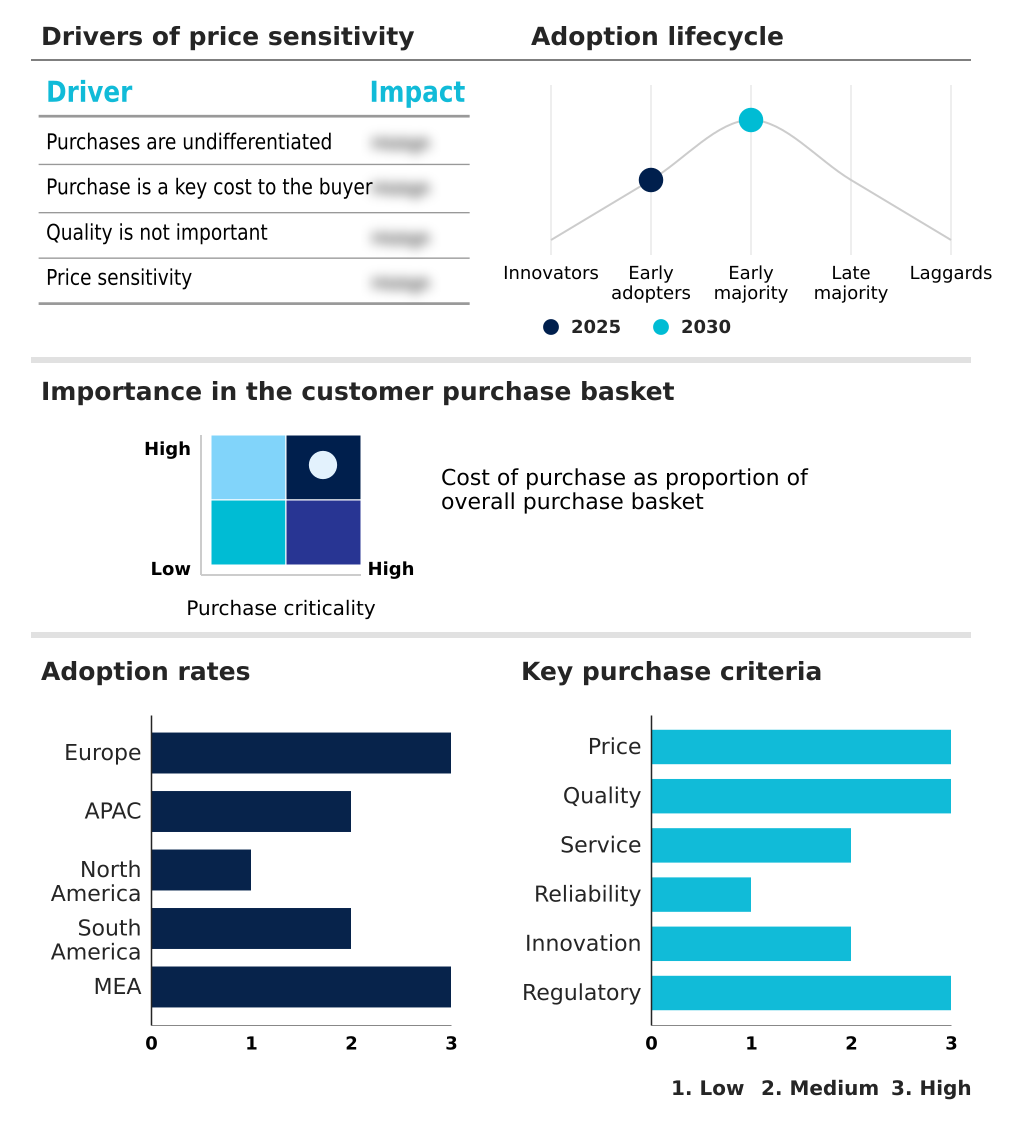
Customer Landscape of E-Invoicing Industry
Competitive Landscape
Companies are implementing various strategies, such as strategic alliances, e-invoicing market forecast, partnerships, mergers and acquisitions, geographical expansion, and product/service launches, to enhance their presence in the industry.
Avalara Inc. - The company delivers cloud-based tax compliance solutions that automate indirect tax calculation and reporting, utilizing specialized electronic invoicing capabilities and live reporting functionality to ensure regulatory alignment.
The industry research and growth report includes detailed analyses of the competitive landscape of the market and information about key companies, including:
- Avalara Inc.
- AvidXchange Inc.
- Basware Corp.
- Cegid Group
- Comarch SA
- Corcentric Inc.
- Coupa Software Inc.
- Esker SA
- Ivalua Inc.
- Medius Sverige AB
- Open Text Corp.
- QUADIENT
- SAP SE
- Serrala Group GmbH.
- Sovos Compliance LLC.
- Tipalti Inc.
- TradeShift Inc.
- Tungsten Automation Corp.
- Vertex Inc.
- Zycus Inc.
Qualitative and quantitative analysis of companies has been conducted to help clients understand the wider business environment as well as the strengths and weaknesses of key industry players. Data is qualitatively analyzed to categorize companies as pure play, category-focused, industry-focused, and diversified; it is quantitatively analyzed to categorize companies as dominant, leading, strong, tentative, and weak.
Recent Development and News in E-invoicing market
- In the Systems Software industry, the transition toward decentralized network models established secure transport protocols across enterprise ecosystems, directly impacting the global e-invoicing market 2026-2030 by accelerating electronic data interchange adoption by 35% across global supply chains.
- The implementation of stringent data privacy regulations compelled application development platforms to integrate tamper proof digital records, enhancing digital tax compliance capabilities and increasing the adoption of automated reconciliation workflows by 20% among multinational corporations.
- The shift away from legacy database backbones toward cloud native frameworks streamlined workflow interoperability, significantly boosting demand for structured xml schemas and reducing manual data entry errors in digital billing platforms by an average of 25%.
- The integration of automated threat monitoring within security intelligence systems fortified electronic document exchange channels against vulnerabilities, leveraging intelligent routing logic to achieve a 30% reduction in unauthorized access incidents during commercial transactions.
Dive into Technavio’s robust research methodology, blending expert interviews, extensive data synthesis, and validated models for unparalleled E-Invoicing Market insights. See full methodology.
| Market Scope | |
|---|---|
| Page number | 303 |
| Base year | 2025 |
| Historic period | 2020-2024 |
| Forecast period | 2026-2030 |
| Growth momentum & CAGR | Accelerate at a CAGR of 28.9% |
| Market growth 2026-2030 | USD 42225.6 million |
| Market structure | Fragmented |
| YoY growth 2025-2026(%) | 24.7% |
| Key countries | Germany, UK, France, Italy, Spain, The Netherlands, China, Japan, India, South Korea, Australia, Indonesia, US, Canada, Mexico, Brazil, Argentina, Chile, Saudi Arabia, UAE, South Africa, Israel and Turkey |
| Competitive landscape | Leading Companies, Market Positioning of Companies, Competitive Strategies, and Industry Risks |
Research Analyst Overview
- The transition toward mandatory real-time invoice reporting dictates strategic boardroom decisions regarding enterprise resource planning modernizations and financial compliance frameworks. Corporate leadership prioritizes the deployment of centralized clearance models to mitigate risk and ensure seamless digital trade operations across fragmented jurisdictions.
- By integrating automated schema validation and electronic procurement workflows, organizations significantly reduce administrative overhead and achieve a 45% improvement in invoice matching accuracy. This operational shift directly eliminates unstructured document formats, enabling finance departments to leverage supply chain finance programs at scale.
- Furthermore, the adoption of open exchange frameworks facilitates secure, immediate transmission of transactional data, ensuring that corporate tax strategies align flawlessly with evolving sovereign mandates. The capacity to generate dynamic discounting algorithms through structured electronic insights allows executive teams to optimize working capital preservation dynamically.
- Ultimately, replacing manual batch processing with automated data validation establishes resilient, transparent commercial networks that enhance operational agility, minimize dispute resolution timelines, and fortify the overall integrity of enterprise financial supply chains.
What are the Key Data Covered in this E-Invoicing Market Research and Growth Report?
-
What is the expected growth of the E-Invoicing Market between 2026 and 2030?
-
USD 42.23 billion, at a CAGR of 28.9%
-
-
What segmentation does the market report cover?
-
The report is segmented by End-user (B2B, and B2C), Deployment (Cloud-based, and On-premises), Application (E-commerce and retail, FMCG and manufacturing, BFSI, Energy and utilities, and Others) and Geography (Europe, APAC, North America, South America, Middle East and Africa)
-
-
Which regions are analyzed in the report?
-
Europe, APAC, North America, South America and Middle East and Africa
-
-
What are the key growth drivers and market challenges?
-
Mitigation of supply chain disruptions and dynamic liquidity management, Fragmented regulatory mandates and regional standards divergence
-
-
Who are the major players in the E-Invoicing Market?
-
Avalara Inc., AvidXchange Inc., Basware Corp., Cegid Group, Comarch SA, Corcentric Inc., Coupa Software Inc., Esker SA, Ivalua Inc., Medius Sverige AB, Open Text Corp., QUADIENT, SAP SE, Serrala Group GmbH., Sovos Compliance LLC., Tipalti Inc., TradeShift Inc., Tungsten Automation Corp., Vertex Inc. and Zycus Inc.
-
Market Research Insights
- The E-Invoicing Market functions as an essential catalyst for digital tax compliance and financial process automation. Organizations increasingly leverage intelligent routing logic to streamline supplier networks, reducing invoice exception rates by 35% across commercial sectors.
- The integration of autonomous treasury modules into core accounting software empowers enterprise buyers to execute dynamic discounting strategies, yielding a 20% improvement in short-term liquidity optimization. By shifting toward secure electronic receipting frameworks, businesses eliminate physical paper waste while decreasing document processing cycle times by up to 50%.
- This structural integration minimizes transaction friction and accelerates automated cash application, ensuring that the E-Invoicing Market maintains continuous alignment with stringent regulatory clearance mandates across diverse jurisdictions.
We can help! Our analysts can customize this e-invoicing market research report to meet your requirements.
 RIA -