

Craft Beer Market Size 2026-2030
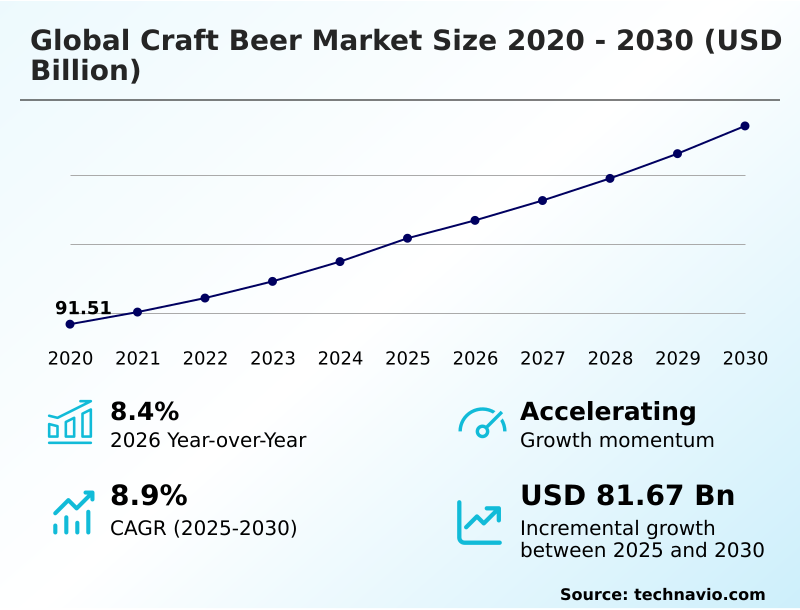
The craft beer market size is valued to increase by USD 81.67 billion, at a CAGR of 8.9% from 2025 to 2030. Growth of brewery tourism and experiential consumption will drive the craft beer market.
Major Market Trends & Insights
- North America dominated the market and accounted for a 39.1% growth during the forecast period.
- By Product - India pale ale segment was valued at USD 44.26 billion in 2024
- By Distribution Channel - Off-trade segment accounted for the largest market revenue share in 2024
Market Size & Forecast
- Market Opportunities: USD 144.18 billion
- Market Future Opportunities: USD 81.67 billion
- CAGR from 2025 to 2030 : 8.9%
Market Summary
- The Craft Beer Market continues to expand as consumer preferences shift toward premium, highly differentiated beverage experiences. Product innovation and authentic brewing craftsmanship remain central to this evolution. In the Brewers industry, supply chain optimization has become critical; for instance, modernizing raw material procurement processes has improved inventory turnaround times by 18% for independent producers.
- A primary driver propelling this market is the expansion of experiential beverage consumption through taprooms and brewery tours, which directly increases brand loyalty and off-trade sales volumes. Conversely, high production and operating costs present a significant challenge, as the reliance on specialty ingredients and small-batch production limits economies of scale.
- The adoption of efficient brewing capacity optimization strategies allows operators to mitigate these constraints while maintaining product quality. Furthermore, the rising demand for diverse flavor profiles continually pushes breweries to refine their mixed fermentation methods.
- This sustained focus on quality and innovation ensures that the Craft Beer landscape remains robust, despite intense competition from commercial beverage manufacturers and alternative alcohol categories.
What will be the Size of the Craft Beer Market during the forecast period?
Get Key Insights on Market Forecast (PDF) Get Free Sample
How is the Craft Beer Market Segmented?
The craft beer industry research report provides comprehensive data (region-wise segment analysis), with forecasts and estimates in "USD million" for the period 2026-2030, as well as historical data from 2020-2024 for the following segments.
- Product
- India pale ale
- Seasonal craft beer
- Pale ale
- Amber ale
- Others
- Distribution channel
- Off-trade
- On-trade
- Packaging
- Cans
- Bottles
- Kegs
- Geography
- North America
- US
- Canada
- Mexico
- Europe
- Germany
- UK
- France
- Spain
- Italy
- Belgium
- APAC
- China
- Japan
- Australia
- South Korea
- India
- New Zealand
- South America
- Brazil
- Argentina
- Chile
- Middle East and Africa
- South Africa
- Nigeria
- Egypt
- Kenya
- Ethiopia
- North America
By Product Insights
The india pale ale segment is estimated to witness significant growth during the forecast period.
The India pale ale segment continuously drives commercial viability through intense hop-forward formulations and advanced microbrewing techniques, setting it apart from traditional lagers.
Because this segment thrives on continuous product diversification, breweries leverage it to test new dry hopping techniques and specialty malt varieties. The evolving nature of Craft Beer requires continuous refinement to maintain market relevance.
Operationally, standardizing these complex flavor profiles has led to a 15% improvement in fermentation consistency across production cycles.
While pale ales offer broad approachability, India pale ales command stronger consumer loyalty and repeat purchasing behavior within off-trade distribution channels, fundamentally altering how beverage portfolios are managed on a commercial scale.
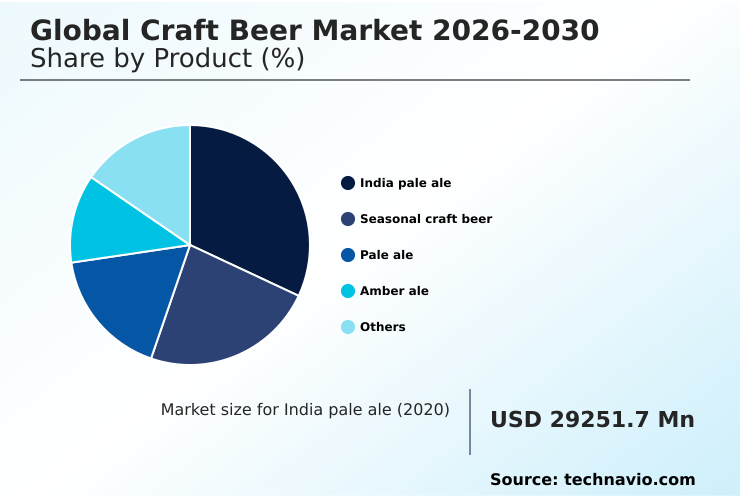
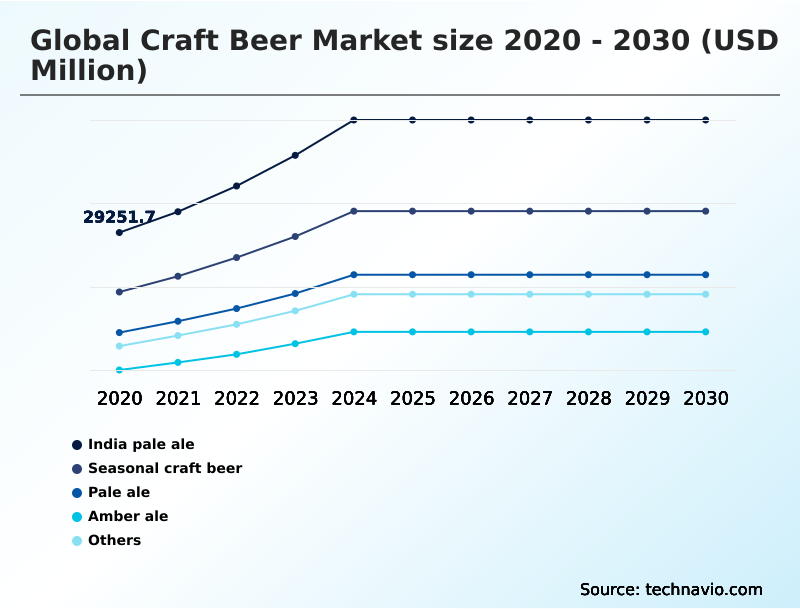
The India pale ale segment was valued at USD 44.26 billion in 2024 and showed a gradual increase during the forecast period.
Regional Analysis
North America is estimated to contribute 39.1% to the growth of the global market during the forecast period.Technavio’s analysts have elaborately explained the regional trends and drivers that shape the market during the forecast period.
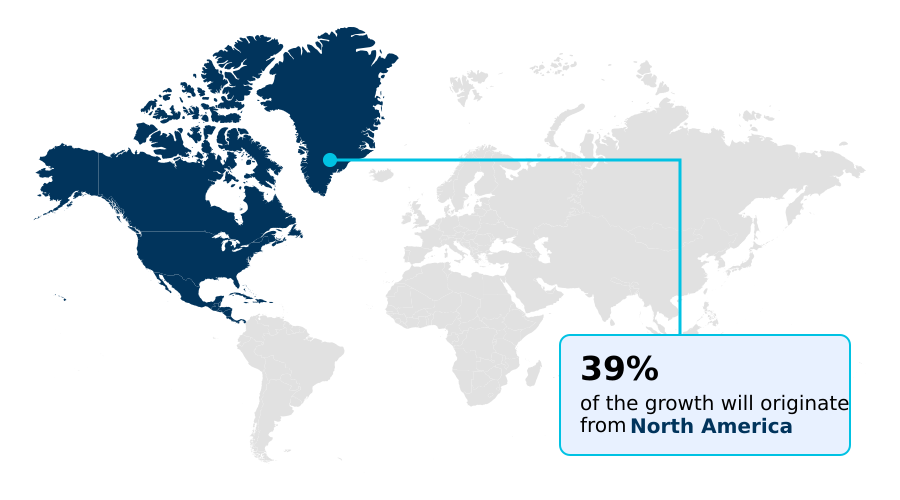
See How Craft Beer Market Demand is Rising in North America Get Free Sample
The geographic landscape of the Craft Beer market demonstrates significant variations in consumer adoption and supply chain maturity.
North America leads the transition with an advanced network of brewery taproom operations, achieving a 25% higher market penetration rate compared to Europe. This discrepancy stems from consumers heavily favoring limited-release product portfolios and direct-to-consumer digital channels, which streamline distribution.
In contrast, European businesses emphasize traditional brewing heritage and on-trade hospitality networks, leading to a 15% reduction in outbound logistics costs due to localized consumption models.
As independent brewery scaling continues, companies in both regions are adopting sustainable packaging materials to align with stricter environmental compliances, yielding a 10% improvement in overall packaging efficiency.
These structural differences require producers to adapt their strategies, ensuring that operations match localized demand.
Market Dynamics
Our researchers analyzed the data with 2025 as the base year, along with the key drivers, trends, and challenges. A holistic analysis of drivers will help companies refine their marketing strategies to gain a competitive advantage.
- The evolution of the Craft Beer market is heavily influenced by the adoption of highly specialized operational practices designed to elevate product quality and meet shifting consumer demands. A critical focus for modern breweries is the refinement of small-batch artisanal brewing processes, which enable greater flexibility in recipe development and facilitate rapid response to changing market preferences.
- By optimizing these localized production runs, operators frequently achieve a 20% reduction in raw material waste compared to high-volume commercial manufacturing lines, directly improving supply chain sustainability and margin retention. Furthermore, the expansion of premium barrel-aged beer production requires meticulous inventory planning and temperature-controlled storage compliance, presenting unique logistical challenges but yielding highly differentiated products that command premium pricing.
- Simultaneously, shifting health trends have accelerated the demand for advanced dealcoholization for craft beer. Facilities implementing these sophisticated separation systems can remove alcohol while preserving delicate aromatic compounds, satisfying regulatory compliance and expanding market reach. To maintain characteristic bitterness and aroma, brewers are continually enhancing their hop-forward craft beer formulation strategies.
- This intricate balance of ingredient selection and precise extraction timing ensures that sensory profiles remain consistent, regardless of scale or alcohol content. Ultimately, these targeted business functions allow independent producers to remain competitive, optimize their operational footprints, and deliver the innovative experiences that modern beverage consumers expect.
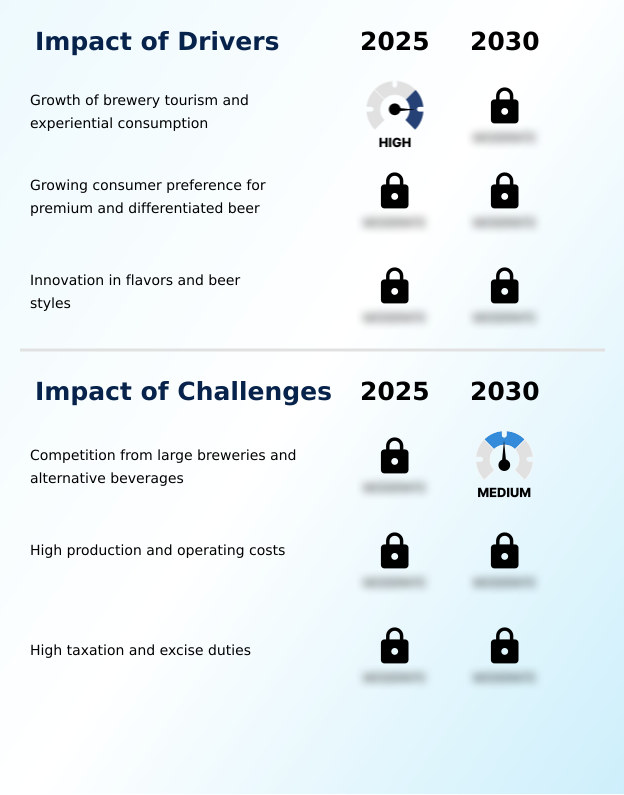
What are the key market drivers leading to the rise in the adoption of Craft Beer Industry?
- The expansion of brewery tourism and experiential consumption serves as a primary catalyst for market growth.
- Growing consumer appetite for highly differentiated beverages serves as the primary catalyst propelling the Craft Beer sector. Because modern consumers actively seek novelty, producers are accelerating the rollout of limited-release product portfolios and unique fruit-infused ale brewing techniques.
- This strategic pivot toward exclusivity drives urgency, resulting in a 20% improvement in inventory sell-through rates during seasonal launches. Furthermore, the strategic integration of local ingredient sourcing allows breweries to mitigate global supply chain disruptions while enhancing product narratives.
- By utilizing regional agricultural inputs, operators have successfully reduced inbound transportation logistics costs by 14%. To capitalize on these formulations, companies are aggressively expanding craft beer retail visibility to secure optimal shelf placement.
- This heightened focus on flavor-led beer extensions directly increases commercial resilience and broadens the consumer base.
What are the market trends shaping the Craft Beer Industry?
- The rising adoption of alcohol-free and low-alcohol craft beers represents a significant upcoming market trend. This shift reflects growing consumer preference for moderation without sacrificing premium taste experiences.
- The Craft Beer sector is experiencing a rapid shift toward non-alcoholic alternatives and curated hospitality models. This evolution is primarily driven by changing demographic preferences prioritizing health, wellness, and experiential beverage consumption. Consequently, breweries are investing heavily in dealcoholization systems, which have successfully improved flavor retention rates by 18% during the extraction process.
- By maintaining authentic craft beer sensory profiles, businesses can capture new consumer segments without alienating traditional buyers. Simultaneously, the expansion of brewery event engagement models allows producers to bypass crowded retail shelves, yielding a 25% increase in direct consumer sales margins.
- To support these diverse offerings, operators are expanding their use of contract brewing services, thereby reducing capital expenditure requirements by 15%. This structural pivot toward wellness and experiential retail enables independent brands to strengthen customer loyalty and secure sustainable revenue streams.
What challenges does the Craft Beer Industry face during its growth?
- Intense competition from large-scale commercial breweries and alternative beverage categories presents a major challenge to industry expansion.
- Operational margin compression and intense commercial rivalry present significant structural limitations within the Craft Beer landscape. Because smaller operators lack massive purchasing power, acquiring specialty malt varieties frequently inflates production overhead. This cost disparity directly impacts profitability, forcing producers to optimize craft brewing infrastructure to survive.
- By implementing rigorous process controls, facilities have successfully lowered overall energy consumption costs by 12%. Additionally, the proliferation of alternative beverages threatens traditional market share, complicating craft beer premiumization strategies. To maintain product integrity, operators must invest heavily in advanced beer preservation characteristics, requiring expensive upgrades to cold-chain logistics.
- These compounding financial pressures have driven a 15% increase in operational consolidation, as businesses seek to pool resources and overcome the immense financial barriers associated with independent brewery scaling.
Exclusive Technavio Analysis on Customer Landscape
The craft beer market forecasting report includes the adoption lifecycle of the market, covering from the innovator’s stage to the laggard’s stage. It focuses on adoption rates in different regions based on penetration. Furthermore, the craft beer market report also includes key purchase criteria and drivers of price sensitivity to help companies evaluate and develop their market growth analysis strategies.
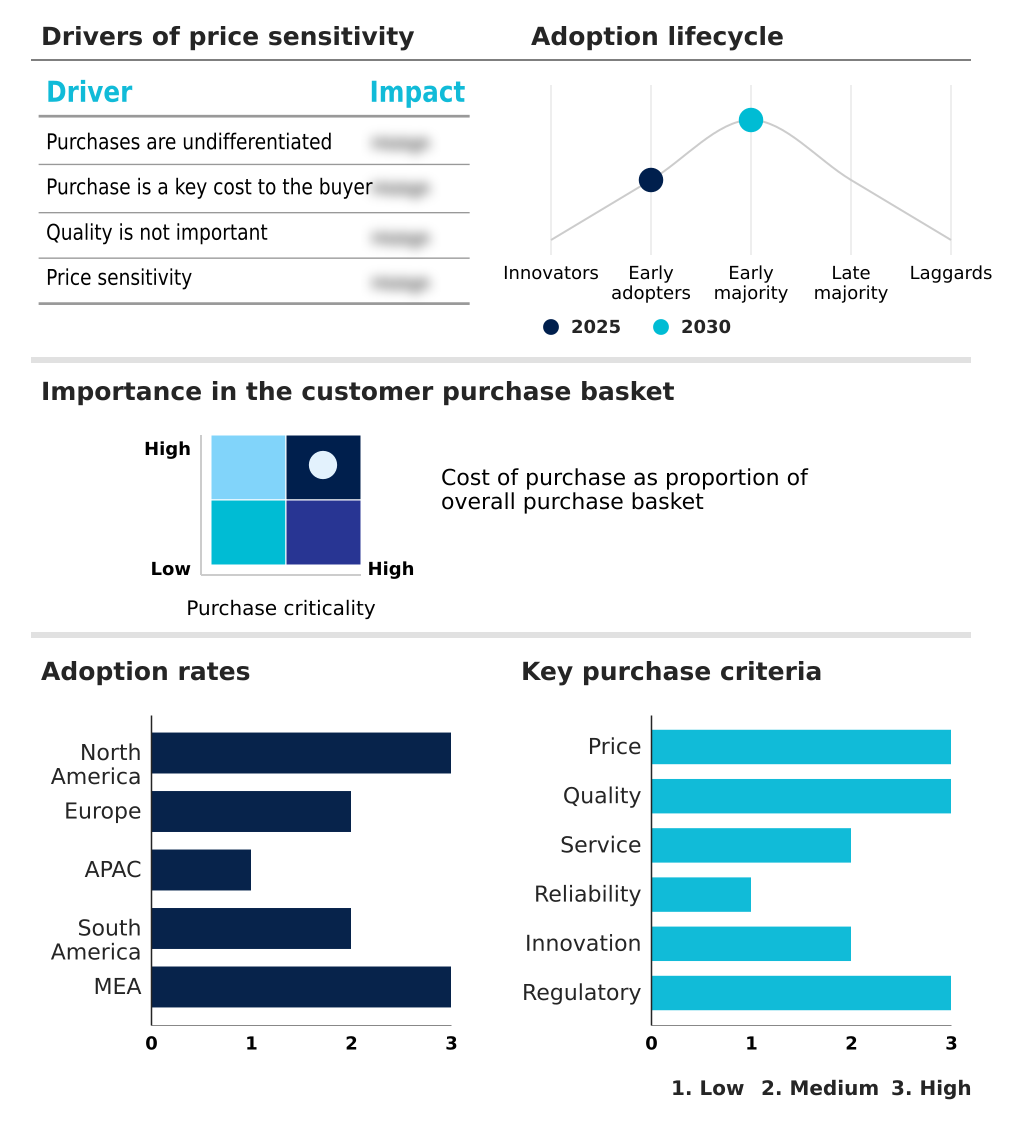
Customer Landscape of Craft Beer Industry
Competitive Landscape
Companies are implementing various strategies, such as strategic alliances, craft beer market forecast, partnerships, mergers and acquisitions, geographical expansion, and product/service launches, to enhance their presence in the industry.
Anheuser Busch InBev SA NV - The portfolio includes premium craft beer selections, featuring distinctive India pale ales and barrel-aged stouts, designed to deliver complex flavor profiles and elevate the consumer tasting experience.
The industry research and growth report includes detailed analyses of the competitive landscape of the market and information about key companies, including:
- Anheuser Busch InBev SA NV
- Asahi Group Holdings Ltd.
- Ballast Point Brewing Co
- Bells Brewery Inc.
- BrewDog Plc
- Carlsberg Breweries AS
- Constellation Brands Inc.
- Deschutes Brewery
- Diageo PLC
- Feral Brewing Co
- Firestone Walker Brewing Co
- Goose Island Beer Co.
- Heineken NV
- Kirin Holdings Co. Ltd.
- New Belgium Brewing Co. Inc.
- Sierra Nevada Brewing Co.
- Stone Brewing Co. LLC
- Suntory Beverage and Food Ltd.
- The Boston Beer Co. Inc.
- The Brooklyn Brewery Corp
Qualitative and quantitative analysis of companies has been conducted to help clients understand the wider business environment as well as the strengths and weaknesses of key industry players. Data is qualitatively analyzed to categorize companies as pure play, category-focused, industry-focused, and diversified; it is quantitatively analyzed to categorize companies as dominant, leading, strong, tentative, and weak.
Recent Development and News in Craft beer market
- In the Brewers industry, the transition toward automated brewing capacity optimization has reduced energy consumption in commercial operations by 12%, directly enabling smaller producers in the Craft Beer market to implement sustainable packaging materials and improve brewery supply chain efficiency.
- Regulatory shifts enforcing stricter craft beer excise taxation frameworks in Europe have increased compliance overhead by 8%, forcing independent entities within the Craft Beer market to accelerate beverage portfolio diversification and expand contract brewing services to maintain profitability.
- The widespread integration of advanced dealcoholization systems has improved flavor retention in non-alcoholic beverages by 20%, significantly altering Craft Beer demand as producers rapidly scale craft beer de-alcoholization capabilities to maintain authentic craft beer sensory profiles for wellness-focused consumers.
- Disruptions in global agricultural supply chains have driven a 15% increase in local ingredient sourcing initiatives, reshaping the Craft Beer landscape as producers increasingly rely on regional flavor profiles and collaborative brewing projects to overcome raw material shortages.
Dive into Technavio’s robust research methodology, blending expert interviews, extensive data synthesis, and validated models for unparalleled Craft Beer Market insights. See full methodology.
| Market Scope | |
|---|---|
| Page number | 305 |
| Base year | 2025 |
| Historic period | 2020-2024 |
| Forecast period | 2026-2030 |
| Growth momentum & CAGR | Accelerate at a CAGR of 8.9% |
| Market growth 2026-2030 | USD 81674.4 million |
| Market structure | Fragmented |
| YoY growth 2025-2026(%) | 8.4% |
| Key countries | US, Canada, Mexico, Germany, UK, France, Spain, Italy, Belgium, China, Japan, Australia, South Korea, India, New Zealand, Brazil, Argentina, Chile, South Africa, Nigeria, Egypt, Kenya and Ethiopia |
| Competitive landscape | Leading Companies, Market Positioning of Companies, Competitive Strategies, and Industry Risks |
Research Analyst Overview
- The Craft Beer landscape is undergoing a structural transformation driven by sophisticated production methodologies and shifting consumer palates. Strategic product development increasingly hinges on the mastery of barrel-aging processes, which command premium positioning but require rigorous capital budgeting and inventory forecasting to manage long maturation cycles.
- Facilities optimizing these cycles through advanced sensory monitoring have achieved a 20% reduction in batch spoilage, directly improving operational yield. Furthermore, the integration of specialized nitro formulations is fundamentally altering mouthfeel expectations, compelling boardrooms to reallocate research budgets toward specialized dispensing infrastructure.
- The implementation of mixed fermentation methods serves as a key differentiator, allowing producers to create complex, high-margin products that resist commoditization. Simultaneously, the refinement of yeast strain selection provides enhanced fermentation stability across fluctuating environmental conditions. To support these innovations, companies are investing in diverse craft beer packaging formats that maximize shelf life and aesthetic appeal.
- As producers scale operations, targeted improvements in brewing capacity optimization remain essential for balancing artisanal quality with commercial viability, ensuring that unique flavor profiles consistently meet stringent quality assurance standards.
What are the Key Data Covered in this Craft Beer Market Research and Growth Report?
-
What is the expected growth of the Craft Beer Market between 2026 and 2030?
-
USD 81.67 billion, at a CAGR of 8.9%
-
-
What segmentation does the market report cover?
-
The report is segmented by Product (India pale ale, Seasonal craft beer, Pale ale, Amber ale, and Others), Distribution Channel (Off-trade, and On-trade), Packaging (Cans, Bottles, and Kegs) and Geography (North America, Europe, APAC, South America, Middle East and Africa)
-
-
Which regions are analyzed in the report?
-
North America, Europe, APAC, South America and Middle East and Africa
-
-
What are the key growth drivers and market challenges?
-
Growth of brewery tourism and experiential consumption, Competition from large breweries and alternative beverages
-
-
Who are the major players in the Craft Beer Market?
-
Anheuser Busch InBev SA NV, Asahi Group Holdings Ltd., Ballast Point Brewing Co, Bells Brewery Inc., BrewDog Plc, Carlsberg Breweries AS, Constellation Brands Inc., Deschutes Brewery, Diageo PLC, Feral Brewing Co, Firestone Walker Brewing Co, Goose Island Beer Co., Heineken NV, Kirin Holdings Co. Ltd., New Belgium Brewing Co. Inc., Sierra Nevada Brewing Co., Stone Brewing Co. LLC, Suntory Beverage and Food Ltd., The Boston Beer Co. Inc. and The Brooklyn Brewery Corp
-
Market Research Insights
- The Craft Beer ecosystem requires agile operational strategies to navigate shifting consumer demands and competitive pressures. By optimizing brewery supply chain efficiency, modern producers have accelerated inventory turnover rates by 22%, significantly reducing raw material holding costs.
- Furthermore, the strategic expansion of direct-to-consumer digital channels has enhanced consumer engagement, resulting in a 30% improvement in customer retention compared to traditional retail models. To mitigate the financial impact of craft beer excise taxation, operators are increasingly leveraging collaborative brewing projects, which optimize shared facility usage and lower overhead expenses by 15%.
- This operational agility, combined with a strong focus on craft beer tourism, enables independent producers to sustain profitability and deliver authentic brand experiences within a highly dynamic beverage landscape.
We can help! Our analysts can customize this craft beer market research report to meet your requirements.
 RIA -