


Cosmetic Skin Care Market Analysis, Size, and Forecast 2026-2030: APAC (China, Japan, and India), Europe (Germany, UK, and France), North America (US, Canada, and Mexico), Middle East and Africa (Saudi Arabia, UAE, and South Africa), South America (Brazil and Argentina), and Rest of World (ROW)

Cosmetic Skin Care Market Analysis, Size, and Forecast 2026-2030:
APAC (China, Japan, and India), Europe (Germany, UK, and France), North America (US, Canada, and Mexico), Middle East and Africa (Saudi Arabia, UAE, and South Africa), South America (Brazil and Argentina), and Rest of World (ROW)

Published: Apr 2026 297 Pages SKU: IRTNTR41578

Market Overview at a Glance

$112.89 B
Market Opportunity
9.7%
CAGR 2025 - 2030
50.3%
APAC Growth
$103.89 B
Face skincare products segment 2024

Cosmetic Skin Care Market Size 2026-2030

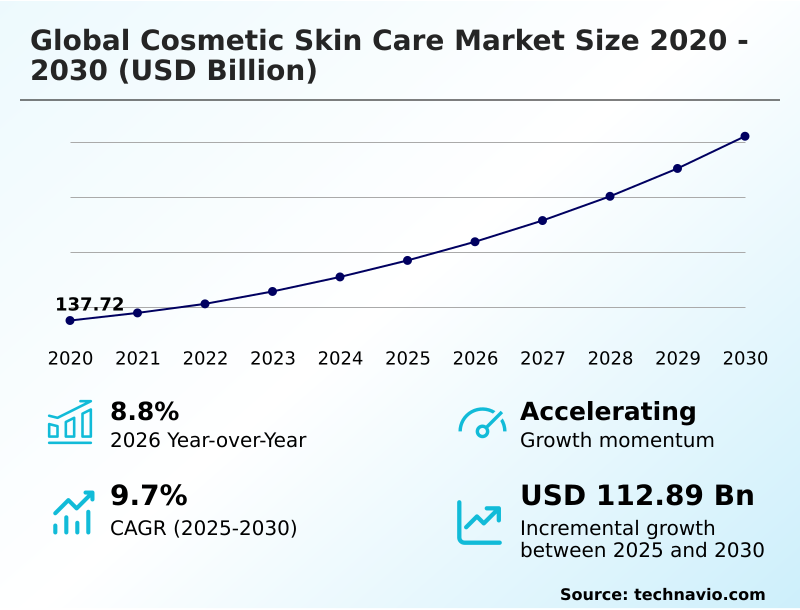
The cosmetic skin care market size is valued to increase by USD 112.89 billion, at a CAGR of 9.7% from 2025 to 2030. Demographic shifts and proliferation of age-defying solutions for aging populations will drive the cosmetic skin care market.

Major Market Trends & Insights

  • APAC dominated the market and accounted for a 50.3% growth during the forecast period.
  • By Product - Face skincare products segment was valued at USD 103.89 billion in 2024
  • By Distribution Channel - Offline segment accounted for the largest market revenue share in 2024

Market Size & Forecast

  • Market Opportunities: USD 167.51 billion
  • Market Future Opportunities: USD 112.89 billion
  • CAGR from 2025 to 2030 : 9.7%

Market Summary

  • The cosmetic skin care market is characterized by a convergence of consumer demand for both efficacy and ethical production. Key drivers include a global aging population seeking preventative care solutions and the digital empowerment of consumers who demand ingredient transparency. This has catalyzed significant investment in biotechnology, leading to the development of high-performance active ingredients and advanced delivery systems.
  • Concurrently, the industry is shaped by the clean beauty movement, which pressures companies to prioritize sustainable ingredient sourcing and eco-friendly packaging. One significant challenge involves navigating the complex and often divergent international regulatory frameworks for product safety and marketing claims.
  • For instance, a company launching a new serum with novel lab-grown ingredients must manage compliance across multiple jurisdictions, a process that can increase time-to-market by up to 20% compared to products with established formulations. This dynamic environment rewards agility and a deep commitment to scientific validation.

What will be the Size of the Cosmetic Skin Care Market during the forecast period?
Get Key Insights on Market Forecast (PDF) Request Free Sample

How is the Cosmetic Skin Care Market Segmented?

The cosmetic skin care industry research report provides comprehensive data (region-wise segment analysis), with forecasts and estimates in "USD million" for the period 2026-2030, as well as historical data from 2020-2024 for the following segments.

  • Product
    • Face skincare products
    • Body skincare products
    • Others
  • Distribution channel
    • Offline
    • Online
  • Price range
    • Mass
    • Premium
    • Luxury
  • Geography
    • APAC
      • China
      • Japan
      • India
    • Europe
      • Germany
      • UK
      • France
    • North America
      • US
      • Canada
      • Mexico
    • Middle East and Africa
      • Saudi Arabia
      • UAE
      • South Africa
    • South America
      • Brazil
      • Argentina
    • Rest of World (ROW)

By Product Insights

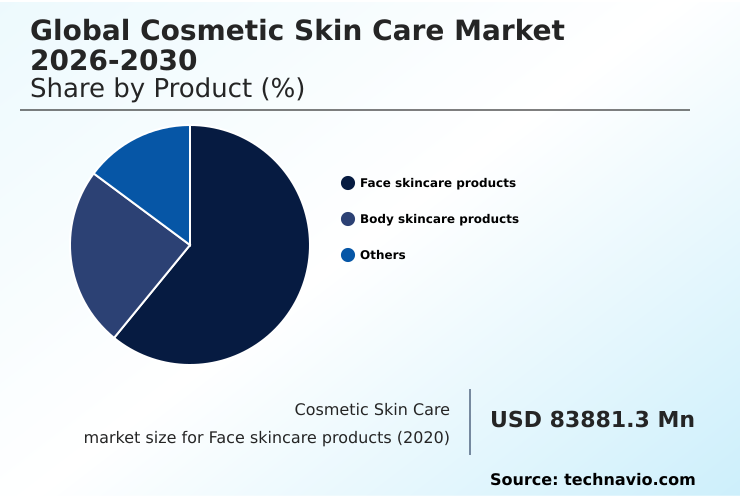
The face skincare products segment is estimated to witness significant growth during the forecast period.

The face skincare products segment is defined by a sophisticated consumer base demanding targeted solutions and scientifically validated results. This has led to the proliferation of complex formulations featuring active ingredients like hyaluronic acid and niacinamide.

Innovation in this space prioritizes not just efficacy but also the delivery mechanism, with a focus on medical-grade cosmeceuticals and proprietary peptides.

The market is increasingly influenced by the masstige product strategy, which makes advanced ingredients accessible to a broader audience. As a result, brands are adopting a robust omnichannel retail strategy to reach consumers.

This highly competitive environment, where the APAC region alone accounts for over 50% of incremental growth, rewards brands that can effectively blend advanced sun protection with the sensory appeal of conscious luxury.
Request Free Sample

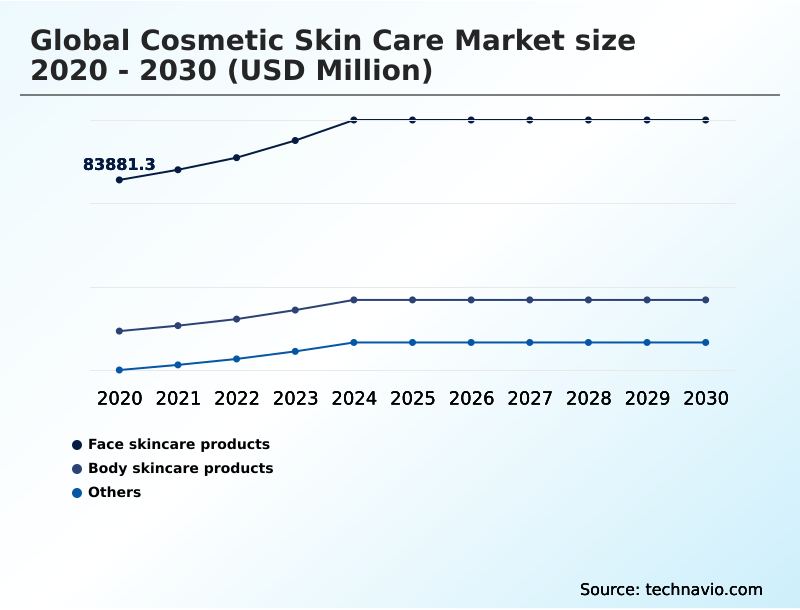
The Face skincare products segment was valued at USD 103.89 billion in 2024 and showed a gradual increase during the forecast period.
Request Free Sample

Regional Analysis

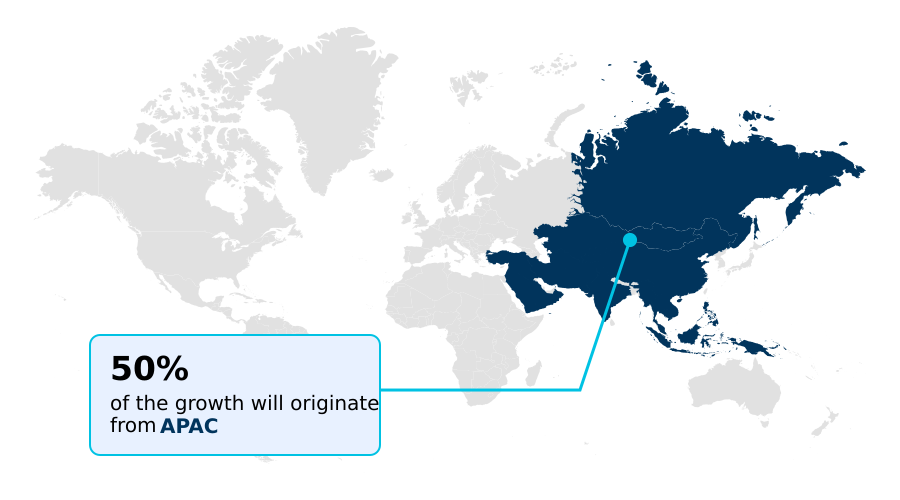
APAC is estimated to contribute 50.3% to the growth of the global market during the forecast period.Technavio’s analysts have elaborately explained the regional trends and drivers that shape the market during the forecast period.
See How Cosmetic Skin Care Market Demand is Rising in APAC Request Free Sample

The geographic landscape of the market is highly dynamic, with the APAC region, accounting for over 50% of incremental growth, serving as a hub for innovation in skin brightening treatments and anti-pollution skincare.

In this region, consumer demand for high-performance active ingredients and traditional medicinal concepts drives rapid product development, outpacing European growth by nearly a full percentage point.

In contrast, European markets, known for their stringent regulations, prioritize formulations featuring thermal spring water and evidence-based interventions. Across the Middle East, the demand for halal-certified skincare is a critical market-entry requirement.

This regional diversity means that navigating compliance for a single product can increase overhead by up to 15%, highlighting the importance of localized strategy and a deep understanding of the skin-intellectual consumer.

Market Dynamics

Our researchers analyzed the data with 2025 as the base year, along with the key drivers, trends, and challenges. A holistic analysis of drivers will help companies refine their marketing strategies to gain a competitive advantage.

  • The cosmetic skin care market is undergoing a significant transformation, with a central focus on the impact of AI on cosmetic skincare, which is reshaping product development and consumer interaction. The role of biotechnology in modern skincare is expanding, leading to innovations that address long-standing consumer needs.
  • One of the most prominent consumer trends in personalized beauty products is the move toward bespoke formulations, though this is tempered by the challenges in global cosmetic regulations. The integration of AR and VR in beauty retail is becoming a key part of online retail strategies for beauty brands, helping to bridge the gap between digital discovery and purchase confidence.
  • Firms are actively exploring microbiome-friendly skincare products and new trends in body care and skinification. Concurrently, the industry is responding to the demand for organic cosmetic ingredients, which has amplified supply chain risks for skincare ingredients. For businesses, navigating fragmented cosmetic compliance complexity is a primary operational hurdle.
  • Firms leveraging advanced analytics to manage these supply chain risks report up to a 25% better inventory turnover. The importance of clinical efficacy in skincare cannot be overstated, fueling the growth of dermo-cosmetics in pharmacies. This is paired with innovations in sun protection technology and advancements in anti-pollution skincare formulations to meet the needs of an increasingly health-conscious consumer.
  • The market also reflects societal shifts, including the rise of male grooming in the skincare market and a greater focus on anti-aging solutions for aging populations. However, issues like market saturation and brand loyalty erosion persist, making hyper-personalization systems in beauty tech a critical differentiator.
  • Finally, sustainability in cosmetic packaging solutions is no longer optional but a core component of brand value.
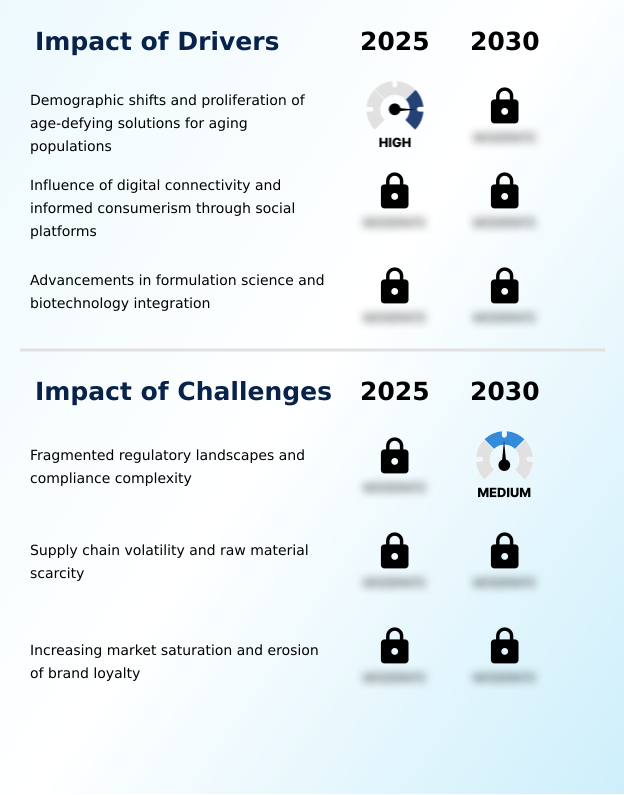
What are the key market drivers leading to the rise in the adoption of Cosmetic Skin Care Industry?

  • Demographic shifts, combined with the proliferation of age-defying solutions for aging populations, are a key driver of market growth.

  • Market growth is primarily fueled by a digitally empowered consumer base and significant advancements in formulation science.
  • The pervasive influence of social media has amplified dermatological endorsements, leading to a 20% higher engagement rate for brands that provide clear evidence for their preventative care solutions. This informed consumerism drives demand for lab-grown ingredients and clean beauty standards.
  • Furthermore, the industry's investment in biotechnology, yielding innovations like waterless formulations and regenerative farming practices for sustainable ingredient sourcing, allows brands to command a 25% price premium on products with proprietary technologies.
  • The focus on holistic skin health and the adoption of eco-friendly packaging using post-consumer recycled plastics are no longer niche concerns but central drivers of value and brand perception.

What are the market trends shaping the Cosmetic Skin Care Industry?

  • The integration of artificial intelligence and hyper-personalization systems is an emerging trend. These technologies are poised to reshape consumer experiences and product development.

  • Key trends are reshaping the market, driven by the integration of advanced technologies and a consumer push for clinical-grade formulations. The rise of hyper-personalization platforms, leveraging digital diagnostic tools to create personalized skincare regimens, has resulted in a 15% increase in customer loyalty for early adopters.
  • This data-driven approach is further enhanced by scientific validation of new ingredients and prebiotic formulations. There is a concurrent shift toward sustainability, where circular economy principles influence product design. Brands that have successfully implemented eco-friendly packaging and demonstrated transparent supply chain ethics have seen a 10% uplift in positive consumer sentiment.
  • This movement prioritizes biocompatibility and the use of bio-fermentation, linking professional-grade products with environmental responsibility.

What challenges does the Cosmetic Skin Care Industry face during its growth?

  • Fragmented regulatory landscapes and compliance complexity present a key challenge affecting industry growth.

  • The primary challenges facing the market are intense competition and operational complexity, which hinder scalability. Navigating the fragmented landscape of international regulations adds an average of 18% to product launch costs, delaying the market entry of new custom-made formulations featuring encapsulated retinol.
  • Supply chain volatility presents another significant hurdle, with disruptions to key ingredients causing production delays of up to 30% for some firms. This environment is compounded by market saturation, where the proliferation of at-home beauty devices and dermo-cosmetic solutions erodes brand loyalty.
  • To stand out, companies must invest heavily in social commerce ecosystems, where the cost of customer acquisition has risen by 25% in competitive segments, making sustained profitability a persistent challenge without strong ingredient transparency and ethical manufacturing credentials.

Exclusive Technavio Analysis on Customer Landscape

The cosmetic skin care market forecasting report includes the adoption lifecycle of the market, covering from the innovator’s stage to the laggard’s stage. It focuses on adoption rates in different regions based on penetration. Furthermore, the cosmetic skin care market report also includes key purchase criteria and drivers of price sensitivity to help companies evaluate and develop their market growth analysis strategies.
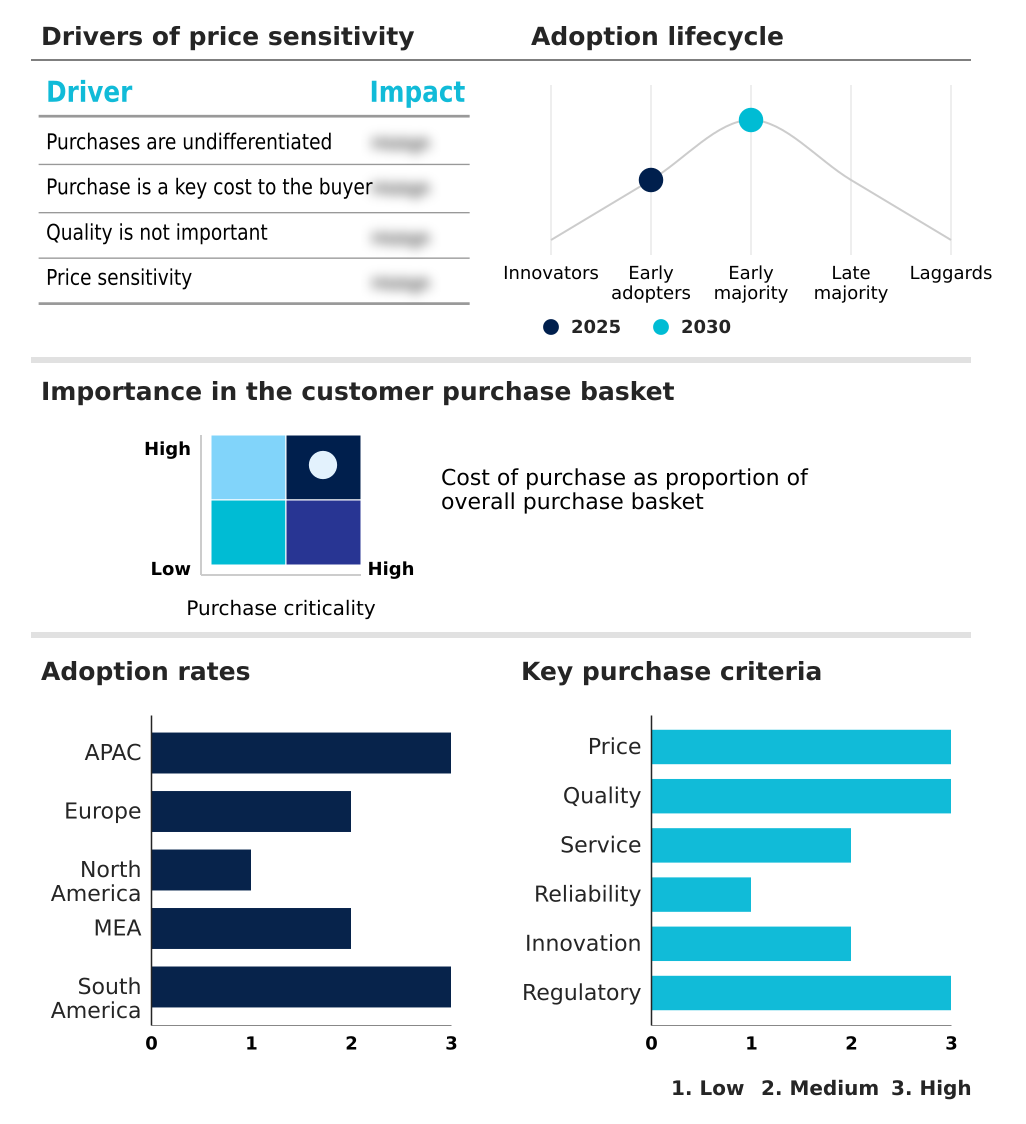
Customer Landscape of Cosmetic Skin Care Industry

Competitive Landscape

Companies are implementing various strategies, such as strategic alliances, cosmetic skin care market forecast, partnerships, mergers and acquisitions, geographical expansion, and product/service launches, to enhance their presence in the industry.

AMOREPACIFIC Group Inc. - Analysis indicates a market focus on advanced formulations, offering high-performance active ingredients and specialized dermatological solutions to meet diverse consumer needs for efficacy and skin health.

The industry research and growth report includes detailed analyses of the competitive landscape of the market and information about key companies, including:

  • AMOREPACIFIC Group Inc.
  • Beiersdorf AG
  • Colgate Palmolive Co.
  • Coty Inc.
  • Emami Ltd.
  • Kao Corp.
  • Knowlton Development Corp.
  • Kose Corp.
  • Loccitane International SA
  • Loreal SA
  • LVMH Moet Hennessy
  • Mary Kay Inc.
  • Natura and Co. Holding SA
  • Procter and Gamble Co.
  • Revlon Inc.
  • Shiseido Co. Ltd.
  • The Clorox Co.
  • The Estee Lauder Co. Inc.
  • The Himalaya Drug Co.
  • Unilever PLC

Qualitative and quantitative analysis of companies has been conducted to help clients understand the wider business environment as well as the strengths and weaknesses of key industry players. Data is qualitatively analyzed to categorize companies as pure play, category-focused, industry-focused, and diversified; it is quantitatively analyzed to categorize companies as dominant, leading, strong, tentative, and weak.

Recent Development and News in Cosmetic skin care market

  • In January 2025, LOreal SA introduced its LOreal Cell BioPrint, a portable lab-on-a-chip device providing personalized skin analysis by studying protein composition.
  • In February 2025, The European Commission introduced the Sustainable Beauty Act, mandating a digital product passport for all cosmetic skincare products to enhance consumer transparency on environmental and social footprints.
  • In March 2025, a consortium of Brazilian beauty brands, in partnership with the Brazilian government and the Rainforest Alliance, launched the Amazonian Bio-Integrity Seal certification program to ensure sustainable ingredient sourcing.
  • In April 2025, Canadian personal care conglomerate InnovaCorp partnered with US-based technology firm SkinTech AI to launch a hyper-personalization platform that uses AI to create customized skincare regimens.

Dive into Technavio’s robust research methodology, blending expert interviews, extensive data synthesis, and validated models for unparalleled Cosmetic Skin Care Market insights. See full methodology.

Market Scope
Page number 297
Base year 2025
Historic period 2020-2024
Forecast period 2026-2030
Growth momentum & CAGR Accelerate at a CAGR of 9.7%
Market growth 2026-2030 USD 112892.6 million
Market structure Fragmented
YoY growth 2025-2026(%) 8.8%
Key countries China, Japan, India, South Korea, Australia, Indonesia, Germany, UK, France, Italy, Spain, The Netherlands, US, Canada, Mexico, Saudi Arabia, UAE, South Africa, Israel, Turkey, Brazil, Argentina and Chile
Competitive landscape Leading Companies, Market Positioning of Companies, Competitive Strategies, and Industry Risks

Request Free Sample

Research Analyst Overview

  • The cosmetic skin care market is driven by relentless innovation in formulation science, where breakthroughs in biotechnology have become a primary differentiator. The development of high-performance active ingredients, including stabilized retinoids, stabilized vitamin C, and hyaluronic acid, has set a new standard for efficacy.
  • We are seeing a move toward dermo-cosmetic solutions that leverage medical-grade cosmeceuticals and proprietary peptides, often derived from lab-grown ingredients and rare botanical extracts. The integration of technology is equally critical, with computer vision skin analysis and augmented reality try-on tools transforming the consumer experience.
  • Boardroom decisions are increasingly focused on navigating the complexities of a circular economy, mandating the use of post-consumer recycled plastics and waterless formulations to meet sustainability targets. Companies investing in R&D for advanced delivery systems like liposomal encapsulation and micro-needling patches report a 15% faster time-to-market for new launches.
  • The emphasis on biocompatibility and skin health is evident in the rise of prebiotic and probiotic formulations, microbiome-friendly products, and advanced barrier repair creams, often delivered via at-home micro-current tools and LED light therapy masks.

What are the Key Data Covered in this Cosmetic Skin Care Market Research and Growth Report?

  • What is the expected growth of the Cosmetic Skin Care Market between 2026 and 2030?

    • USD 112.89 billion, at a CAGR of 9.7%

  • What segmentation does the market report cover?

    • The report is segmented by Product (Face skincare products, Body skincare products, and Others), Distribution Channel (Offline, and Online), Price Range (Mass, Premium, and Luxury) and Geography (APAC, Europe, North America, Middle East and Africa, South America)

  • Which regions are analyzed in the report?

    • APAC, Europe, North America, Middle East and Africa and South America

  • What are the key growth drivers and market challenges?

    • Demographic shifts and proliferation of age-defying solutions for aging populations, Fragmented regulatory landscapes and compliance complexity

  • Who are the major players in the Cosmetic Skin Care Market?

    • AMOREPACIFIC Group Inc., Beiersdorf AG, Colgate Palmolive Co., Coty Inc., Emami Ltd., Kao Corp., Knowlton Development Corp., Kose Corp., Loccitane International SA, Loreal SA, LVMH Moet Hennessy, Mary Kay Inc., Natura and Co. Holding SA, Procter and Gamble Co., Revlon Inc., Shiseido Co. Ltd., The Clorox Co., The Estee Lauder Co. Inc., The Himalaya Drug Co. and Unilever PLC

Market Research Insights

  • The market's momentum is increasingly tied to a brand's ability to offer scientific validation for its professional-grade products and embrace a holistic skin health philosophy. Companies that align with consumer demand for transparency and ethical manufacturing have seen customer retention rates improve by over 10%.
  • Furthermore, the adoption of a direct-to-consumer model, enhanced by digital diagnostic tools and personalized skincare regimens, has demonstrated a corresponding 15% reduction in product return rates. This shift toward evidence-based interventions and a sophisticated omnichannel retail strategy underscores the new competitive baseline, where performance and personalization are paramount.

We can help! Our analysts can customize this cosmetic skin care market research report to meet your requirements.

Get in touch

1. Executive Summary

1.1 Market overview

Executive Summary - Chart on Market Overview
Executive Summary - Data Table on Market Overview
Executive Summary - Chart on Global Market Characteristics
Executive Summary - Chart on Market by Geography
Executive Summary - Chart on Market Segmentation by Product
Executive Summary - Chart on Market Segmentation by Distribution Channel
Executive Summary - Chart on Market Segmentation by Price Range
Executive Summary - Chart on Incremental Growth
Executive Summary - Data Table on Incremental Growth
Executive Summary - Chart on Company Market Positioning

2. Technavio Analysis

2.1 Analysis of price sensitivity, lifecycle, customer purchase basket, adoption rates, and purchase criteria

2.2 Criticality of inputs and Factors of differentiation

Chart on Overview on criticality of inputs and factors of differentiation

2.3 Factors of disruption

Chart on Overview on factors of disruption

2.4 Impact of drivers and challenges

Chart on Impact of drivers and challenges in 2025 and 2030

3. Market Landscape

3.1 Market ecosystem

Chart on Parent Market
Data Table on - Parent Market

3.2 Market characteristics

Chart on Market characteristics analysis

3.3 Value chain analysis

Chart on Value chain analysis

4. Market Sizing

4.1 Market definition

Data Table on Offerings of companies included in the market definition

4.2 Market segment analysis

Market segments

4.3 Market size 2025

4.4 Market outlook: Forecast for 2025-2030

Chart on Global - Market size and forecast 2025-2030 ($ million)
Data Table on Global - Market size and forecast 2025-2030 ($ million)
Chart on Global Market: Year-over-year growth 2025-2030 (%)
Data Table on Global Market: Year-over-year growth 2025-2030 (%)

5. Historic Market Size

5.1 Global Cosmetic Skin Care Market 2020 - 2024

Historic Market Size - Data Table on Global Cosmetic Skin Care Market 2020 - 2024 ($ million)

5.2 Product segment analysis 2020 - 2024

Historic Market Size - Product Segment 2020 - 2024 ($ million)

5.3 Distribution Channel segment analysis 2020 - 2024

Historic Market Size - Distribution Channel Segment 2020 - 2024 ($ million)

5.4 Price Range segment analysis 2020 - 2024

Historic Market Size - Price Range Segment 2020 - 2024 ($ million)

5.5 Geography segment analysis 2020 - 2024

Historic Market Size - Geography Segment 2020 - 2024 ($ million)

5.6 Country segment analysis 2020 - 2024

Historic Market Size - Country Segment 2020 - 2024 ($ million)

6. Qualitative Analysis

6.1 Impact of AI on global cosmetic skin care market

6.2 Impact of geopolitical conflicts on global cosmetic skin care market

7. Five Forces Analysis

7.1 Five forces summary

Five forces analysis - Comparison between 2025 and 2030

7.2 Bargaining power of buyers

Bargaining power of buyers - Impact of key factors 2025 and 2030

7.3 Bargaining power of suppliers

Bargaining power of suppliers - Impact of key factors in 2025 and 2030

7.4 Threat of new entrants

Threat of new entrants - Impact of key factors in 2025 and 2030

7.5 Threat of substitutes

Threat of substitutes - Impact of key factors in 2025 and 2030

7.6 Threat of rivalry

Threat of rivalry - Impact of key factors in 2025 and 2030

7.7 Market condition

Chart on Market condition - Five forces 2025 and 2030

8. Market Segmentation by Product

8.1 Market segments

Chart on Product - Market share 2025-2030 (%)
Data Table on Product - Market share 2025-2030 (%)

8.2 Comparison by Product

Chart on Comparison by Product
Data Table on Comparison by Product

8.3 Face skincare products - Market size and forecast 2025-2030

Chart on Face skincare products - Market size and forecast 2025-2030 ($ million)
Data Table on Face skincare products - Market size and forecast 2025-2030 ($ million)
Chart on Face skincare products - Year-over-year growth 2025-2030 (%)
Data Table on Face skincare products - Year-over-year growth 2025-2030 (%)

8.4 Body skincare products - Market size and forecast 2025-2030

Chart on Body skincare products - Market size and forecast 2025-2030 ($ million)
Data Table on Body skincare products - Market size and forecast 2025-2030 ($ million)
Chart on Body skincare products - Year-over-year growth 2025-2030 (%)
Data Table on Body skincare products - Year-over-year growth 2025-2030 (%)

8.5 Others - Market size and forecast 2025-2030

Chart on Others - Market size and forecast 2025-2030 ($ million)
Data Table on Others - Market size and forecast 2025-2030 ($ million)
Chart on Others - Year-over-year growth 2025-2030 (%)
Data Table on Others - Year-over-year growth 2025-2030 (%)

8.6 Market opportunity by Product

Market opportunity by Product ($ million)
Data Table on Market opportunity by Product ($ million)

9. Market Segmentation by Distribution Channel

9.1 Market segments

Chart on Distribution Channel - Market share 2025-2030 (%)
Data Table on Distribution Channel - Market share 2025-2030 (%)

9.2 Comparison by Distribution Channel

Chart on Comparison by Distribution Channel
Data Table on Comparison by Distribution Channel

9.3 Offline - Market size and forecast 2025-2030

Chart on Offline - Market size and forecast 2025-2030 ($ million)
Data Table on Offline - Market size and forecast 2025-2030 ($ million)
Chart on Offline - Year-over-year growth 2025-2030 (%)
Data Table on Offline - Year-over-year growth 2025-2030 (%)

9.4 Online - Market size and forecast 2025-2030

Chart on Online - Market size and forecast 2025-2030 ($ million)
Data Table on Online - Market size and forecast 2025-2030 ($ million)
Chart on Online - Year-over-year growth 2025-2030 (%)
Data Table on Online - Year-over-year growth 2025-2030 (%)

9.5 Market opportunity by Distribution Channel

Market opportunity by Distribution Channel ($ million)
Data Table on Market opportunity by Distribution Channel ($ million)

10. Market Segmentation by Price Range

10.1 Market segments

Chart on Price Range - Market share 2025-2030 (%)
Data Table on Price Range - Market share 2025-2030 (%)

10.2 Comparison by Price Range

Chart on Comparison by Price Range
Data Table on Comparison by Price Range

10.3 Mass - Market size and forecast 2025-2030

Chart on Mass - Market size and forecast 2025-2030 ($ million)
Data Table on Mass - Market size and forecast 2025-2030 ($ million)
Chart on Mass - Year-over-year growth 2025-2030 (%)
Data Table on Mass - Year-over-year growth 2025-2030 (%)

10.4 Premium - Market size and forecast 2025-2030

Chart on Premium - Market size and forecast 2025-2030 ($ million)
Data Table on Premium - Market size and forecast 2025-2030 ($ million)
Chart on Premium - Year-over-year growth 2025-2030 (%)
Data Table on Premium - Year-over-year growth 2025-2030 (%)

10.5 Luxury - Market size and forecast 2025-2030

Chart on Luxury - Market size and forecast 2025-2030 ($ million)
Data Table on Luxury - Market size and forecast 2025-2030 ($ million)
Chart on Luxury - Year-over-year growth 2025-2030 (%)
Data Table on Luxury - Year-over-year growth 2025-2030 (%)

10.6 Market opportunity by Price Range

Market opportunity by Price Range ($ million)
Data Table on Market opportunity by Price Range ($ million)

11. Customer Landscape

11.1 Customer landscape overview

Analysis of price sensitivity, lifecycle, customer purchase basket, adoption rates, and purchase criteria

12. Geographic Landscape

12.1 Geographic segmentation

Chart on Market share by geography 2025-2030 (%)
Data Table on Market share by geography 2025-2030 (%)

12.2 Geographic comparison

Chart on Geographic comparison
Data Table on Geographic comparison

12.3 APAC - Market size and forecast 2025-2030

Chart on APAC - Market size and forecast 2025-2030 ($ million)
Data Table on APAC - Market size and forecast 2025-2030 ($ million)
Chart on APAC - Year-over-year growth 2025-2030 (%)
Data Table on APAC - Year-over-year growth 2025-2030 (%)
Chart on Regional Comparison - APAC
Data Table on Regional Comparison - APAC

12.3.1 China - Market size and forecast 2025-2030

Chart on China - Market size and forecast 2025-2030 ($ million)
Data Table on China - Market size and forecast 2025-2030 ($ million)
Chart on China - Year-over-year growth 2025-2030 (%)
Data Table on China - Year-over-year growth 2025-2030 (%)

12.3.2 Japan - Market size and forecast 2025-2030

Chart on Japan - Market size and forecast 2025-2030 ($ million)
Data Table on Japan - Market size and forecast 2025-2030 ($ million)
Chart on Japan - Year-over-year growth 2025-2030 (%)
Data Table on Japan - Year-over-year growth 2025-2030 (%)

12.3.3 India - Market size and forecast 2025-2030

Chart on India - Market size and forecast 2025-2030 ($ million)
Data Table on India - Market size and forecast 2025-2030 ($ million)
Chart on India - Year-over-year growth 2025-2030 (%)
Data Table on India - Year-over-year growth 2025-2030 (%)

12.3.4 South Korea - Market size and forecast 2025-2030

Chart on South Korea - Market size and forecast 2025-2030 ($ million)
Data Table on South Korea - Market size and forecast 2025-2030 ($ million)
Chart on South Korea - Year-over-year growth 2025-2030 (%)
Data Table on South Korea - Year-over-year growth 2025-2030 (%)

12.3.5 Australia - Market size and forecast 2025-2030

Chart on Australia - Market size and forecast 2025-2030 ($ million)
Data Table on Australia - Market size and forecast 2025-2030 ($ million)
Chart on Australia - Year-over-year growth 2025-2030 (%)
Data Table on Australia - Year-over-year growth 2025-2030 (%)

12.3.6 Indonesia - Market size and forecast 2025-2030

Chart on Indonesia - Market size and forecast 2025-2030 ($ million)
Data Table on Indonesia - Market size and forecast 2025-2030 ($ million)
Chart on Indonesia - Year-over-year growth 2025-2030 (%)
Data Table on Indonesia - Year-over-year growth 2025-2030 (%)

12.4 Europe - Market size and forecast 2025-2030

Chart on Europe - Market size and forecast 2025-2030 ($ million)
Data Table on Europe - Market size and forecast 2025-2030 ($ million)
Chart on Europe - Year-over-year growth 2025-2030 (%)
Data Table on Europe - Year-over-year growth 2025-2030 (%)
Chart on Regional Comparison - Europe
Data Table on Regional Comparison - Europe

12.4.1 Germany - Market size and forecast 2025-2030

Chart on Germany - Market size and forecast 2025-2030 ($ million)
Data Table on Germany - Market size and forecast 2025-2030 ($ million)
Chart on Germany - Year-over-year growth 2025-2030 (%)
Data Table on Germany - Year-over-year growth 2025-2030 (%)

12.4.2 UK - Market size and forecast 2025-2030

Chart on UK - Market size and forecast 2025-2030 ($ million)
Data Table on UK - Market size and forecast 2025-2030 ($ million)
Chart on UK - Year-over-year growth 2025-2030 (%)
Data Table on UK - Year-over-year growth 2025-2030 (%)

12.4.3 France - Market size and forecast 2025-2030

Chart on France - Market size and forecast 2025-2030 ($ million)
Data Table on France - Market size and forecast 2025-2030 ($ million)
Chart on France - Year-over-year growth 2025-2030 (%)
Data Table on France - Year-over-year growth 2025-2030 (%)

12.4.4 Italy - Market size and forecast 2025-2030

Chart on Italy - Market size and forecast 2025-2030 ($ million)
Data Table on Italy - Market size and forecast 2025-2030 ($ million)
Chart on Italy - Year-over-year growth 2025-2030 (%)
Data Table on Italy - Year-over-year growth 2025-2030 (%)

12.4.5 Spain - Market size and forecast 2025-2030

Chart on Spain - Market size and forecast 2025-2030 ($ million)
Data Table on Spain - Market size and forecast 2025-2030 ($ million)
Chart on Spain - Year-over-year growth 2025-2030 (%)
Data Table on Spain - Year-over-year growth 2025-2030 (%)

12.4.6 The Netherlands - Market size and forecast 2025-2030

Chart on The Netherlands - Market size and forecast 2025-2030 ($ million)
Data Table on The Netherlands - Market size and forecast 2025-2030 ($ million)
Chart on The Netherlands - Year-over-year growth 2025-2030 (%)
Data Table on The Netherlands - Year-over-year growth 2025-2030 (%)

12.5 North America - Market size and forecast 2025-2030

Chart on North America - Market size and forecast 2025-2030 ($ million)
Data Table on North America - Market size and forecast 2025-2030 ($ million)
Chart on North America - Year-over-year growth 2025-2030 (%)
Data Table on North America - Year-over-year growth 2025-2030 (%)
Chart on Regional Comparison - North America
Data Table on Regional Comparison - North America

12.5.1 US - Market size and forecast 2025-2030

Chart on US - Market size and forecast 2025-2030 ($ million)
Data Table on US - Market size and forecast 2025-2030 ($ million)
Chart on US - Year-over-year growth 2025-2030 (%)
Data Table on US - Year-over-year growth 2025-2030 (%)

12.5.2 Canada - Market size and forecast 2025-2030

Chart on Canada - Market size and forecast 2025-2030 ($ million)
Data Table on Canada - Market size and forecast 2025-2030 ($ million)
Chart on Canada - Year-over-year growth 2025-2030 (%)
Data Table on Canada - Year-over-year growth 2025-2030 (%)

12.5.3 Mexico - Market size and forecast 2025-2030

Chart on Mexico - Market size and forecast 2025-2030 ($ million)
Data Table on Mexico - Market size and forecast 2025-2030 ($ million)
Chart on Mexico - Year-over-year growth 2025-2030 (%)
Data Table on Mexico - Year-over-year growth 2025-2030 (%)

12.6 Middle East and Africa - Market size and forecast 2025-2030

Chart on Middle East and Africa - Market size and forecast 2025-2030 ($ million)
Data Table on Middle East and Africa - Market size and forecast 2025-2030 ($ million)
Chart on Middle East and Africa - Year-over-year growth 2025-2030 (%)
Data Table on Middle East and Africa - Year-over-year growth 2025-2030 (%)
Chart on Regional Comparison - Middle East and Africa
Data Table on Regional Comparison - Middle East and Africa

12.6.1 Saudi Arabia - Market size and forecast 2025-2030

Chart on Saudi Arabia - Market size and forecast 2025-2030 ($ million)
Data Table on Saudi Arabia - Market size and forecast 2025-2030 ($ million)
Chart on Saudi Arabia - Year-over-year growth 2025-2030 (%)
Data Table on Saudi Arabia - Year-over-year growth 2025-2030 (%)

12.6.2 UAE - Market size and forecast 2025-2030

Chart on UAE - Market size and forecast 2025-2030 ($ million)
Data Table on UAE - Market size and forecast 2025-2030 ($ million)
Chart on UAE - Year-over-year growth 2025-2030 (%)
Data Table on UAE - Year-over-year growth 2025-2030 (%)

12.6.3 South Africa - Market size and forecast 2025-2030

Chart on South Africa - Market size and forecast 2025-2030 ($ million)
Data Table on South Africa - Market size and forecast 2025-2030 ($ million)
Chart on South Africa - Year-over-year growth 2025-2030 (%)
Data Table on South Africa - Year-over-year growth 2025-2030 (%)

12.6.4 Israel - Market size and forecast 2025-2030

Chart on Israel - Market size and forecast 2025-2030 ($ million)
Data Table on Israel - Market size and forecast 2025-2030 ($ million)
Chart on Israel - Year-over-year growth 2025-2030 (%)
Data Table on Israel - Year-over-year growth 2025-2030 (%)

12.6.5 Turkey - Market size and forecast 2025-2030

Chart on Turkey - Market size and forecast 2025-2030 ($ million)
Data Table on Turkey - Market size and forecast 2025-2030 ($ million)
Chart on Turkey - Year-over-year growth 2025-2030 (%)
Data Table on Turkey - Year-over-year growth 2025-2030 (%)

12.7 South America - Market size and forecast 2025-2030

Chart on South America - Market size and forecast 2025-2030 ($ million)
Data Table on South America - Market size and forecast 2025-2030 ($ million)
Chart on South America - Year-over-year growth 2025-2030 (%)
Data Table on South America - Year-over-year growth 2025-2030 (%)
Chart on Regional Comparison - South America
Data Table on Regional Comparison - South America

12.7.1 Brazil - Market size and forecast 2025-2030

Chart on Brazil - Market size and forecast 2025-2030 ($ million)
Data Table on Brazil - Market size and forecast 2025-2030 ($ million)
Chart on Brazil - Year-over-year growth 2025-2030 (%)
Data Table on Brazil - Year-over-year growth 2025-2030 (%)

12.7.2 Argentina - Market size and forecast 2025-2030

Chart on Argentina - Market size and forecast 2025-2030 ($ million)
Data Table on Argentina - Market size and forecast 2025-2030 ($ million)
Chart on Argentina - Year-over-year growth 2025-2030 (%)
Data Table on Argentina - Year-over-year growth 2025-2030 (%)

12.7.3 Chile - Market size and forecast 2025-2030

Chart on Chile - Market size and forecast 2025-2030 ($ million)
Data Table on Chile - Market size and forecast 2025-2030 ($ million)
Chart on Chile - Year-over-year growth 2025-2030 (%)
Data Table on Chile - Year-over-year growth 2025-2030 (%)

12.8 Market opportunity by geography

Market opportunity by geography ($ million)
Data Tables on Market opportunity by geography ($ million)

13. Drivers, Challenges, and Opportunity

13.1 Market drivers

Demographic shifts and proliferation of age-defying solutions for aging populations
Influence of digital connectivity and informed consumerism through social platforms
Advancements in formulation science and biotechnology integration

13.2 Market challenges

Fragmented regulatory landscapes and compliance complexity
Supply chain volatility and raw material scarcity
Increasing market saturation and erosion of brand loyalty

13.3 Impact of drivers and challenges

Impact of drivers and challenges in 2025 and 2030

13.4 Market opportunities

Artificial intelligence and hyper-personalization systems
Sustainability and circular economy in packaging and sourcing
Clinical efficacy and rise of professional-grade formulations

14. Competitive Landscape

14.1 Overview

14.2

Overview on criticality of inputs and factors of differentiation

14.3 Landscape disruption

Overview on factors of disruption

14.4 Industry risks

Impact of key risks on business

15. Competitive Analysis

15.1 Companies profiled

Companies covered

15.2 Company ranking index

15.3 Market positioning of companies

Matrix on companies position and classification

15.4 AMOREPACIFIC Group Inc.

AMOREPACIFIC Group Inc. - Overview
AMOREPACIFIC Group Inc. - Business segments
AMOREPACIFIC Group Inc. - Key offerings
AMOREPACIFIC Group Inc. - Segment focus
SWOT

15.5 Beiersdorf AG

Beiersdorf AG - Overview
Beiersdorf AG - Business segments
Beiersdorf AG - Key offerings
Beiersdorf AG - Segment focus
SWOT

15.6 Colgate Palmolive Co.

Colgate Palmolive Co. - Overview
Colgate Palmolive Co. - Business segments
Colgate Palmolive Co. - Key offerings
Colgate Palmolive Co. - Segment focus
SWOT

15.7 Coty Inc.

Coty Inc. - Overview
Coty Inc. - Business segments
Coty Inc. - Key news
Coty Inc. - Key offerings
Coty Inc. - Segment focus
SWOT

15.8 Emami Ltd.

Emami Ltd. - Overview
Emami Ltd. - Product / Service
Emami Ltd. - Key offerings
SWOT

15.9 Kao Corp.

Kao Corp. - Overview
Kao Corp. - Business segments
Kao Corp. - Key news
Kao Corp. - Key offerings
Kao Corp. - Segment focus
SWOT

15.10 Knowlton Development Corp.

Knowlton Development Corp. - Overview
Knowlton Development Corp. - Product / Service
Knowlton Development Corp. - Key offerings
SWOT

15.11 LVMH Moet Hennessy

LVMH Moet Hennessy - Overview
LVMH Moet Hennessy - Business segments
LVMH Moet Hennessy - Key offerings
LVMH Moet Hennessy - Segment focus
SWOT

15.12 Natura and Co. Holding SA

Natura and Co. Holding SA - Overview
Natura and Co. Holding SA - Business segments
Natura and Co. Holding SA - Key offerings
Natura and Co. Holding SA - Segment focus
SWOT

15.13 Procter and Gamble Co.

Procter and Gamble Co. - Overview
Procter and Gamble Co. - Business segments
Procter and Gamble Co. - Key news
Procter and Gamble Co. - Key offerings
Procter and Gamble Co. - Segment focus
SWOT

15.14 Shiseido Co. Ltd.

Shiseido Co. Ltd. - Overview
Shiseido Co. Ltd. - Business segments
Shiseido Co. Ltd. - Key offerings
Shiseido Co. Ltd. - Segment focus
SWOT

15.15 The Clorox Co.

The Clorox Co. - Overview
The Clorox Co. - Business segments
The Clorox Co. - Key offerings
The Clorox Co. - Segment focus
SWOT

15.16 The Estee Lauder Co. Inc.

The Estee Lauder Co. Inc. - Overview
The Estee Lauder Co. Inc. - Business segments
The Estee Lauder Co. Inc. - Key offerings
The Estee Lauder Co. Inc. - Segment focus
SWOT

15.17 The Himalaya Drug Co.

The Himalaya Drug Co. - Overview
The Himalaya Drug Co. - Product / Service
The Himalaya Drug Co. - Key offerings
SWOT

15.18 Unilever PLC

Unilever PLC - Overview
Unilever PLC - Business segments
Unilever PLC - Key news
Unilever PLC - Key offerings
Unilever PLC - Segment focus
SWOT

16. Appendix

16.1 Scope of the report

Market definition
Objectives
Notes and caveats

16.2 Inclusions and exclusions checklist

Inclusions checklist
Exclusions checklist

16.3 Currency conversion rates for US$

16.4 Research methodology

16.5 Data procurement

Information sources

16.6 Data validation

16.7 Validation techniques employed for market sizing

16.8 Data synthesis

16.9 360 degree market analysis

16.10 List of abbreviations

Research Methodology

Technavio presents a detailed picture of the market by way of study, synthesis, and summation of data from multiple sources. The analysts have presented the various facets of the market with a particular focus on identifying the key industry influencers. The data thus presented is comprehensive, reliable, and the result of extensive research, both primary and secondary.

INFORMATION SOURCES

Primary sources

  • Manufacturers and suppliers
  • Channel partners
  • Industry experts
  • Strategic decision makers

Secondary sources

  • Industry journals and periodicals
  • Government data
  • Financial reports of key industry players
  • Historical data
  • Press releases

DATA ANALYSIS

Data Synthesis

  • Collation of data
  • Estimation of key figures
  • Analysis of derived insights

Data Validation

  • Triangulation with data models
  • Reference against proprietary databases
  • Corroboration with industry experts

REPORT WRITING

Qualitative

  • Market drivers
  • Market challenges
  • Market trends
  • Five forces analysis

Quantitative

  • Market size and forecast
  • Market segmentation
  • Geographical insights
  • Competitive landscape

Interested in this report?

Get your sample now to see our research methodology and insights!

Download Now

Frequently Asked Questions

Cosmetic Skin Care market growth will increase by USD 112892.6 million during 2026-2030.

The Cosmetic Skin Care market is expected to grow at a CAGR of 9.7% during 2026-2030.

Cosmetic Skin Care market is segmented by Product (Face skincare products, Body skincare products, Others) Distribution channel (Offline, Online) Price range (Mass, Premium, Luxury)

AMOREPACIFIC Group Inc., Beiersdorf AG, Colgate Palmolive Co., Coty Inc., Emami Ltd., Kao Corp., Knowlton Development Corp., Kose Corp., Loccitane International SA, Loreal SA, LVMH Moet Hennessy, Mary Kay Inc., Natura and Co. Holding SA, Procter and Gamble Co., Revlon Inc., Shiseido Co. Ltd., The Clorox Co., The Estee Lauder Co. Inc., The Himalaya Drug Co., Unilever PLC are a few of the key vendors in the Cosmetic Skin Care market.

APAC will register the highest growth rate of 50.3% among the other regions. Therefore, the Cosmetic Skin Care market in APAC is expected to garner significant business opportunities for the vendors during the forecast period.

China, Japan, India, South Korea, Australia, Indonesia, Germany, UK, France, Italy, Spain, The Netherlands, US, Canada, Mexico, Saudi Arabia, UAE, South Africa, Israel, Turkey, Brazil, Argentina, Chile

  • Demographic shifts and proliferation of age-defying solutions for aging populations is the driving factor this market.

The Cosmetic Skin Care market vendors should focus on grabbing business opportunities from the Product segment as it accounted for the largest market share in the base year.
RIA - Research AI Assistant
Ask RIA