



Corporate Wellness Market Size 2026-2030
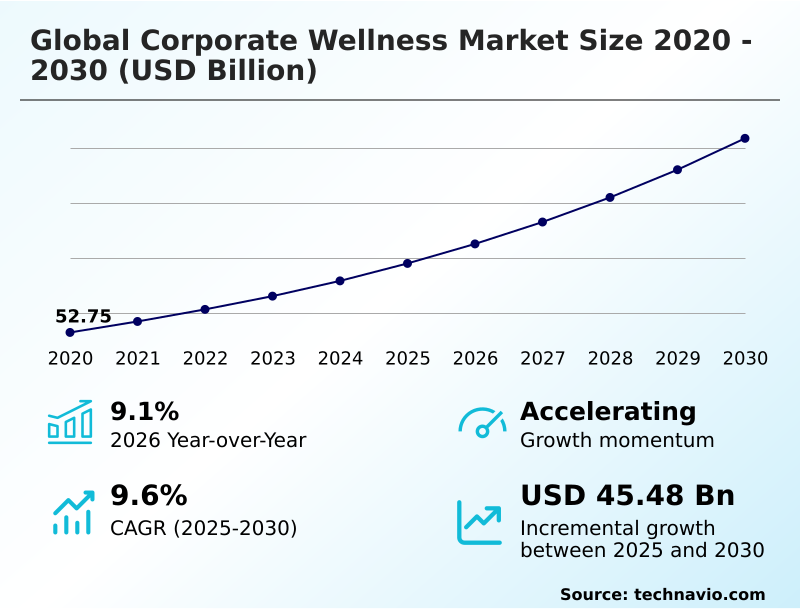
The corporate wellness market size is valued to increase by USD 45.48 billion, at a CAGR of 9.6% from 2025 to 2030. Maturation of agentic AI and hyper-personalized wellness ecosystems will drive the corporate wellness market.
Major Market Trends & Insights
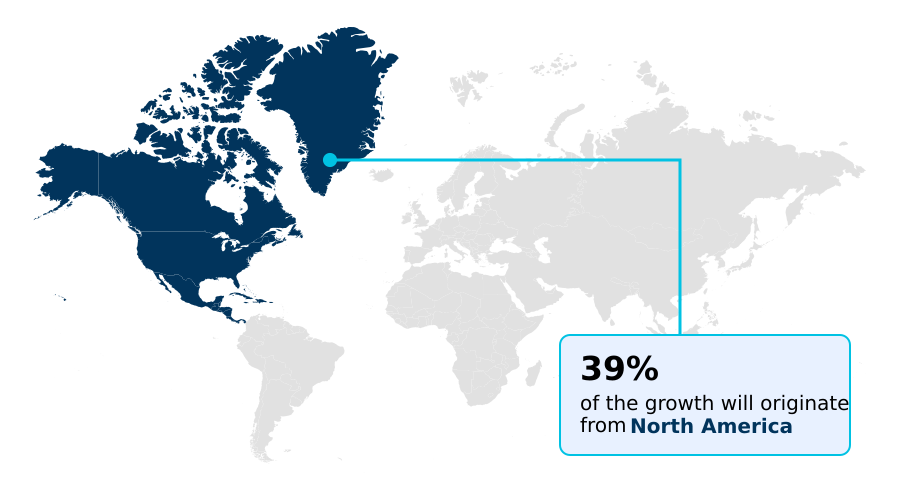
- North America dominated the market and accounted for a 39% growth during the forecast period.
- By Application - Health risk assessment segment was valued at USD 36.26 billion in 2024
- By End-user - SMEs segment accounted for the largest market revenue share in 2024
Market Size & Forecast
- Market Opportunities: USD 70.58 billion
- Market Future Opportunities: USD 45.48 billion
- CAGR from 2025 to 2030 : 9.6%
Market Summary
- The Corporate Wellness Market is transitioning from a set of discretionary benefits to an integral component of enterprise strategy, driven by advanced technology and a holistic view of employee health. This evolution is marked by the integration of agentic artificial intelligence into platforms, enabling autonomous, hyper-personalized navigation of employee wellness journeys.
- For instance, in a large multinational logistics firm, AI-driven platforms can analyze real-time data from wearables and calendar activity to predict burnout risk among drivers and warehouse staff, automatically suggesting schedule adjustments or offering access to real-time stress management tools. This proactive approach moves beyond traditional annual health assessments.
- The market is also heavily influenced by a global push toward codifying psychosocial risk management, forcing organizations to treat mental health as a mandatory compliance issue.
- Consequently, there is a growing demand for evidence-based solutions that can demonstrate a clear return on investment by reducing absenteeism, improving productivity, and fostering a resilient workforce, making corporate wellness a critical pillar of modern human capital management. This shift underscores the strategic importance of investing in technologies that support both individual wellbeing and organizational stability.
What will be the Size of the Corporate Wellness Market during the forecast period?
Get Key Insights on Market Forecast (PDF) Get Free Sample
How is the Corporate Wellness Market Segmented?
The corporate wellness industry research report provides comprehensive data (region-wise segment analysis), with forecasts and estimates in "USD million" for the period 2026-2030, as well as historical data from 2020-2024 for the following segments.
- Application
- Health risk assessment
- Stress management
- Others
- End-user
- SMEs
- Large organizations
- Delivery mode
- Onsite
- Offsite
- Geography
- North America
- US
- Canada
- Mexico
- Europe
- Germany
- UK
- France
- APAC
- China
- Japan
- India
- South America
- Brazil
- Argentina
- Middle East and Africa
- Saudi Arabia
- UAE
- South Africa
- Rest of World (ROW)
- North America
By Application Insights
The health risk assessment segment is estimated to witness significant growth during the forecast period.
The health risk assessment segment is the foundational component of modern corporate wellness platforms, serving as the primary mechanism for diagnostic-led wellness.
These assessments go beyond simple biometric screenings by collecting and analyzing data to create personalized health pathways for employees. This initial data-gathering phase informs all subsequent lifestyle medicine interventions and is critical for continuous data-driven optimization of health outcomes.
By centralizing this wellness data, organizations can more effectively design value-based care programs aimed at mitigating absenteeism costs.
Firms using this approach report that data-driven, diagnostic-led wellness achieves engagement rates up to 64% higher than traditional programs, which is a key factor in improving employee retention strategies and demonstrating the value of human capital investment.
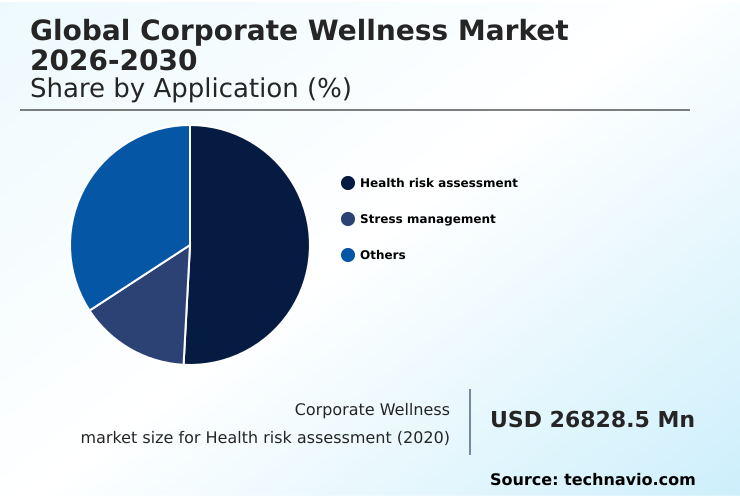
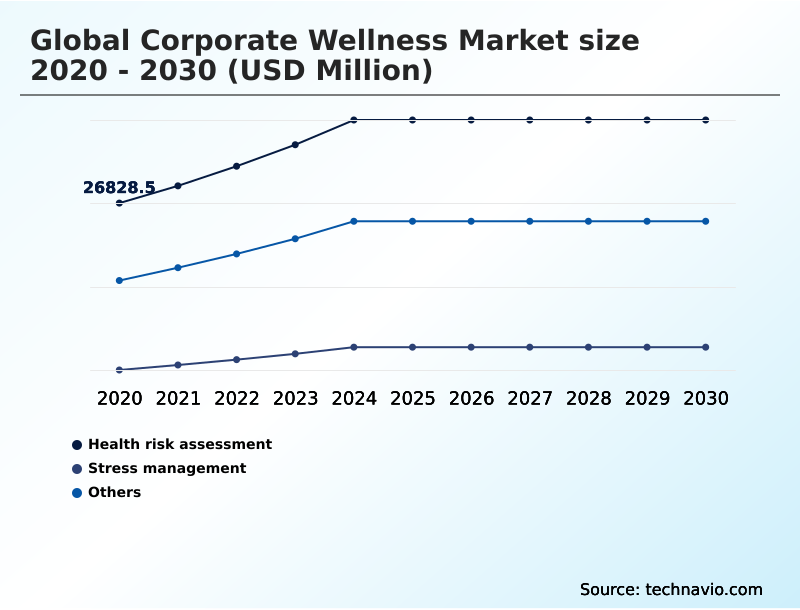
The Health risk assessment segment was valued at USD 36.26 billion in 2024 and showed a gradual increase during the forecast period.
Regional Analysis
North America is estimated to contribute 39% to the growth of the global market during the forecast period.Technavio’s analysts have elaborately explained the regional trends and drivers that shape the market during the forecast period.
See How Corporate Wellness Market Demand is Rising in North America Get Free Sample
The market's geographic landscape is diverse, with North America representing the largest share of opportunity at nearly 39%, driven by the aggressive adoption of unified health navigation platforms and a focus on enterprise risk management.
European markets are heavily influenced by regulatory pressures, leading to a surge in platforms addressing psychosocial risk management.
The APAC region, contributing over 25% of the market opportunity, is the fastest-growing geography, characterized by a mobile-first approach to offsite digital wellness and the rapid adoption of digital meal benefits.
Across regions, there is a consistent move towards holistic population health management, integrating real-time stress management, dynamic nutrition planning, and financial wellness coaching to create comprehensive employee support systems, often supported by onsite wellness coordinators and incentive-based employee health programs.
Market Dynamics
Our researchers analyzed the data with 2025 as the base year, along with the key drivers, trends, and challenges. A holistic analysis of drivers will help companies refine their marketing strategies to gain a competitive advantage.
- The strategic discourse within boardrooms is increasingly focused on the ROI of corporate wellness programs, moving beyond simple benefit provision to a core component of business strategy. A central theme is the impact of agentic AI on employee wellness, which promises hyper-personalization at scale but raises questions about the ethical considerations of AI in employee health.
- The role of leadership in employee wellbeing is now seen as paramount for building a culture of health and resilience, especially as organizations grapple with strategies for addressing managerial burnout.
- The future of corporate wellness with generative AI is a frequent topic, particularly its application in using predictive analytics for employee burnout and enhancing the effectiveness of digital health coaching platforms.
- Simultaneously, executives are tasked with managing psychosocial risks in the workplace and ensuring compliance with ISO 45003 for psychosocial risk, which is now a non-negotiable aspect of corporate wellness and enterprise risk management.
- The challenge lies in balancing personalization with data privacy regulations while also integrating mental health in corporate strategy through the implementation of stepped care pathways for mental health. Firms that successfully integrate these elements see significantly better outcomes in employee retention than those that do not.
- For many, the primary hurdle remains overcoming the challenges of integrating fragmented wellness apps and finding effective corporate wellness solutions for remote workforce models. The focus on nutrition-led interventions for chronic disease prevention and analyzing technology's role in improving employee engagement are key to demonstrating evidence-based outcomes in corporate wellness.
- This is particularly relevant when deploying wellness platforms in small and medium enterprises, where resource constraints make measuring the financial impact of employee disengagement a critical priority.
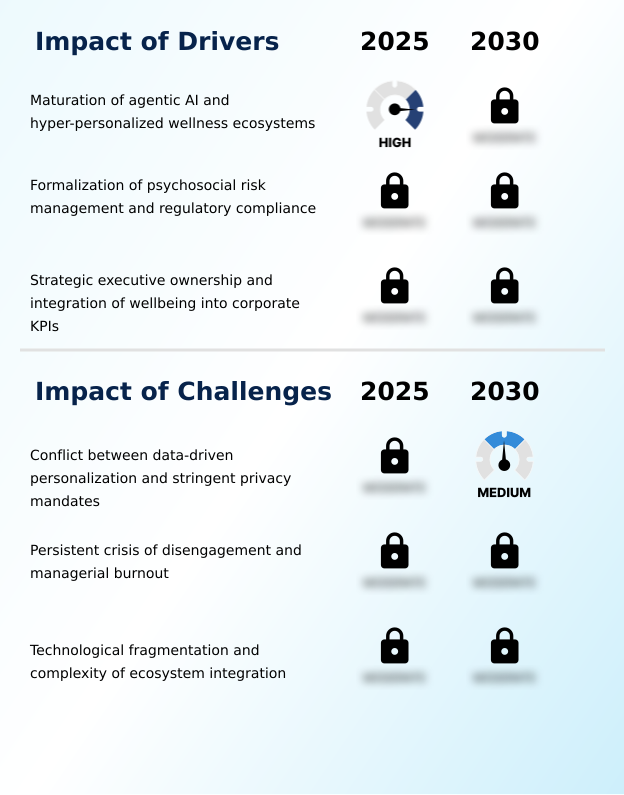
What are the key market drivers leading to the rise in the adoption of Corporate Wellness Industry?
- The maturation of agentic AI is a key driver, enabling hyper-personalized wellness ecosystems that deliver autonomous, real-time support.
- The rapid integration of agentic artificial intelligence is a primary driver, enabling autonomous and personalized employee health navigation that achieves engagement rates up to 64% higher than traditional programs.
- Another critical driver is the formalization of psychosocial risk management through regulatory compliance for wellness, with firms adopting modular wellness modules to align with global standards.
- This shift elevates employee wellbeing as a KPI tied to corporate governance in health, with demand increasing for evidence-based wellness solutions that connect to corporate sustainability reporting.
- Furthermore, a shift in executive mindset sees workforce resilience as a core human capital investment, with 58% of CEOs now agreeing it is a critical driver of profitability.
- This strategic workforce planning approach solidifies the need for platforms demonstrating a clear return on investment in wellness.
What are the market trends shaping the Corporate Wellness Industry?
- A key market trend is the shift toward structured, stepped care pathways. This evolution involves creating integrated mental health journeys for employees.
- A dominant trend is the move toward structured, longitudinal stepped care pathways, creating integrated mental health journeys that escalate from digital self-help resources to professional support. This evolution toward human-led, digital, and AI-powered solutions is exemplified by platforms serving 28 million customers with immediate behavioral health access.
- The deep integration of agentic artificial intelligence enables predictive burnout analytics, with some systems using digital tone analysis and calendar data to identify at-risk teams. Firms now track time-to-first-consult as a primary performance metric.
- Another key shift is the convergence with lifestyle medicine interventions, where medical-grade interventions and emotional support AI coaches are used to address chronic conditions, moving beyond reactive care to proactive, data-driven health management and workplace mental health support.
What challenges does the Corporate Wellness Industry face during its growth?
- A primary challenge is the inherent conflict between delivering data-driven personalization and navigating the complexities of stringent global privacy mandates.
- A foremost challenge is the conflict between data-driven personalization in health and stringent privacy mandates, which complicates the use of biometric screenings and creates risks of penalties up to 7% of global turnover. This limits the full potential of hyper-personalization by restricting biometric data privacy.
- A second major challenge is the crisis of disengagement, with engagement rates falling to 20%, a problem compounded by poor manager engagement and wellness. Finally, technological fragmentation hinders progress; siloed applications prevent seamless ecosystem integration and require a shift toward an interoperable wellbeing-as-a-service model.
- Overcoming technical debt and data silos through tools like asynchronous communication tools is crucial for building the interoperable wellness ecosystems needed to address these issues effectively.
Exclusive Technavio Analysis on Customer Landscape
The corporate wellness market forecasting report includes the adoption lifecycle of the market, covering from the innovator’s stage to the laggard’s stage. It focuses on adoption rates in different regions based on penetration. Furthermore, the corporate wellness market report also includes key purchase criteria and drivers of price sensitivity to help companies evaluate and develop their market growth analysis strategies.
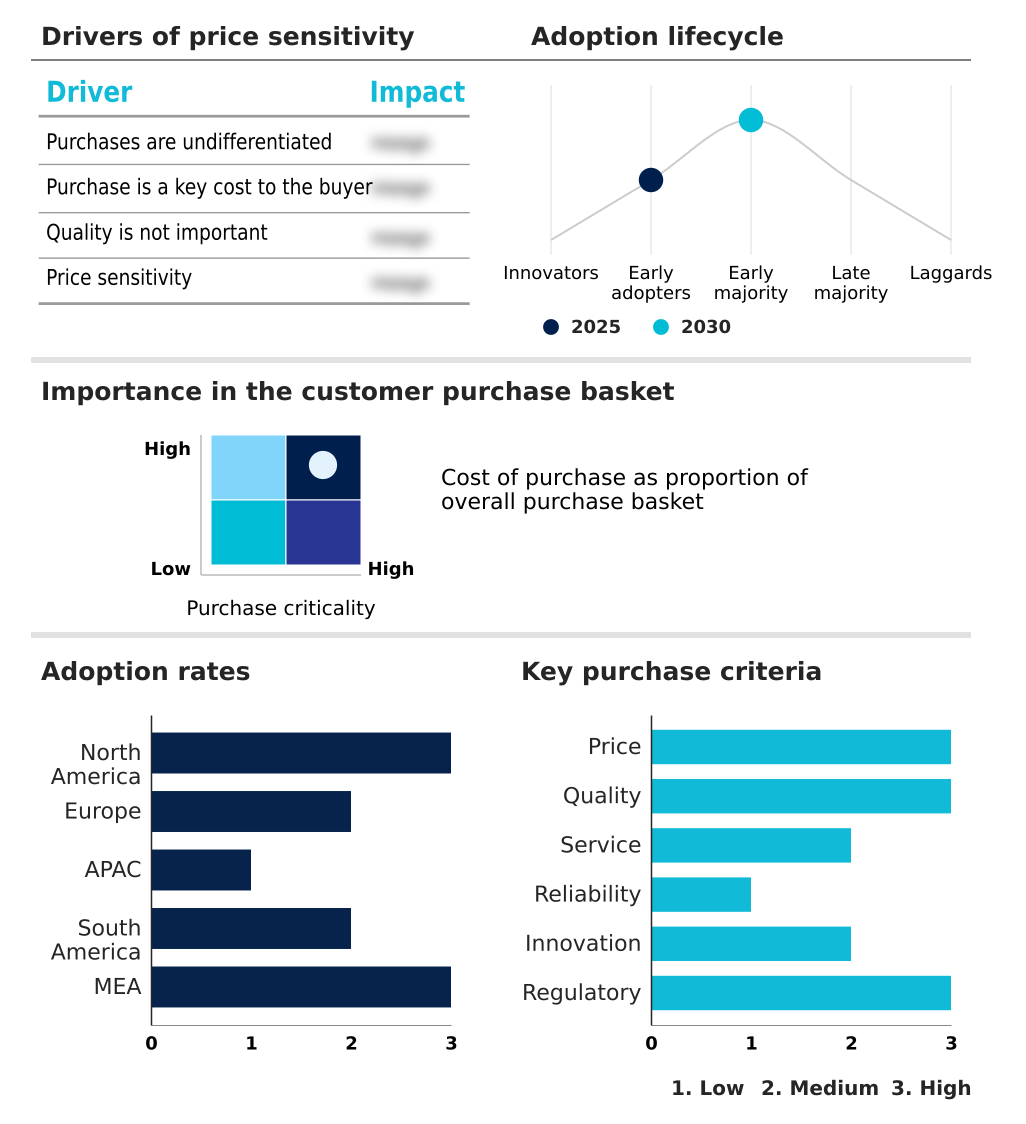
Customer Landscape of Corporate Wellness Industry
Competitive Landscape
Companies are implementing various strategies, such as strategic alliances, corporate wellness market forecast, partnerships, mergers and acquisitions, geographical expansion, and product/service launches, to enhance their presence in the industry.
Aduro LLC - Delivering integrated digital coaching and holistic employee wellness solutions through a unified engagement platform.
The industry research and growth report includes detailed analyses of the competitive landscape of the market and information about key companies, including:
- Aduro LLC
- ComPsych Corp.
- CoreHealth Technologies Inc
- Corporate Wellness Inc
- Exos Works Inc.
- Google LLC
- Marathon Health LLC
- Marino Wellness LLC
- Optum Inc.
- Personify Health Inc.
- Premise Health
- Privia Health Group Inc.
- Quest Diagnostics Inc.
- SOL Wellness LLC
- Sonic Boom Wellness Inc
- The Cigna Group
- TotalWellness Health
- Truworth Wellness
- Vitality Group LLC
- Wellable Inc
Qualitative and quantitative analysis of companies has been conducted to help clients understand the wider business environment as well as the strengths and weaknesses of key industry players. Data is qualitatively analyzed to categorize companies as pure play, category-focused, industry-focused, and diversified; it is quantitatively analyzed to categorize companies as dominant, leading, strong, tentative, and weak.
Recent Development and News in Corporate wellness market
- In August 2025, the European Union entered a critical implementation phase of the AI Act, specifically regulating general-purpose models that underpin many wellness platforms and forcing companies to provide transparency regarding training data and algorithmic intent.
- In May 2025, Whoop launched its Whoop 5.0 and Whoop MG device, providing enterprises with advanced wearable technology for conducting continuous fitness assessments and strain monitoring, enabling a data-driven approach to physical readiness.
- In April 2025, the United States Department of Justice implemented the Bulk Data Rule, which created a substantial barrier for global wellness providers by restricting how personal health data can be processed by foreign entities.
- In February 2025, MyFitnessPal launched its 2025 Winter Release, introducing advanced habit-tracking features that allow corporate users to build personalized nutrition plans and monitor dietary progress through self-service digital tools.
Dive into Technavio’s robust research methodology, blending expert interviews, extensive data synthesis, and validated models for unparalleled Corporate Wellness Market insights. See full methodology.
| Market Scope | |
|---|---|
| Page number | 285 |
| Base year | 2025 |
| Historic period | 2020-2024 |
| Forecast period | 2026-2030 |
| Growth momentum & CAGR | Accelerate at a CAGR of 9.6% |
| Market growth 2026-2030 | USD 45484.6 million |
| Market structure | Fragmented |
| YoY growth 2025-2026(%) | 9.1% |
| Key countries | US, Canada, Mexico, Germany, UK, France, Italy, Spain, The Netherlands, China, Japan, India, South Korea, Australia, Indonesia, Brazil, Argentina, Chile, Saudi Arabia, UAE, South Africa, Israel and Turkey |
| Competitive landscape | Leading Companies, Market Positioning of Companies, Competitive Strategies, and Industry Risks |
Research Analyst Overview
- The market is undergoing a profound transformation, driven by the maturation of agentic artificial intelligence and the need for autonomous health management. Modern platforms now offer hyper-personalized wellness through digital health navigation and virtual health coaches, providing real-time stress management and dynamic nutrition planning. This shift supports the broader goal of human capital investment and improving workforce resilience.
- However, a persistent crisis of disengagement, where engagement recently fell to 20%, remains a central boardroom concern. To combat this, leading firms are implementing stepped care pathways and evidence-based wellness solutions that integrate lifestyle medicine interventions and behavioral science interventions. The use of predictive burnout analytics, often informed by digital tone analysis and cognitive performance data, is becoming standard.
- These systems are part of a move toward continuous data-driven optimization, leveraging biometric screenings and health risk assessments for personalized health pathways. This focus on occupational health and safety is now a key part of enterprise risk management and corporate sustainability reporting.
- The integration of modular wellness modules, digital meal benefits, and employee assistance programs into an interoperable wellbeing-as-a-service model addresses technological fragmentation. This ecosystem integration is vital for delivering medical-grade interventions and emotional support AI coaches, though it must navigate stringent privacy mandates to succeed.
What are the Key Data Covered in this Corporate Wellness Market Research and Growth Report?
-
What is the expected growth of the Corporate Wellness Market between 2026 and 2030?
-
USD 45.48 billion, at a CAGR of 9.6%
-
-
What segmentation does the market report cover?
-
The report is segmented by Application (Health risk assessment, Stress management, and Others), End-user (SMEs, and Large organizations), Delivery Mode (Onsite, and Offsite) and Geography (North America, Europe, APAC, South America, Middle East and Africa)
-
-
Which regions are analyzed in the report?
-
North America, Europe, APAC, South America and Middle East and Africa
-
-
What are the key growth drivers and market challenges?
-
Maturation of agentic AI and hyper-personalized wellness ecosystems, Conflict between data-driven personalization and stringent privacy mandates
-
-
Who are the major players in the Corporate Wellness Market?
-
Aduro LLC, ComPsych Corp., CoreHealth Technologies Inc, Corporate Wellness Inc, Exos Works Inc., Google LLC, Marathon Health LLC, Marino Wellness LLC, Optum Inc., Personify Health Inc., Premise Health, Privia Health Group Inc., Quest Diagnostics Inc., SOL Wellness LLC, Sonic Boom Wellness Inc, The Cigna Group, TotalWellness Health, Truworth Wellness, Vitality Group LLC and Wellable Inc
-
Market Research Insights
- Market dynamics are being reshaped by the strategic imperative to treat employee wellbeing as a key performance indicator, directly linked to corporate governance and employee retention strategies. The deployment of unified health navigation platforms that centralize wellness data is proving effective, with some systems achieving engagement rates up to 64% higher than legacy programs.
- However, a persistent crisis of disengagement, where overall employee engagement has fallen to 20%, highlights the gap between available tools and meaningful adoption. This challenge is compounded by manager burnout, which hinders the effective rollout of workplace mental health support.
- Successful strategies now focus on creating interoperable wellness ecosystems that integrate everything from financial wellness coaching to asynchronous communication tools, demonstrating a clear return on investment in wellness by mitigating absenteeism costs.
We can help! Our analysts can customize this corporate wellness market research report to meet your requirements.
 RIA -
RIA -