
Cloud Integration Software Market Analysis, Size, and Forecast 2026-2030: North America (US, Canada, and Mexico), APAC (China, Japan, and India), Europe (UK, Germany, and France), South America (Brazil, Argentina, and Chile), Middle East and Africa (UAE, Saudi Arabia, and South Africa), and Rest of World (ROW)

Cloud Integration Software Market Analysis, Size, and Forecast 2026-2030:
North America (US, Canada, and Mexico), APAC (China, Japan, and India), Europe (UK, Germany, and France), South America (Brazil, Argentina, and Chile), Middle East and Africa (UAE, Saudi Arabia, and South Africa), and Rest of World (ROW)

Published: Oct 2026 300 Pages SKU: IRTNTR74103

Market Overview at a Glance

$10.84 B
Market Opportunity
12.9%
CAGR 2025 - 2030
49.4%
North America Growth
$7.03 B
SaaS segment 2024

Cloud Integration Software Market Size 2026-2030

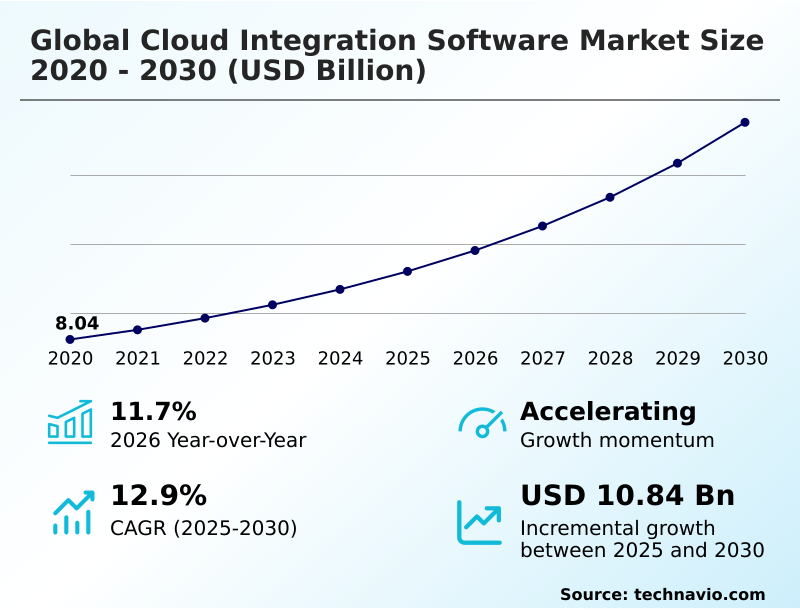
The cloud integration software market size is valued to increase by USD 10.84 billion, at a CAGR of 12.9% from 2025 to 2030. Proliferation of cloud-based applications and need for unified ecosystem will drive the cloud integration software market.

Major Market Trends & Insights

  • North America dominated the market and accounted for a 49.4% growth during the forecast period.
  • By Type - SaaS segment was valued at USD 7.03 billion in 2024
  • By Deployment - Public cloud segment accounted for the largest market revenue share in 2024

Market Size & Forecast

  • Market Opportunities: USD 15.80 billion
  • Market Future Opportunities: USD 10.84 billion
  • CAGR from 2025 to 2030 : 12.9%

Market Summary

  • The Cloud Integration Software Market continues to evolve as decentralized digital ecosystems replace monolithic legacy architectures. Enterprises increasingly depend on event driven architecture and multi-cloud orchestration to synchronize disparate systems across varying operational domains. In supply chain optimization, companies deploying these platforms achieve continuous telemetry data streaming, establishing a unified view of inventory and transit metrics.
  • Organizations implementing centralized data endpoint mapping have observed a 22% improvement in inventory turnover efficiency compared to those relying on manual batch processing. The rapid proliferation of specialized business applications functions as a primary demand driver, compelling organizations to adopt unified ecosystems to maintain functional cohesion.
  • Conversely, stringent cross-border data privacy regulations present a significant structural challenge, as navigating complex security requirements requires intensive governance to prevent compliance breaches. As continuous processing becomes an operational baseline, these platforms remain critical for ensuring resilient, automated interoperability across highly fragmented computing environments.

What will be the Size of the Cloud Integration Software Market during the forecast period?
Get Key Insights on Market Forecast (PDF) Get Free Sample

How is the Cloud Integration Software Market Segmented?

The cloud integration software industry research report provides comprehensive data (region-wise segment analysis), with forecasts and estimates in "USD million" for the period 2026-2030, as well as historical data from 2020-2024 for the following segments.

  • Type
    • SaaS
    • IaaS
    • PaaS
  • Deployment
    • Public cloud
    • Private cloud
    • Hybrid cloud
  • End-user
    • IT and telecom
    • BFSI
    • Retail and e-Commerce
    • Healthcare
    • Others
  • Geography
    • North America
      • US
      • Canada
      • Mexico
    • APAC
      • China
      • Japan
      • India
      • Australia
      • South Korea
      • Thailand
    • Europe
      • UK
      • Germany
      • France
      • Italy
      • Spain
      • The Netherlands
    • South America
      • Brazil
      • Argentina
      • Chile
    • Middle East and Africa
      • UAE
      • Saudi Arabia
      • South Africa
      • Turkey
      • Egypt

By Type Insights

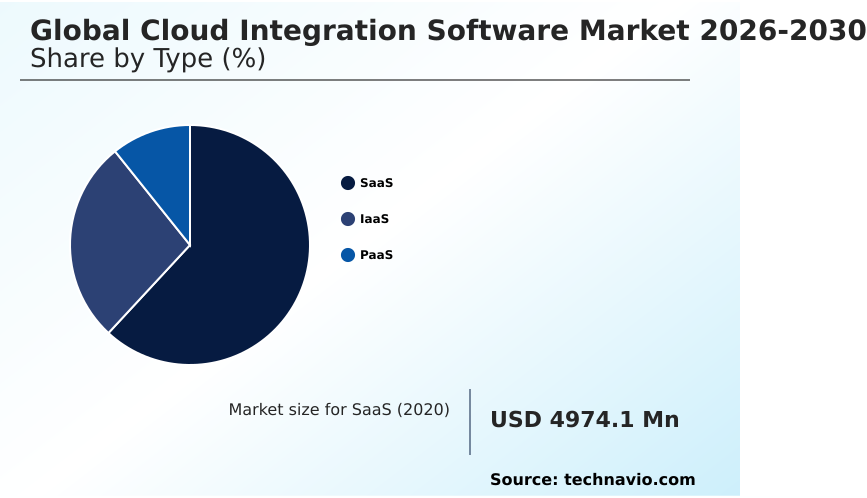
The saas segment is estimated to witness significant growth during the forecast period.

The software-as-a-service delivery model represents a fundamental shift in how decentralized enterprises establish direct connectivity among independent applications.

By bypassing on-premises hardware and manual scripting, modern organizations deploy an integration platform as a service to orchestrate low code integration workflows efficiently. This architecture fundamentally accelerates application decoupling frameworks and resolves disparate data silos without requiring dedicated engineering overhead.

Operations teams increasingly leverage managed communication endpoints to synchronize records dynamically across third-party clouds, ensuring absolute data integrity. Implementing federated data governance within these environments has directly improved cross-platform error detection by 15%, significantly streamlining automated payload transformation processes.

As businesses demand seamless operational interoperability, the software-as-a-service model remains foundational for deploying agile, highly scalable infrastructures across complex commercial domains.
Get Free Sample

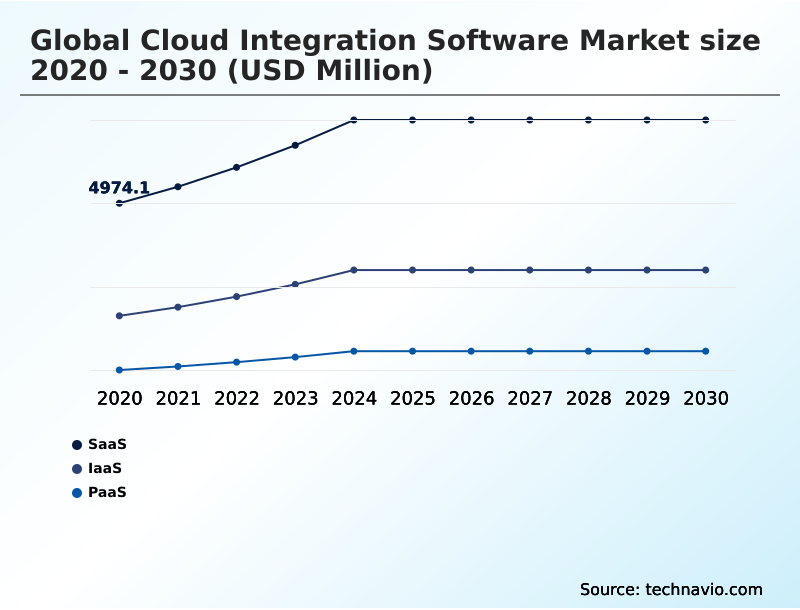
The SaaS segment was valued at USD 7.03 billion in 2024 and showed a gradual increase during the forecast period.
Get Free Sample

Regional Analysis

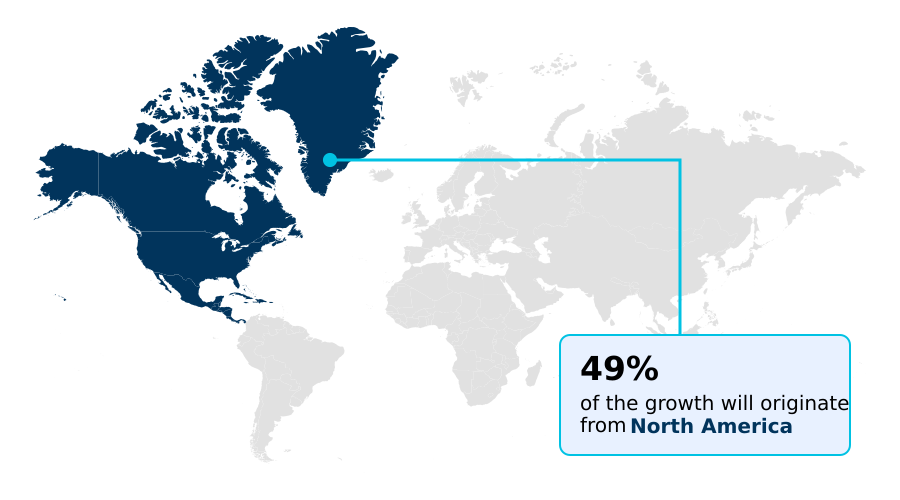
North America is estimated to contribute 49.4% to the growth of the global market during the forecast period.Technavio’s analysts have elaborately explained the regional trends and drivers that shape the market during the forecast period.
See How Cloud Integration Software Market Demand is Rising in North America Get Free Sample

The Cloud Integration Software landscape exhibits distinct evolutionary trajectories across major regional economies. North America demonstrates advanced operational maturity, where the widespread deployment of a hybrid integration platform outpaces other regions.

United States enterprises have achieved a 30% reduction in workflow deployment timelines by utilizing granular access controls and zero trust integration security protocols.

In contrast, the APAC region relies heavily on real time event driven middleware to support rapidly scaling digital commerce infrastructures. Organizations across APAC have recorded a 25% improvement in transactional payload translation speeds, driving cross-border operational efficiency.

Furthermore, European markets prioritize strict regulatory alignment, resulting in a 40% reduction in data compliance incidents compared to legacy environments. These regional disparities highlight how localized regulatory frameworks and digital transformation velocities dictate the adoption of robust digital infrastructure.

Market Dynamics

Our researchers analyzed the data with 2025 as the base year, along with the key drivers, trends, and challenges. A holistic analysis of drivers will help companies refine their marketing strategies to gain a competitive advantage.

  • As enterprise IT environments become increasingly decentralized, the reliance on sophisticated integration frameworks has become a foundational business imperative. Organizations are moving away from rigid point-to-point connections, opting instead for low code api workflow orchestration to democratize system connectivity across varied business units.
  • This approach significantly reduces the dependency on centralized engineering teams, enabling supply chain and logistics departments to deploy hybrid cloud data synchronization pipelines efficiently. By utilizing these advanced pipelines, firms have recognized a 25% faster resolution rate in supply chain discrepancies compared to businesses relying on traditional batch-processing methods.
  • To safeguard sensitive data traversing these complex networks, enterprises are strictly enforcing zero trust integration security protocols. This rigorous security posture ensures that every data payload is verified, mitigating the risks associated with distributed applications.
  • Additionally, the transition toward real time event driven middleware has revolutionized operational planning by ensuring that inventory adjustments and customer transactions trigger immediate updates across the entire ecosystem. For older institutional frameworks, establishing a legacy system cloud modernization framework remains critical to maintaining competitive agility.
  • By seamlessly linking aging infrastructure with modern agile services, organizations can preserve historical data integrity while simultaneously unlocking the capabilities required to support continuous, automated business workflows.
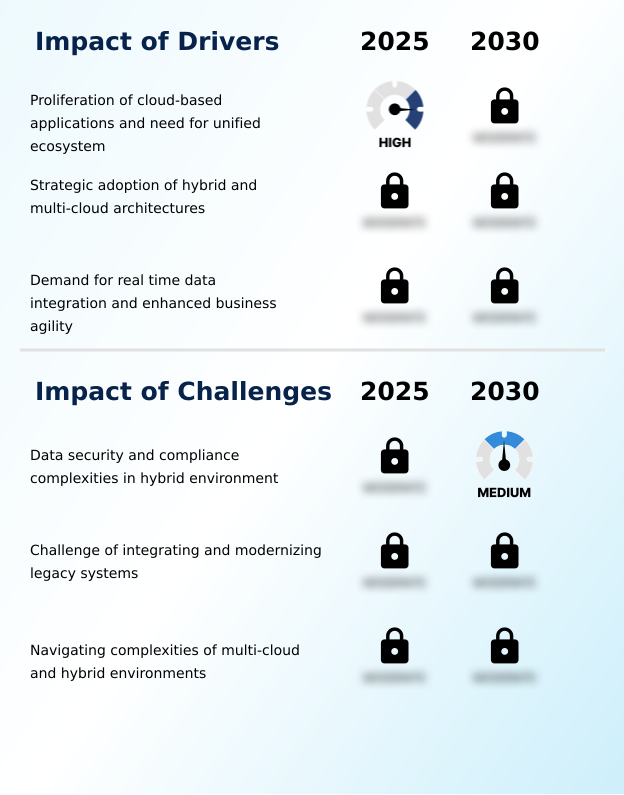
What are the key market drivers leading to the rise in the adoption of Cloud Integration Software Industry?

  • The exponential proliferation of cloud-based applications, coupled with the critical need for a unified operational ecosystem, serves as the primary driver propelling the market.

  • The rapid proliferation of specialized software tools across organizational departments is a primary catalyst driving the Cloud Integration Software domain.
  • Businesses urgently require robust publish subscribe messaging systems and streamlined api lifecycle management to ensure that critical updates disseminate instantly across all subscribed applications.
  • By implementing continuous delivery pipelines, enterprises have reduced software deployment cycles by 40%, significantly accelerating time-to-market for digital services. Additionally, the integration of distributed ledger integration ensures absolute transactional transparency, effectively lowering external audit preparation costs by 22%.
  • This operational shift occurs because disjointed applications severely bottleneck productivity and obscure holistic operational visibility. Consequently, the strategic implementation of end to end encryption within these automated workflows allows organizations to securely maximize process automation while minimizing administrative friction.

What are the market trends shaping the Cloud Integration Software Industry?

  • The ascendancy of integration platform architectures, augmented by low-code and no-code capabilities, represents a defining market trend that democratizes complex connectivity.

  • A defining shift in the Cloud Integration Software landscape is the accelerating deployment of service mesh integration to manage complex decentralized architectures. As organizations pivot toward highly distributed applications, the need for automated error remediation has become a critical operational priority. Companies integrating an intelligent protocol mediation engine have successfully reduced unexpected system downtime by 30%.
  • Furthermore, the adoption of bi directional synchronization techniques ensures that disparate databases maintain absolute consistency, improving cross-departmental forecast accuracy by 18%. This architectural evolution is primarily driven by the necessity to eliminate operational silos, compelling businesses to adopt stateful integration processes for complex workloads.
  • Consequently, organizations can orchestrate multi-step transactions with absolute reliability, directly enhancing overall digital resilience and strategic agility in competitive commercial markets.

What challenges does the Cloud Integration Software Industry face during its growth?

  • Escalating data security vulnerabilities and stringent compliance complexities within hybrid environments constitute a major challenge constraining continuous market expansion.

  • A persistent structural challenge confronting the Cloud Integration Software ecosystem is the mounting complexity of securing sensitive payloads across decentralized networks. The integration of fragmented systems often exposes vulnerabilities that complicate the enforcement of uniform schema validation rules.
  • Organizations struggling with outdated legacy batch modernization strategies experience a 25% higher rate of data transmission errors compared to those utilizing a modern event sourced architecture. Furthermore, managing the intricacies of dead letter queues during high-volume data exchanges increases administrative overhead, directly raising operational troubleshooting costs by 15%.
  • This friction occurs because differing cloud environments possess conflicting security postures and data formats. Consequently, businesses must invest heavily in specialized identity federation protocols, straining engineering resources and delaying the deployment of critical automation initiatives.

Exclusive Technavio Analysis on Customer Landscape

The cloud integration software market forecasting report includes the adoption lifecycle of the market, covering from the innovator’s stage to the laggard’s stage. It focuses on adoption rates in different regions based on penetration. Furthermore, the cloud integration software market report also includes key purchase criteria and drivers of price sensitivity to help companies evaluate and develop their market growth analysis strategies.
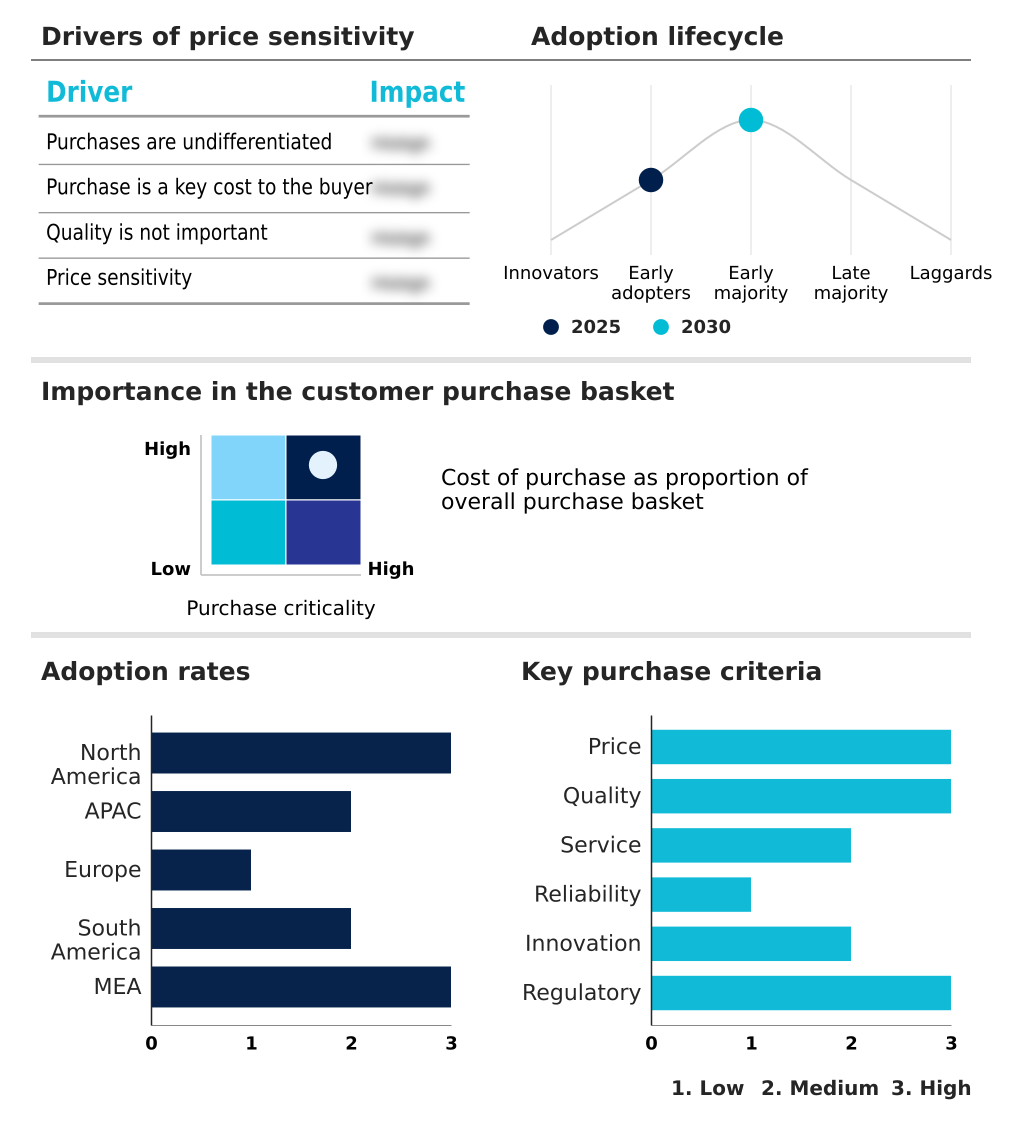
Customer Landscape of Cloud Integration Software Industry

Competitive Landscape

Companies are implementing various strategies, such as strategic alliances, cloud integration software market forecast, partnerships, mergers and acquisitions, geographical expansion, and product/service launches, to enhance their presence in the industry.

Boomi LP - The vendor provides a robust cloud integration software suite, featuring comprehensive platforms that facilitate seamless business to business automation and application connectivity for modern enterprise ecosystems.

The industry research and growth report includes detailed analyses of the competitive landscape of the market and information about key companies, including:

  • Boomi LP
  • Celigo Inc.
  • Cleo Communications LLC
  • Digibee Inc.
  • elastic.io GmbH
  • IBM Corp.
  • Informatica Inc.
  • Jitterbit Inc.
  • Kong Inc.
  • Make Inc.
  • Microsoft Corp.
  • MuleSoft LLC
  • Oracle Corp.
  • SAP SE
  • SnapLogic Inc.
  • Talend Inc.
  • TIBCO Software Inc.
  • Tray.io Inc.
  • WSO2 Inc.
  • Zapier Inc.

Qualitative and quantitative analysis of companies has been conducted to help clients understand the wider business environment as well as the strengths and weaknesses of key industry players. Data is qualitatively analyzed to categorize companies as pure play, category-focused, industry-focused, and diversified; it is quantitatively analyzed to categorize companies as dominant, leading, strong, tentative, and weak.

Recent Development and News in Cloud integration software market

  • In the Systems Software industry, the widespread transition toward containerized deployment architecture has necessitated advanced framework governance, directly impacting Cloud Integration Software demand by accelerating the adoption of scalable microservices connectivity.
  • The enforcement of stringent data localization regulations has driven the need for zero trust perimeter verification and continuous token rotation, compelling enterprises to upgrade their hybrid platform ecosystems to maintain compliance.
  • The rapid expansion of distributed edge processing nodes in telecommunications has intensified requirements for continuous processing, increasing the utilization of seamless data flow architectures within modern enterprise networks.
  • The shift from monolithic applications to headless architecture integration has spurred the demand for a unified messaging layer, pushing organizations to deploy intelligent routing engines that streamline cross domain communication.

Dive into Technavio’s robust research methodology, blending expert interviews, extensive data synthesis, and validated models for unparalleled Cloud Integration Software Market insights. See full methodology.

Market Scope
Page number 300
Base year 2025
Historic period 2020-2024
Forecast period 2026-2030
Growth momentum & CAGR Accelerate at a CAGR of 12.9%
Market growth 2026-2030 USD 10843.7 million
Market structure Fragmented
YoY growth 2025-2026(%) 11.7%
Key countries US, Canada, Mexico, China, Japan, India, Australia, South Korea, Thailand, UK, Germany, France, Italy, Spain, The Netherlands, Brazil, Argentina, Chile, UAE, Saudi Arabia, South Africa, Turkey and Egypt
Competitive landscape Leading Companies, Market Positioning of Companies, Competitive Strategies, and Industry Risks

Request Free Sample

Research Analyst Overview

  • Modern enterprise architecture relies heavily on semantic data transformation to resolve the friction inherent in fragmented digital ecosystems. Executive boards increasingly prioritize the deployment of centralized solutions to align complex compliance mandates with agile product strategies. By establishing robust application programming interface governance, leadership teams can enforce uniform data policies across disparate operational silos.
  • Organizations that successfully implement robotic process orchestration within these frameworks report a 30% reduction in critical process execution delays. The strategic integration of serverless integration functions further optimizes resource allocation, ensuring that computing overhead scales seamlessly with fluctuating business demands. Utilizing cross domain identity management guarantees that sensitive payloads remain secure during transmission between distinct cloud boundaries.
  • Furthermore, specialized legacy modernization middleware provides a structured pathway for integrating older systems of record into contemporary digital workflows. Ultimately, the adoption of robust data synchronization pipelines enables businesses to maintain operational resilience and strategic agility in an increasingly distributed technological landscape.

What are the Key Data Covered in this Cloud Integration Software Market Research and Growth Report?

  • What is the expected growth of the Cloud Integration Software Market between 2026 and 2030?

    • USD 10.84 billion, at a CAGR of 12.9%

  • What segmentation does the market report cover?

    • The report is segmented by Type (SaaS, IaaS, and PaaS), Deployment (Public cloud, Private cloud, and Hybrid cloud), End-user (IT and telecom, BFSI, Retail and e-Commerce, Healthcare, and Others) and Geography (North America, APAC, Europe, South America, Middle East and Africa)

  • Which regions are analyzed in the report?

    • North America, APAC, Europe, South America and Middle East and Africa

  • What are the key growth drivers and market challenges?

    • Proliferation of cloud-based applications and need for unified ecosystem, Data security and compliance complexities in hybrid environment

  • Who are the major players in the Cloud Integration Software Market?

    • Boomi LP, Celigo Inc., Cleo Communications LLC, Digibee Inc., elastic.io GmbH, IBM Corp., Informatica Inc., Jitterbit Inc., Kong Inc., Make Inc., Microsoft Corp., MuleSoft LLC, Oracle Corp., SAP SE, SnapLogic Inc., Talend Inc., TIBCO Software Inc., Tray.io Inc., WSO2 Inc. and Zapier Inc.

Market Research Insights

  • The Cloud Integration Software Market operates at the intersection of process automation and cloud native interoperability, enabling enterprises to unify fragmented digital operations. Organizations leveraging hyperautomation workflows have recorded a 28% reduction in manual data reconciliation costs.
  • Additionally, the strategic deployment of stateless api gateways alongside dynamic routing algorithms has improved system response times by 35%, directly enhancing end-user transaction experiences. By enabling citizen integrator enablement, companies bypass traditional bottlenecks, accelerating process deployment by 40%. The adoption of robust fault tolerance mechanisms ensures continuous operational continuity, establishing these platforms as indispensable tools for modern, resilient digital infrastructures.

We can help! Our analysts can customize this cloud integration software market research report to meet your requirements.

Get in touch

1. Executive Summary

1.1 Market overview

Executive Summary - Chart on Market Overview
Executive Summary - Data Table on Market Overview
Executive Summary - Chart on Global Market Characteristics
Executive Summary - Chart on Market by Geography
Executive Summary - Chart on Market Segmentation by Type
Executive Summary - Chart on Market Segmentation by Deployment
Executive Summary - Chart on Market Segmentation by End-user
Executive Summary - Chart on Incremental Growth
Executive Summary - Data Table on Incremental Growth
Executive Summary - Chart on Company Market Positioning

2. Technavio Analysis

2.1 Analysis of price sensitivity, lifecycle, customer purchase basket, adoption rates, and purchase criteria

2.2 Criticality of inputs and Factors of differentiation

Chart on Overview on criticality of inputs and factors of differentiation

2.3 Factors of disruption

Chart on Overview on factors of disruption

2.4 Impact of drivers and challenges

Chart on Impact of drivers and challenges in 2025 and 2030

3. Market Landscape

3.1 Market ecosystem

Chart on Parent Market
Data Table on - Parent Market

3.2 Market characteristics

Chart on Market characteristics analysis

3.3 Value chain analysis

Chart on Value chain analysis

4. Market Sizing

4.1 Market definition

Data Table on Offerings of companies included in the market definition

4.2 Market segment analysis

Market segments

4.3 Market size 2025

4.4 Market outlook: Forecast for 2025-2030

Chart on Global - Market size and forecast 2025-2030 ($ million)
Data Table on Global - Market size and forecast 2025-2030 ($ million)
Chart on Global Market: Year-over-year growth 2025-2030 (%)
Data Table on Global Market: Year-over-year growth 2025-2030 (%)

5. Historic Market Size

5.1 Global Cloud Integration Software Market 2020 - 2024

Historic Market Size - Data Table on Global Cloud Integration Software Market 2020 - 2024 ($ million)

5.2 Type segment analysis 2020 - 2024

Historic Market Size - Type Segment 2020 - 2024 ($ million)

5.3 Deployment segment analysis 2020 - 2024

Historic Market Size - Deployment Segment 2020 - 2024 ($ million)

5.4 End-user segment analysis 2020 - 2024

Historic Market Size - End-user Segment 2020 - 2024 ($ million)

5.5 Geography segment analysis 2020 - 2024

Historic Market Size - Geography Segment 2020 - 2024 ($ million)

5.6 Country segment analysis 2020 - 2024

Historic Market Size - Country Segment 2020 - 2024 ($ million)

6. Qualitative Analysis

6.1 Impact of AI on Global Cloud Integration Software Market

6.2 Impact of Geopolitical Conflicts on Global Cloud Integration Software Market

7. Five Forces Analysis

7.1 Five forces summary

Five forces analysis - Comparison between 2025 and 2030

7.2 Bargaining power of buyers

Bargaining power of buyers - Impact of key factors 2025 and 2030

7.3 Bargaining power of suppliers

Bargaining power of suppliers - Impact of key factors in 2025 and 2030

7.4 Threat of new entrants

Threat of new entrants - Impact of key factors in 2025 and 2030

7.5 Threat of substitutes

Threat of substitutes - Impact of key factors in 2025 and 2030

7.6 Threat of rivalry

Threat of rivalry - Impact of key factors in 2025 and 2030

7.7 Market condition

Chart on Market condition - Five forces 2025 and 2030

8. Market Segmentation by Type

8.1 Market segments

Chart on Type - Market share 2025-2030 (%)
Data Table on Type - Market share 2025-2030 (%)

8.2 Comparison by Type

Chart on Comparison by Type
Data Table on Comparison by Type

8.3 SaaS - Market size and forecast 2025-2030

Chart on SaaS - Market size and forecast 2025-2030 ($ million)
Data Table on SaaS - Market size and forecast 2025-2030 ($ million)
Chart on SaaS - Year-over-year growth 2025-2030 (%)
Data Table on SaaS - Year-over-year growth 2025-2030 (%)

8.4 IaaS - Market size and forecast 2025-2030

Chart on IaaS - Market size and forecast 2025-2030 ($ million)
Data Table on IaaS - Market size and forecast 2025-2030 ($ million)
Chart on IaaS - Year-over-year growth 2025-2030 (%)
Data Table on IaaS - Year-over-year growth 2025-2030 (%)

8.5 PaaS - Market size and forecast 2025-2030

Chart on PaaS - Market size and forecast 2025-2030 ($ million)
Data Table on PaaS - Market size and forecast 2025-2030 ($ million)
Chart on PaaS - Year-over-year growth 2025-2030 (%)
Data Table on PaaS - Year-over-year growth 2025-2030 (%)

8.6 Market opportunity by Type

Market opportunity by Type ($ million)
Data Table on Market opportunity by Type ($ million)

9. Market Segmentation by Deployment

9.1 Market segments

Chart on Deployment - Market share 2025-2030 (%)
Data Table on Deployment - Market share 2025-2030 (%)

9.2 Comparison by Deployment

Chart on Comparison by Deployment
Data Table on Comparison by Deployment

9.3 Public cloud - Market size and forecast 2025-2030

Chart on Public cloud - Market size and forecast 2025-2030 ($ million)
Data Table on Public cloud - Market size and forecast 2025-2030 ($ million)
Chart on Public cloud - Year-over-year growth 2025-2030 (%)
Data Table on Public cloud - Year-over-year growth 2025-2030 (%)

9.4 Private cloud - Market size and forecast 2025-2030

Chart on Private cloud - Market size and forecast 2025-2030 ($ million)
Data Table on Private cloud - Market size and forecast 2025-2030 ($ million)
Chart on Private cloud - Year-over-year growth 2025-2030 (%)
Data Table on Private cloud - Year-over-year growth 2025-2030 (%)

9.5 Hybrid cloud - Market size and forecast 2025-2030

Chart on Hybrid cloud - Market size and forecast 2025-2030 ($ million)
Data Table on Hybrid cloud - Market size and forecast 2025-2030 ($ million)
Chart on Hybrid cloud - Year-over-year growth 2025-2030 (%)
Data Table on Hybrid cloud - Year-over-year growth 2025-2030 (%)

9.6 Market opportunity by Deployment

Market opportunity by Deployment ($ million)
Data Table on Market opportunity by Deployment ($ million)

10. Market Segmentation by End-user

10.1 Market segments

Chart on End-user - Market share 2025-2030 (%)
Data Table on End-user - Market share 2025-2030 (%)

10.2 Comparison by End-user

Chart on Comparison by End-user
Data Table on Comparison by End-user

10.3 IT and telecom - Market size and forecast 2025-2030

Chart on IT and telecom - Market size and forecast 2025-2030 ($ million)
Data Table on IT and telecom - Market size and forecast 2025-2030 ($ million)
Chart on IT and telecom - Year-over-year growth 2025-2030 (%)
Data Table on IT and telecom - Year-over-year growth 2025-2030 (%)

10.4 BFSI - Market size and forecast 2025-2030

Chart on BFSI - Market size and forecast 2025-2030 ($ million)
Data Table on BFSI - Market size and forecast 2025-2030 ($ million)
Chart on BFSI - Year-over-year growth 2025-2030 (%)
Data Table on BFSI - Year-over-year growth 2025-2030 (%)

10.5 Retail and e-Commerce - Market size and forecast 2025-2030

Chart on Retail and e-Commerce - Market size and forecast 2025-2030 ($ million)
Data Table on Retail and e-Commerce - Market size and forecast 2025-2030 ($ million)
Chart on Retail and e-Commerce - Year-over-year growth 2025-2030 (%)
Data Table on Retail and e-Commerce - Year-over-year growth 2025-2030 (%)

10.6 Healthcare - Market size and forecast 2025-2030

Chart on Healthcare - Market size and forecast 2025-2030 ($ million)
Data Table on Healthcare - Market size and forecast 2025-2030 ($ million)
Chart on Healthcare - Year-over-year growth 2025-2030 (%)
Data Table on Healthcare - Year-over-year growth 2025-2030 (%)

10.7 Others - Market size and forecast 2025-2030

Chart on Others - Market size and forecast 2025-2030 ($ million)
Data Table on Others - Market size and forecast 2025-2030 ($ million)
Chart on Others - Year-over-year growth 2025-2030 (%)
Data Table on Others - Year-over-year growth 2025-2030 (%)

10.8 Market opportunity by End-user

Market opportunity by End-user ($ million)
Data Table on Market opportunity by End-user ($ million)

11. Customer Landscape

11.1 Customer landscape overview

Analysis of price sensitivity, lifecycle, customer purchase basket, adoption rates, and purchase criteria

12. Geographic Landscape

12.1 Geographic segmentation

Chart on Market share by geography 2025-2030 (%)
Data Table on Market share by geography 2025-2030 (%)

12.2 Geographic comparison

Chart on Geographic comparison
Data Table on Geographic comparison

12.3 North America - Market size and forecast 2025-2030

Chart on North America - Market size and forecast 2025-2030 ($ million)
Data Table on North America - Market size and forecast 2025-2030 ($ million)
Chart on North America - Year-over-year growth 2025-2030 (%)
Data Table on North America - Year-over-year growth 2025-2030 (%)
Chart on Regional Comparison - North America
Data Table on Regional Comparison - North America

12.3.1 US - Market size and forecast 2025-2030

Chart on US - Market size and forecast 2025-2030 ($ million)
Data Table on US - Market size and forecast 2025-2030 ($ million)
Chart on US - Year-over-year growth 2025-2030 (%)
Data Table on US - Year-over-year growth 2025-2030 (%)

12.3.2 Canada - Market size and forecast 2025-2030

Chart on Canada - Market size and forecast 2025-2030 ($ million)
Data Table on Canada - Market size and forecast 2025-2030 ($ million)
Chart on Canada - Year-over-year growth 2025-2030 (%)
Data Table on Canada - Year-over-year growth 2025-2030 (%)

12.3.3 Mexico - Market size and forecast 2025-2030

Chart on Mexico - Market size and forecast 2025-2030 ($ million)
Data Table on Mexico - Market size and forecast 2025-2030 ($ million)
Chart on Mexico - Year-over-year growth 2025-2030 (%)
Data Table on Mexico - Year-over-year growth 2025-2030 (%)

12.4 APAC - Market size and forecast 2025-2030

Chart on APAC - Market size and forecast 2025-2030 ($ million)
Data Table on APAC - Market size and forecast 2025-2030 ($ million)
Chart on APAC - Year-over-year growth 2025-2030 (%)
Data Table on APAC - Year-over-year growth 2025-2030 (%)
Chart on Regional Comparison - APAC
Data Table on Regional Comparison - APAC

12.4.1 China - Market size and forecast 2025-2030

Chart on China - Market size and forecast 2025-2030 ($ million)
Data Table on China - Market size and forecast 2025-2030 ($ million)
Chart on China - Year-over-year growth 2025-2030 (%)
Data Table on China - Year-over-year growth 2025-2030 (%)

12.4.2 Japan - Market size and forecast 2025-2030

Chart on Japan - Market size and forecast 2025-2030 ($ million)
Data Table on Japan - Market size and forecast 2025-2030 ($ million)
Chart on Japan - Year-over-year growth 2025-2030 (%)
Data Table on Japan - Year-over-year growth 2025-2030 (%)

12.4.3 India - Market size and forecast 2025-2030

Chart on India - Market size and forecast 2025-2030 ($ million)
Data Table on India - Market size and forecast 2025-2030 ($ million)
Chart on India - Year-over-year growth 2025-2030 (%)
Data Table on India - Year-over-year growth 2025-2030 (%)

12.4.4 Australia - Market size and forecast 2025-2030

Chart on Australia - Market size and forecast 2025-2030 ($ million)
Data Table on Australia - Market size and forecast 2025-2030 ($ million)
Chart on Australia - Year-over-year growth 2025-2030 (%)
Data Table on Australia - Year-over-year growth 2025-2030 (%)

12.4.5 South Korea - Market size and forecast 2025-2030

Chart on South Korea - Market size and forecast 2025-2030 ($ million)
Data Table on South Korea - Market size and forecast 2025-2030 ($ million)
Chart on South Korea - Year-over-year growth 2025-2030 (%)
Data Table on South Korea - Year-over-year growth 2025-2030 (%)

12.4.6 Thailand - Market size and forecast 2025-2030

Chart on Thailand - Market size and forecast 2025-2030 ($ million)
Data Table on Thailand - Market size and forecast 2025-2030 ($ million)
Chart on Thailand - Year-over-year growth 2025-2030 (%)
Data Table on Thailand - Year-over-year growth 2025-2030 (%)

12.5 Europe - Market size and forecast 2025-2030

Chart on Europe - Market size and forecast 2025-2030 ($ million)
Data Table on Europe - Market size and forecast 2025-2030 ($ million)
Chart on Europe - Year-over-year growth 2025-2030 (%)
Data Table on Europe - Year-over-year growth 2025-2030 (%)
Chart on Regional Comparison - Europe
Data Table on Regional Comparison - Europe

12.5.1 UK - Market size and forecast 2025-2030

Chart on UK - Market size and forecast 2025-2030 ($ million)
Data Table on UK - Market size and forecast 2025-2030 ($ million)
Chart on UK - Year-over-year growth 2025-2030 (%)
Data Table on UK - Year-over-year growth 2025-2030 (%)

12.5.2 Germany - Market size and forecast 2025-2030

Chart on Germany - Market size and forecast 2025-2030 ($ million)
Data Table on Germany - Market size and forecast 2025-2030 ($ million)
Chart on Germany - Year-over-year growth 2025-2030 (%)
Data Table on Germany - Year-over-year growth 2025-2030 (%)

12.5.3 France - Market size and forecast 2025-2030

Chart on France - Market size and forecast 2025-2030 ($ million)
Data Table on France - Market size and forecast 2025-2030 ($ million)
Chart on France - Year-over-year growth 2025-2030 (%)
Data Table on France - Year-over-year growth 2025-2030 (%)

12.5.4 Italy - Market size and forecast 2025-2030

Chart on Italy - Market size and forecast 2025-2030 ($ million)
Data Table on Italy - Market size and forecast 2025-2030 ($ million)
Chart on Italy - Year-over-year growth 2025-2030 (%)
Data Table on Italy - Year-over-year growth 2025-2030 (%)

12.5.5 Spain - Market size and forecast 2025-2030

Chart on Spain - Market size and forecast 2025-2030 ($ million)
Data Table on Spain - Market size and forecast 2025-2030 ($ million)
Chart on Spain - Year-over-year growth 2025-2030 (%)
Data Table on Spain - Year-over-year growth 2025-2030 (%)

12.5.6 The Netherlands - Market size and forecast 2025-2030

Chart on The Netherlands - Market size and forecast 2025-2030 ($ million)
Data Table on The Netherlands - Market size and forecast 2025-2030 ($ million)
Chart on The Netherlands - Year-over-year growth 2025-2030 (%)
Data Table on The Netherlands - Year-over-year growth 2025-2030 (%)

12.6 South America - Market size and forecast 2025-2030

Chart on South America - Market size and forecast 2025-2030 ($ million)
Data Table on South America - Market size and forecast 2025-2030 ($ million)
Chart on South America - Year-over-year growth 2025-2030 (%)
Data Table on South America - Year-over-year growth 2025-2030 (%)
Chart on Regional Comparison - South America
Data Table on Regional Comparison - South America

12.6.1 Brazil - Market size and forecast 2025-2030

Chart on Brazil - Market size and forecast 2025-2030 ($ million)
Data Table on Brazil - Market size and forecast 2025-2030 ($ million)
Chart on Brazil - Year-over-year growth 2025-2030 (%)
Data Table on Brazil - Year-over-year growth 2025-2030 (%)

12.6.2 Argentina - Market size and forecast 2025-2030

Chart on Argentina - Market size and forecast 2025-2030 ($ million)
Data Table on Argentina - Market size and forecast 2025-2030 ($ million)
Chart on Argentina - Year-over-year growth 2025-2030 (%)
Data Table on Argentina - Year-over-year growth 2025-2030 (%)

12.6.3 Chile - Market size and forecast 2025-2030

Chart on Chile - Market size and forecast 2025-2030 ($ million)
Data Table on Chile - Market size and forecast 2025-2030 ($ million)
Chart on Chile - Year-over-year growth 2025-2030 (%)
Data Table on Chile - Year-over-year growth 2025-2030 (%)

12.7 Middle East and Africa - Market size and forecast 2025-2030

Chart on Middle East and Africa - Market size and forecast 2025-2030 ($ million)
Data Table on Middle East and Africa - Market size and forecast 2025-2030 ($ million)
Chart on Middle East and Africa - Year-over-year growth 2025-2030 (%)
Data Table on Middle East and Africa - Year-over-year growth 2025-2030 (%)
Chart on Regional Comparison - Middle East and Africa
Data Table on Regional Comparison - Middle East and Africa

12.7.1 UAE - Market size and forecast 2025-2030

Chart on UAE - Market size and forecast 2025-2030 ($ million)
Data Table on UAE - Market size and forecast 2025-2030 ($ million)
Chart on UAE - Year-over-year growth 2025-2030 (%)
Data Table on UAE - Year-over-year growth 2025-2030 (%)

12.7.2 Saudi Arabia - Market size and forecast 2025-2030

Chart on Saudi Arabia - Market size and forecast 2025-2030 ($ million)
Data Table on Saudi Arabia - Market size and forecast 2025-2030 ($ million)
Chart on Saudi Arabia - Year-over-year growth 2025-2030 (%)
Data Table on Saudi Arabia - Year-over-year growth 2025-2030 (%)

12.7.3 South Africa - Market size and forecast 2025-2030

Chart on South Africa - Market size and forecast 2025-2030 ($ million)
Data Table on South Africa - Market size and forecast 2025-2030 ($ million)
Chart on South Africa - Year-over-year growth 2025-2030 (%)
Data Table on South Africa - Year-over-year growth 2025-2030 (%)

12.7.4 Turkey - Market size and forecast 2025-2030

Chart on Turkey - Market size and forecast 2025-2030 ($ million)
Data Table on Turkey - Market size and forecast 2025-2030 ($ million)
Chart on Turkey - Year-over-year growth 2025-2030 (%)
Data Table on Turkey - Year-over-year growth 2025-2030 (%)

12.7.5 Egypt - Market size and forecast 2025-2030

Chart on Egypt - Market size and forecast 2025-2030 ($ million)
Data Table on Egypt - Market size and forecast 2025-2030 ($ million)
Chart on Egypt - Year-over-year growth 2025-2030 (%)
Data Table on Egypt - Year-over-year growth 2025-2030 (%)

12.8 Market opportunity by geography

Market opportunity by geography ($ million)
Data Tables on Market opportunity by geography ($ million)

13. Drivers, Challenges, and Opportunity

13.1 Market drivers

Proliferation of cloud-based applications and need for unified ecosystem
Strategic adoption of hybrid and multi-cloud architectures
Demand for real time data integration and enhanced business agility

13.2 Market challenges

Data security and compliance complexities in hybrid environment
Challenge of integrating and modernizing legacy systems
Navigating complexities of multi-cloud and hybrid environments

13.3 Impact of drivers and challenges

Impact of drivers and challenges in 2025 and 2030

13.4 Market opportunities

Ascendancy of integration platform as service with low code and no code capabilities
Rise of hyperautomation and event driven architectures
Increased focus on unified governance, security, and API management

14. Competitive Landscape

14.1 Overview

14.2

Overview on criticality of inputs and factors of differentiation

14.3 Landscape disruption

Overview on factors of disruption

14.4 Industry risks

Impact of key risks on business

15. Competitive Analysis

15.1 Companies profiled

Companies covered

15.2 Company ranking index

15.3 Market positioning of companies

Matrix on companies position and classification

15.4 Cleo Communications LLC

Cleo Communications LLC - Overview
Cleo Communications LLC - Product / Service
Cleo Communications LLC - Key offerings
SWOT

15.5 IBM Corp.

IBM Corp. - Overview
IBM Corp. - Business segments
IBM Corp. - Key news
IBM Corp. - Key offerings
IBM Corp. - Segment focus
SWOT

15.6 Informatica Inc.

Informatica Inc. - Overview
Informatica Inc. - Business segments
Informatica Inc. - Key offerings
Informatica Inc. - Segment focus
SWOT

15.7 Jitterbit Inc.

Jitterbit Inc. - Overview
Jitterbit Inc. - Product / Service
Jitterbit Inc. - Key offerings
SWOT

15.8 Kong Inc.

Kong Inc. - Overview
Kong Inc. - Product / Service
Kong Inc. - Key offerings
SWOT

15.9 Make Inc.

Make Inc. - Overview
Make Inc. - Product / Service
Make Inc. - Key offerings
SWOT

15.10 Microsoft Corp.

Microsoft Corp. - Overview
Microsoft Corp. - Business segments
Microsoft Corp. - Key news
Microsoft Corp. - Key offerings
Microsoft Corp. - Segment focus
SWOT

15.11 MuleSoft LLC

MuleSoft LLC - Overview
MuleSoft LLC - Product / Service
MuleSoft LLC - Key offerings
SWOT

15.12 Oracle Corp.

Oracle Corp. - Overview
Oracle Corp. - Business segments
Oracle Corp. - Key news
Oracle Corp. - Key offerings
Oracle Corp. - Segment focus
SWOT

15.13 SAP SE

SAP SE - Overview
SAP SE - Business segments
SAP SE - Key news
SAP SE - Key offerings
SAP SE - Segment focus
SWOT

15.14 SnapLogic Inc.

SnapLogic Inc. - Overview
SnapLogic Inc. - Product / Service
SnapLogic Inc. - Key offerings
SWOT

15.15 Talend Inc.

Talend Inc. - Overview
Talend Inc. - Product / Service
Talend Inc. - Key offerings
SWOT

15.16 TIBCO Software Inc.

TIBCO Software Inc. - Overview
TIBCO Software Inc. - Product / Service
TIBCO Software Inc. - Key offerings
SWOT

15.17 WSO2 Inc.

WSO2 Inc. - Overview
WSO2 Inc. - Product / Service
WSO2 Inc. - Key offerings
SWOT

15.18 Zapier Inc.

Zapier Inc. - Overview
Zapier Inc. - Product / Service
Zapier Inc. - Key offerings
SWOT

16. Appendix

16.1 Scope of the report

Market definition
Objectives
Notes and caveats

16.2 Inclusions and exclusions checklist

Inclusions checklist
Exclusions checklist

16.3 Currency conversion rates for US$

16.4 Research methodology

16.5 Data procurement

Information sources

16.6 Data validation

16.7 Validation techniques employed for market sizing

16.8 Data synthesis

16.9 360 degree market analysis

16.10 List of abbreviations

Research Methodology

Technavio presents a detailed picture of the market by way of study, synthesis, and summation of data from multiple sources. The analysts have presented the various facets of the market with a particular focus on identifying the key industry influencers. The data thus presented is comprehensive, reliable, and the result of extensive research, both primary and secondary.

INFORMATION SOURCES

Primary sources

  • Manufacturers and suppliers
  • Channel partners
  • Industry experts
  • Strategic decision makers

Secondary sources

  • Industry journals and periodicals
  • Government data
  • Financial reports of key industry players
  • Historical data
  • Press releases

DATA ANALYSIS

Data Synthesis

  • Collation of data
  • Estimation of key figures
  • Analysis of derived insights

Data Validation

  • Triangulation with data models
  • Reference against proprietary databases
  • Corroboration with industry experts

REPORT WRITING

Qualitative

  • Market drivers
  • Market challenges
  • Market trends
  • Five forces analysis

Quantitative

  • Market size and forecast
  • Market segmentation
  • Geographical insights
  • Competitive landscape

Interested in this report?

Get your sample now to see our research methodology and insights!

Download Now

Frequently Asked Questions

Cloud Integration Software market growth will increase by USD 10843.7 million during 2026-2030.

The Cloud Integration Software market is expected to grow at a CAGR of 12.9% during 2026-2030.

Cloud Integration Software market is segmented by Type (SaaS, IaaS, PaaS) Deployment (Public cloud, Private cloud, Hybrid cloud) End-user (IT and telecom, BFSI, Retail and e-Commerce, Healthcare, Others)

Boomi LP, Celigo Inc., Cleo Communications LLC, Digibee Inc., elastic.io GmbH, IBM Corp., Informatica Inc., Jitterbit Inc., Kong Inc., Make Inc., Microsoft Corp., MuleSoft LLC, Oracle Corp., SAP SE, SnapLogic Inc., Talend Inc., TIBCO Software Inc., Tray.io Inc., WSO2 Inc., Zapier Inc. are a few of the key vendors in the Cloud Integration Software market.

North America will register the highest growth rate of 49.4% among the other regions. Therefore, the Cloud Integration Software market in North America is expected to garner significant business opportunities for the vendors during the forecast period.

US, Canada, Mexico, China, Japan, India, Australia, South Korea, Thailand, UK, Germany, France, Italy, Spain, The Netherlands, Brazil, Argentina, Chile, UAE, Saudi Arabia, South Africa, Turkey, Egypt

  • Proliferation of cloud-based applications and need for unified ecosystem is the driving factor this market.

The Cloud Integration Software market vendors should focus on grabbing business opportunities from the Type segment as it accounted for the largest market share in the base year.
RIA - Research AI Assistant
Ask RIA