


Botanical And Plant-derived Drugs Market Size 2026-2030
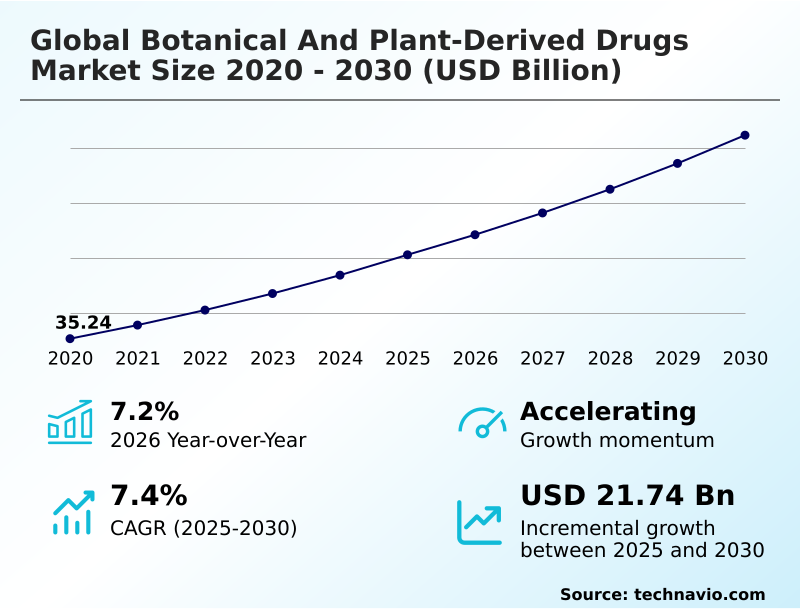
The botanical and plant-derived drugs market size is valued to increase by USD 21.74 billion, at a CAGR of 7.4% from 2025 to 2030. Increasing integration of traditional medicine with modern scientific advancements will drive the botanical and plant-derived drugs market.
Major Market Trends & Insights
- Asia dominated the market and accounted for a 45.9% growth during the forecast period.
- By Type - Oral segment was valued at USD 19.96 billion in 2024
- By Application - Infectious diseases segment accounted for the largest market revenue share in 2024
Market Size & Forecast
- Market Opportunities: USD 37.00 billion
- Market Future Opportunities: USD 21.74 billion
- CAGR from 2025 to 2030 : 7.4%
Market Summary
- The botanical and plant-derived drugs market is undergoing a significant transformation, driven by the convergence of traditional medicinal knowledge and modern scientific validation. This evolution is shifting the focus from basic herbal remedies to highly refined phytopharmaceuticals and botanical drug candidates that meet stringent regulatory standards.
- Key drivers include a growing consumer preference for natural-origin therapeutics and advancements in biotechnology that enable the development of plant-derived APIs with consistent efficacy. Innovations in plant cell culture and metabolic engineering are addressing historical challenges related to raw material variability. However, the industry grapples with complex regulatory harmonization and intellectual property constraints for naturally occurring compounds.
- For instance, a pharmaceutical firm developing a new therapy from a rare plant must establish a secure, ethically sourced supply chain and implement rigorous bioassay-guided fractionation to ensure batch-to-batch consistency, a critical factor for gaining clinical approval and market acceptance.
- This dynamic landscape is fostering the creation of novel treatments for chronic disease management, leveraging the synergistic effects of bioactive compounds found in ethnobotanical libraries.
What will be the Size of the Botanical And Plant-derived Drugs Market during the forecast period?
Get Key Insights on Market Forecast (PDF) Get Free Sample
How is the Botanical And Plant-derived Drugs Market Segmented?
The botanical and plant-derived drugs industry research report provides comprehensive data (region-wise segment analysis), with forecasts and estimates in "USD million" for the period 2026-2030, as well as historical data from 2020-2024 for the following segments.
- Type
- Oral
- Injectables
- Topicals
- Application
- Infectious diseases
- Central nervous system
- Cardiovascular diseases
- Respiratory diseases
- Others
- Source
- Plant-based
- Algae-based
- Fungi-based
- Geography
- Asia
- Europe
- Germany
- France
- UK
- North America
- US
- Canada
- Mexico
- Rest of World (ROW)
By Type Insights
The oral segment is estimated to witness significant growth during the forecast period.
The oral segment maintains a significant market position, driven by patient compliance and ease of administration.
A major focus is on mitigating concerns around batch-to-batch consistency in botanical drug formulations, as nearly 46% of new formulations face challenges with inconsistent active compound concentrations.
The industry is advancing toward standardized extracts in oral medications, leveraging plant-derived neuroprotectants and plant-derived anticoagulants to manage chronic conditions. This transition is supported by biotechnology-enhanced plant extraction and innovations in functional plant-based formulations.
Developments in encapsulation technology protect sensitive phytochemical markers, improving the bioavailability of active pharmaceutical ingredients and ensuring that multi-component botanical drugs and plant-based nutraceutical compounds achieve their intended therapeutic effect after oral delivery.
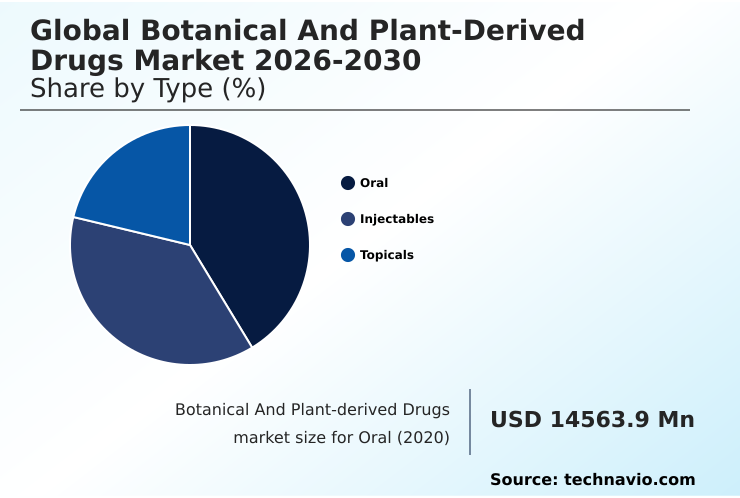
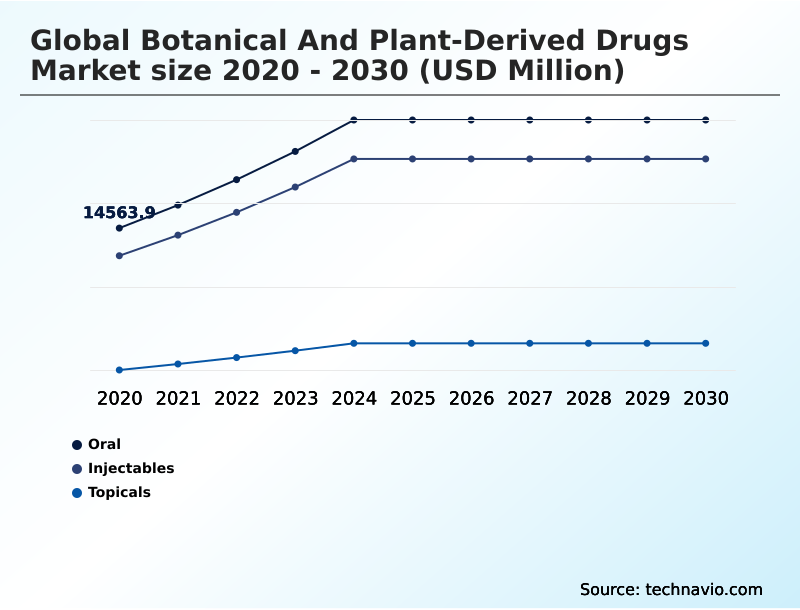
The Oral segment was valued at USD 19.96 billion in 2024 and showed a gradual increase during the forecast period.
Regional Analysis
Asia is estimated to contribute 45.9% to the growth of the global market during the forecast period.Technavio’s analysts have elaborately explained the regional trends and drivers that shape the market during the forecast period.

See How Botanical And Plant-derived Drugs Market Demand is Rising in Asia Get Free Sample
The geographic landscape is led by Asia, which accounts for 45.9% of the market's incremental growth, fueled by a deep-rooted history in traditional medicine and modernized regulatory frameworks.
This region's dominance is reinforced by government investment in high-tech extraction facilities to ensure the consistency of plant-derived APIs, which is critical for global exports.
North America follows, demonstrating robust growth driven by significant capital investment in pharmaceutical biotechnology and a sophisticated regulatory environment. The European market is characterized by stringent oversight and a mature consumer base with high trust in phytotherapy.
Key developments include the rise of plant-based vaccines and the application of natural-origin neuro-therapeutics.
The Rest of World is emerging as a vital contributor, leveraging its rich biodiversity to transition from a raw material exporter to a manufacturer of value-added products like plant-derived research compounds and herbal based respiratory therapies, addressing conditions from neuro-psychiatry to cardiovascular diseases.
Market Dynamics
Our researchers analyzed the data with 2025 as the base year, along with the key drivers, trends, and challenges. A holistic analysis of drivers will help companies refine their marketing strategies to gain a competitive advantage.
- The global botanical and plant-derived drugs market is witnessing a strategic shift toward developing high-value therapeutics for complex health challenges. This includes managing metabolic dysfunction cardiovascular disorders and treating neurodegenerative disorders mental health through innovative formulations. A key area of focus is on plant-derived lipid-lowering agents and botanical anti-infectives for antimicrobial resistance, which offer alternatives to conventional synthetic drugs.
- The development of fungal-derived compounds immunomodulatory activities is opening new frontiers in treatment. Furthermore, there is a growing pipeline dedicated to developing plant-derived drugs rare diseases by leveraging natural compound based research therapeutics.
- Success hinges on standardizing botanical extracts clinical application, a process complicated by inherent product variability, with some analyses showing that over 40% of formulations struggle with inconsistent active compound levels. Advanced nanoparticle delivery systems and the creation of multi-cannabinoid drug for autism highlight the industry's technological progress.
- Companies are commercializing botanical-based pharmaceutical products, including plant based therapeutic products, plant-derived anti-inflammatory drug, and botanical based gastrointestinal therapies. The establishment of resources like a botanical drug trade center and the production of herbal formulations, plant derived active ingredients, and natural dermatology products support this expanding ecosystem, which increasingly relies on plant based pharmaceuticals.
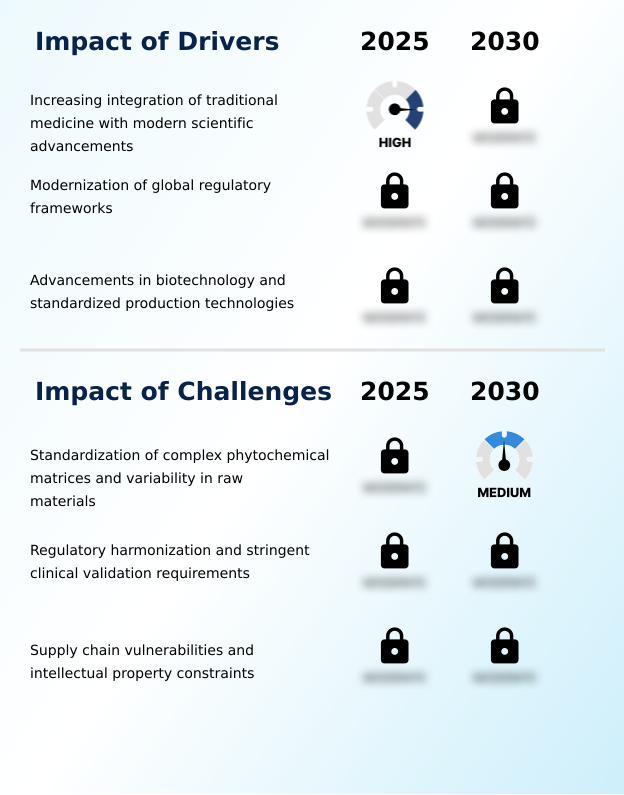
What are the key market drivers leading to the rise in the adoption of Botanical And Plant-derived Drugs Industry?
- The increasing integration of traditional medicine with modern scientific advancements serves as a key driver for market growth.
- Market expansion is fueled by the integration of traditional medicinal knowledge with modern clinical pharmacology, supported by modernizing regulatory frameworks.
- The global push to validate and standardize phytopharmaceuticals is creating clearer pathways for commercialization, especially for products derived from traditional chinese medicine.
- Advancements in high-throughput screening and bioassay-guided fractionation allow for the rapid identification of potent secondary metabolites and phytochemical markers. This scientific validation is increasing physician and patient trust in botanical-based therapeutic solutions.
- Regulatory bodies are now more receptive to evidence from ethnobotanical libraries, with some regions fast-tracking approvals for plant-derived treatments that address unmet needs, reducing approval timelines by up to 20%.
- This environment encourages investment in plant cell culture and metabolic engineering, ensuring a stable supply of high-quality plant-derived APIs and plant-based active pharmaceutical ingredients for a growing global market.
What are the market trends shaping the Botanical And Plant-derived Drugs Industry?
- The integration of advanced biotechnological synthesis with standardized extraction methods is an emerging market trend. This development enhances the consistency, purity, and efficacy of botanical therapeutics.
- Key market trends are centered on the adoption of advanced technologies to enhance therapeutic efficacy and consistency. The use of solid-state fermentation and transdermal delivery systems is expanding, particularly for chronic conditions like chronic obstructive pulmonary disease and eosinophilic asthma.
- Innovations in evidence-based phytotherapy are leading to the development of sophisticated botanical-based therapeutic solutions for cardiovascular risk reduction and the management of multi-drug resistant bacteria. This progress is supported by a deeper understanding of medicinal plant genomes and plant metabolic pathways.
- For example, clinical trials for neurodegenerative disorders have shown that certain botanical extracts can improve outcomes by over 15% compared to placebos. The push toward precision phytotherapy is driving R&D in plant-derived sterol formulations and other specialized treatments within the orphan drug space, where new plant-derived scaffolds offer hope for rare diseases.
What challenges does the Botanical And Plant-derived Drugs Industry face during its growth?
- Standardization of complex phytochemical matrices and variability in raw materials pose a key challenge to the industry's growth.
- The market faces significant challenges related to standardization and supply chain integrity. The inherent variability of complex phytochemical matrices and raw material variability makes achieving batch-to-batch consistency difficult, affecting the reliability of therapies. A lack of global regulatory harmonization creates substantial hurdles for commercialization, with disparate clinical validation requirements across regions.
- Furthermore, the industry is exposed to acute supply chain vulnerabilities and intellectual property constraints, as many critical botanicals are sourced from specific geographic areas. Experts note that geopolitical disruptions have left healthcare systems at a 30% higher risk of shortages for certain plant-derived drugs.
- Addressing these issues requires significant investment in controlled cultivation methods like plant-cell fermentation, the adoption of new approach methodologies for testing, and the development of resilient, transparent supply networks to support the growing pipeline of botanical drug candidates.
Exclusive Technavio Analysis on Customer Landscape
The botanical and plant-derived drugs market forecasting report includes the adoption lifecycle of the market, covering from the innovator’s stage to the laggard’s stage. It focuses on adoption rates in different regions based on penetration. Furthermore, the botanical and plant-derived drugs market report also includes key purchase criteria and drivers of price sensitivity to help companies evaluate and develop their market growth analysis strategies.
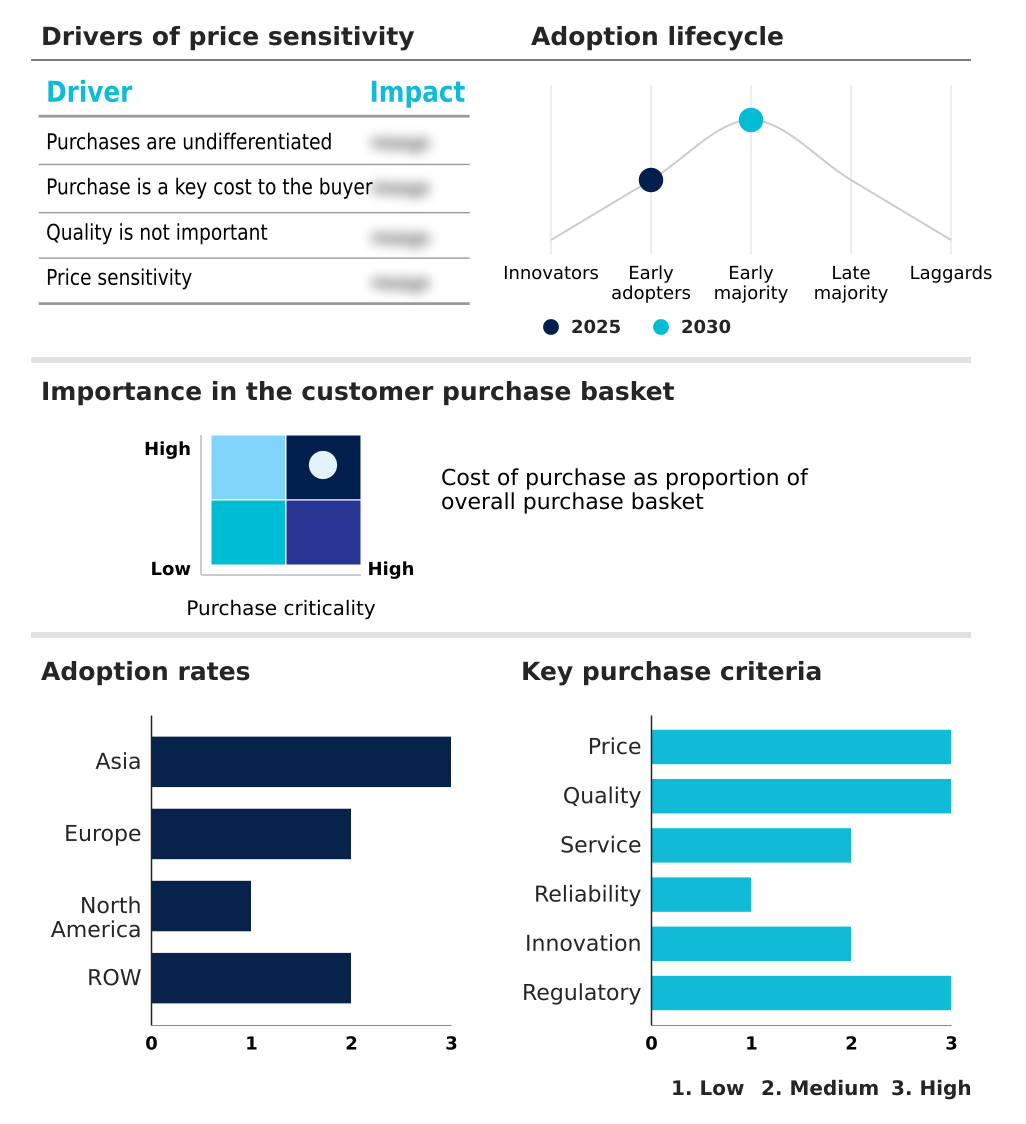
Customer Landscape of Botanical And Plant-derived Drugs Industry
Competitive Landscape
Companies are implementing various strategies, such as strategic alliances, botanical and plant-derived drugs market forecast, partnerships, mergers and acquisitions, geographical expansion, and product/service launches, to enhance their presence in the industry.
Bausch Health Companies Inc. - Key offerings include a range of botanical and plant-derived drugs, such as gastrointestinal therapies, herbal formulations, and natural product-based medicines for various health applications.
The industry research and growth report includes detailed analyses of the competitive landscape of the market and information about key companies, including:
- Bausch Health Companies Inc.
- Bayer AG
- BioHarvest Sciences Inc.
- Boehringer Ingelheim GmbH
- Devonian Health Group Inc.
- Emery Pharma LLC
- F. Hoffmann La Roche Ltd.
- Hetero Labs Ltd.
- Huisong Pharmaceuticals
- Jaguar Health Inc.
- Jazz Pharmaceuticals Plc
- Merck KGaA
- Novartis AG
- Pierre Fabre SA
- Protalix Biotherapeutics Inc.
- Sanofi SA
- Sun Pharmaceutical Industries
- Vertex Pharmaceuticals Inc.
- Willmar Schwabe GmbH & Co. KG
- Wilson Drugs
Qualitative and quantitative analysis of companies has been conducted to help clients understand the wider business environment as well as the strengths and weaknesses of key industry players. Data is qualitatively analyzed to categorize companies as pure play, category-focused, industry-focused, and diversified; it is quantitatively analyzed to categorize companies as dominant, leading, strong, tentative, and weak.
Recent Development and News in Botanical and plant-derived drugs market
- In August 2025, Jazz Pharmaceuticals announced the approval of Donidalorsen, an injectable treatment for the prevention of hereditary angioedema attacks, expanding its portfolio in the rare disease space.
- In February 2025, a new regulatory framework was introduced by the National Medical Products Administration in Asia to harmonize the approval process for botanical drugs derived from Traditional Chinese Medicine and Ayurveda, a move impacting companies like Sun Pharmaceutical Industries.
- In March 2025, Ajna BioSciences PBC and Charlottes Web Holdings Inc. received Investigational New Drug application clearance from the Food and Drug Administration for AJA001, an oral multi-cannabinoid drug for treating symptoms of autism spectrum disorder.
- In May 2025, Bausch Health Companies Inc. highlighted the expansion of botanical derivatives into the ophthalmic sector with the approval of Tryptyr, a new topical treatment for dry eye disease.
Dive into Technavio’s robust research methodology, blending expert interviews, extensive data synthesis, and validated models for unparalleled Botanical And Plant-derived Drugs Market insights. See full methodology.
| Market Scope | |
|---|---|
| Page number | 296 |
| Base year | 2025 |
| Historic period | 2020-2024 |
| Forecast period | 2026-2030 |
| Growth momentum & CAGR | Accelerate at a CAGR of 7.4% |
| Market growth 2026-2030 | USD 21744.7 million |
| Market structure | Fragmented |
| YoY growth 2025-2026(%) | 7.2% |
| Key countries | China, India, Japan, South Korea, Thailand, Vietnam, Germany, France, UK, Italy, Spain, The Netherlands, US, Canada, Mexico, Brazil, Saudi Arabia, UAE, Turkey, South Africa, Egypt, Argentina and Nigeria |
| Competitive landscape | Leading Companies, Market Positioning of Companies, Competitive Strategies, and Industry Risks |
Research Analyst Overview
- The botanical and plant-derived drugs market is advancing through the systematic application of high-throughput screening and metabolic engineering to unlock the potential of medicinal plant genomes. This scientific rigor is transforming traditional remedies into validated botanical drug candidates.
- The development of plant-derived APIs, including complex alkaloids and glycosides, is central to this evolution, enabling the creation of novel cannabinoid-based therapies and plant-derived scaffolds for oncology and immunology. Innovations in plant cell culture and supercritical fluid extraction are crucial for producing standardized herbal actives and ensuring the synergistic effects of multi-component botanical drugs.
- For instance, the adoption of advanced molecular distillation techniques can reduce purification times by over 25% compared to conventional methods, directly impacting production costs and scalability. This allows for the consistent manufacturing of phytopharmaceuticals and plant-based active pharmaceutical ingredients from ethnobotanical libraries, addressing the demand for effective treatments derived from plant metabolic pathways.
- The industry is now delivering sophisticated botanical drug formulations, targeting a wide range of conditions with greater precision.
What are the Key Data Covered in this Botanical And Plant-derived Drugs Market Research and Growth Report?
-
What is the expected growth of the Botanical And Plant-derived Drugs Market between 2026 and 2030?
-
USD 21.74 billion, at a CAGR of 7.4%
-
-
What segmentation does the market report cover?
-
The report is segmented by Type (Oral, Injectables, and Topicals), Application (Infectious diseases, Central nervous system, Cardiovascular diseases, Respiratory diseases, and Others), Source (Plant-based, Algae-based, and Fungi-based) and Geography (Asia, Europe, North America, Rest of World (ROW))
-
-
Which regions are analyzed in the report?
-
Asia, Europe, North America and Rest of World (ROW)
-
-
What are the key growth drivers and market challenges?
-
Increasing integration of traditional medicine with modern scientific advancements, Standardization of complex phytochemical matrices and variability in raw materials
-
-
Who are the major players in the Botanical And Plant-derived Drugs Market?
-
Bausch Health Companies Inc., Bayer AG, BioHarvest Sciences Inc., Boehringer Ingelheim GmbH, Devonian Health Group Inc., Emery Pharma LLC, F. Hoffmann La Roche Ltd., Hetero Labs Ltd., Huisong Pharmaceuticals, Jaguar Health Inc., Jazz Pharmaceuticals Plc, Merck KGaA, Novartis AG, Pierre Fabre SA, Protalix Biotherapeutics Inc., Sanofi SA, Sun Pharmaceutical Industries, Vertex Pharmaceuticals Inc., Willmar Schwabe GmbH & Co. KG and Wilson Drugs
-
Market Research Insights
- The market is shaped by a complex interplay of innovation and operational risk. While advancements in precision phytotherapy are creating new therapeutic avenues, significant supply chain vulnerabilities persist, with nearly half of essential plant-derived medicines reliant on materials from a single country. This creates substantial risk, compelling organizations to adopt digital traceability and diversify sourcing.
- Furthermore, achieving consistency remains a challenge, as approximately 46% of new botanical formulations struggle with uniform active compound concentrations, heightening the need for stringent clinical validation requirements and new approach methodologies.
- Firms are leveraging plant-cell fermentation and sustainable harvesting practices to mitigate these issues, ensuring that raw material variability does not impede the path to commercialization for novel plant-based animal health products and human therapeutics, including those for paroxysmal supraventricular tachycardia.
We can help! Our analysts can customize this botanical and plant-derived drugs market research report to meet your requirements.
 RIA -
RIA -