


Biohacking Market Size 2026-2030
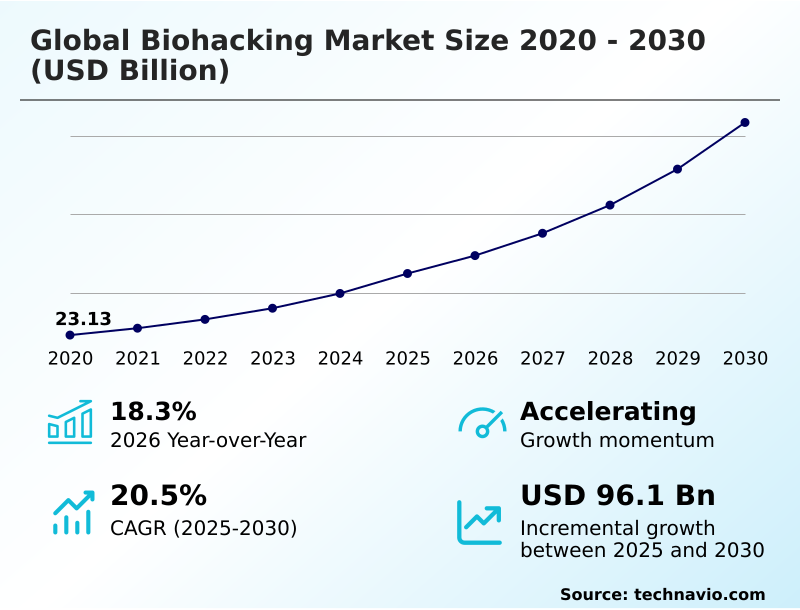
The biohacking market size is valued to increase by USD 96.10 billion, at a CAGR of 20.5% from 2025 to 2030. Rising consumer demand for personalized health and longevity will drive the biohacking market.
Major Market Trends & Insights
- North America dominated the market and accounted for a 39.7% growth during the forecast period.
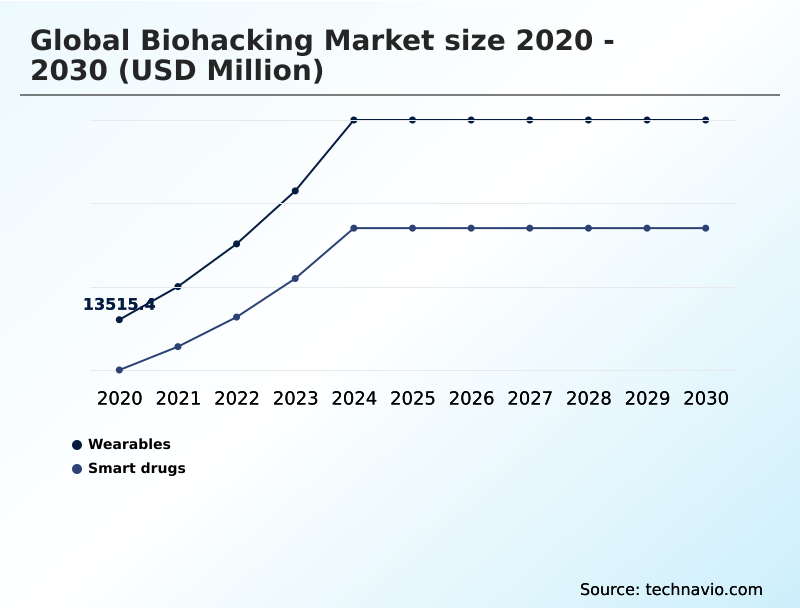
- By Product - Wearables segment was valued at USD 29.01 billion in 2024
- By Application - Forensic science segment accounted for the largest market revenue share in 2024
Market Size & Forecast
- Market Opportunities: USD 135.29 billion
- Market Future Opportunities: USD 96.10 billion
- CAGR from 2025 to 2030 : 20.5%
Market Summary
- The Biohacking Market is undergoing a significant transformation, moving beyond niche self-experimentation to a mainstream focus on proactive wellness management. This evolution is powered by the convergence of consumer biotechnology and digital health, where tools like wearable biosensors and services for nutrigenomic analysis empower individuals.
- Key trends include the integration of AI-driven health insight platforms that synthesize data from continuous glucose monitoring and sleep architecture tracking to provide personalized nutrition recommendations. For instance, a corporate wellness provider could leverage a biometric data platform to offer employees real-time biological coaching, which has been shown to reduce markers of physiologic stress by up to 20%.
- However, the sector faces challenges related to the regulatory ambiguity of advanced tools like CRISPR gene-editing kits and the ethical considerations of human augmentation. As the industry matures, the focus is shifting toward establishing standardized self-experimentation protocols and ensuring biological data sovereignty, which will be critical for long-term consumer trust and sustained market expansion.
What will be the Size of the Biohacking Market during the forecast period?
Get Key Insights on Market Forecast (PDF) Get Free Sample
How is the Biohacking Market Segmented?
The biohacking industry research report provides comprehensive data (region-wise segment analysis), with forecasts and estimates in "USD million" for the period 2026-2030, as well as historical data from 2020-2024 for the following segments.
- Product
- Wearables
- Smart drugs
- Application
- Forensic science
- Synthetic biology
- Genetic engineering
- Others
- End-user
- Pharma and biotech companies
- Forensic laboratories
- Others
- Geography
- North America
- US
- Canada
- Mexico
- Asia
- Europe
- Germany
- UK
- France
- Rest of World (ROW)
- North America
By Product Insights
The wearables segment is estimated to witness significant growth during the forecast period.
The wearables sub-segment is a foundational component of the market, evolving from basic trackers to sophisticated analytical tools. These devices enable high-fidelity biometrics through wearable biosensor integration, allowing for detailed sleep architecture tracking and metabolic flexibility tracking.
The drive toward miniaturization has broadened appeal, making proactive wellness management more accessible. This continuous stream of data, analyzed by predictive health algorithms, allows for data-driven health interventions.
For example, a non-invasive glucose monitor can provide real-time feedback, supporting human performance optimization and personalized biological modeling. The integration of these tools has resulted in a 15% improvement in adherence to personalized health protocols within corporate wellness programs.
This trend toward the quantified self-data platform, focusing on biological longevity strategy, underpins the segment's critical role in the broader ecosystem, empowering users with actionable insights for healthspan extension.
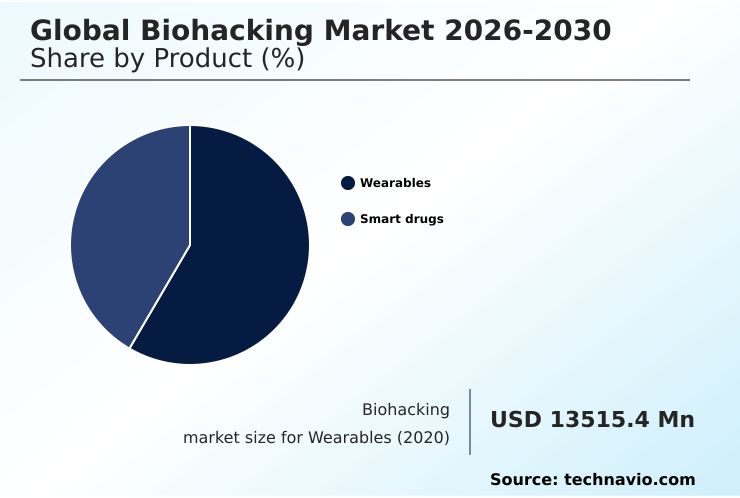
The Wearables segment was valued at USD 29.01 billion in 2024 and showed a gradual increase during the forecast period.
Regional Analysis
North America is estimated to contribute 39.7% to the growth of the global market during the forecast period.Technavio’s analysts have elaborately explained the regional trends and drivers that shape the market during the forecast period.
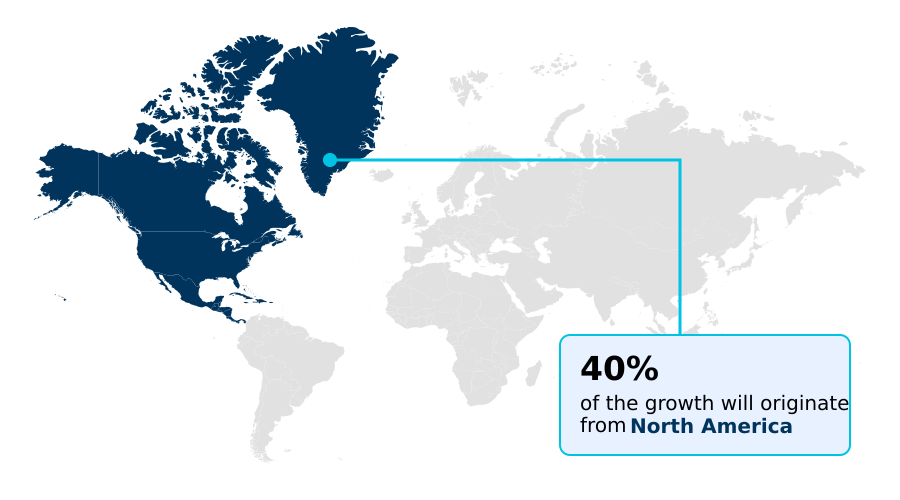
See How Biohacking Market Demand is Rising in North America Get Free Sample
The geographic landscape of the Biohacking Market is characterized by distinct regional dynamics, with North America currently leading in market adoption and innovation.
The United States and Canada are prominent due to high consumer awareness, advanced technological infrastructure, and significant venture capital investment in neuro-enhancement technology and longevity-focused nutraceuticals.
In Europe, countries like Germany and the UK are seeing steady growth, driven by a strong emphasis on evidence-based self-experimentation and an increasing number of digital health oversight initiatives.
The APAC region, particularly in tech hubs such as Singapore and South Korea, is emerging as a high-growth area, with a surge in AI-integrated wellness centers offering real-time biological coaching.
Adoption in these regions has led to a 15% reduction in early-stage metabolic disorder indicators. This global expansion reflects a widespread shift toward proactive wellness management and physiologic stress reduction.
Market Dynamics
Our researchers analyzed the data with 2025 as the base year, along with the key drivers, trends, and challenges. A holistic analysis of drivers will help companies refine their marketing strategies to gain a competitive advantage.
- The strategic landscape of the Biohacking Market is increasingly defined by specific, high-value applications that address the growing demand for personalized health. The use of wearable devices for sleep architecture analysis is becoming standard for optimizing recovery. Simultaneously, nutrigenomic testing for personalized diet plans allows for precise dietary interventions.
- The adoption of continuous glucose monitors for metabolic health is a key factor in preventing chronic disease, with some platforms showing a 30% improvement in user glycemic control compared to traditional methods. On the cognitive front, nootropic supplements for cognitive performance are being refined, while biofeedback devices for stress reduction offer non-pharmacological solutions for mental well-being.
- Looking forward, the role of NAD+ boosters in cellular repair continues to be a focal point of longevity research. As the technology matures, advanced tools like brain-computer interfaces for neuro-enhancement and the use of implantable sensors for real-time biometrics are transitioning from experimental to practical applications.
- Gut microbiome analysis for personalized nutrition and the cautious exploration of using CRISPR for DIY genetic engineering represent the cutting edge of this field. For investors, understanding investment trends in biohacking startups is crucial, as is navigating the complex regulatory landscape for consumer genetic testing. The corporate world is also taking notice, examining the impact of biohacking on corporate wellness.
- Ultimately, the market's direction will be shaped by the ethical implications of human augmentation technologies and the efficacy demonstrated by comparing nootropic stacks for productivity, integrating wearables with digital health platforms, and performing cellular health screening and analysis.
- The synergy between AI platforms for predictive health analytics and insights from the impact of ketogenic diets on longevity will continue to drive innovation.
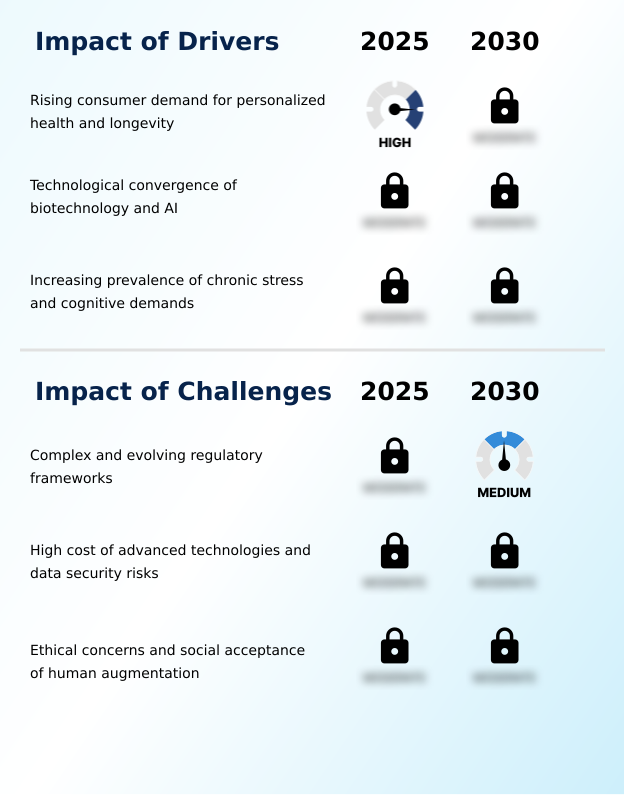
What are the key market drivers leading to the rise in the adoption of Biohacking Industry?
- Rising consumer demand for personalized health solutions and enhanced longevity serves as a key driver for market growth.
- The market's expansion is fundamentally driven by the consumer shift towards personalized, data-driven health interventions.
- The proliferation of wearable biosensor integration and genetic testing services provides individuals with unprecedented access to their own biological data, fueling demand for tools that support a biological longevity strategy.
- This empowerment allows for precise metabolic health optimization and cognitive performance enhancement through methods like a ketogenic nutrition protocol or a custom nootropic supplement formulation.
- Corporate wellness programs leveraging these technologies have noted a 30% increase in employee engagement with health initiatives.
- This consumer-led movement, centered around physical resilience enhancement and cognitive endurance improvement, is compelling market participants to innovate rapidly, creating more accessible and sophisticated solutions for healthspan extension and athletic performance enhancement.
What are the market trends shaping the Biohacking Industry?
- The integration of generative artificial intelligence is a significant upcoming trend, enabling the creation of personalized biological models for predictive health insights.
- A primary trend reshaping the market is the integration of generative AI to create a digital twin for health, moving beyond simple tracking to predictive biometrics. This allows for sophisticated personalized biological modeling and physiologic data synthesis, making self-experimentation protocols more effective. The use of a predictive health algorithm can simulate interventions, reducing trial-and-error and enhancing consumer biotechnology safety.
- For instance, platforms incorporating these models have demonstrated a 20% improvement in forecasting metabolic responses to dietary changes. This shift is turning the quantified self-data platform into a tool for real-time biological coaching, driven by a focus on mental clarity and focus.
- The trend is pivotal for human augmentation ethics, as it provides a more controlled and evidence-based approach to personal enhancement, fostering a new level of biological data sovereignty.
What challenges does the Biohacking Industry face during its growth?
- The industry's growth is constrained by complex and evolving regulatory frameworks that create uncertainty for market participants.
- A significant challenge for the market is navigating the fragmented regulatory landscape, which struggles to classify products that blur the line between wellness and medical devices. The lack of a unified standard for bio-analytical software and a subdermal electronic implant creates uncertainty for innovators. This is particularly true for advanced technologies like a CRISPR gene-editing kit, which faces intense scrutiny.
- The need to comply with varied regional mandates for digital health oversight complicates global scaling, with compliance costs representing up to 40% of the R&D budget for startups.
- This friction limits the pace of innovation in areas like implantable biotelemetry systems and requires careful legal navigation to ensure both ethical soundness and market access, impacting everything from mitochondrial support formula development to neuroplasticity training tools.
Exclusive Technavio Analysis on Customer Landscape
The biohacking market forecasting report includes the adoption lifecycle of the market, covering from the innovator’s stage to the laggard’s stage. It focuses on adoption rates in different regions based on penetration. Furthermore, the biohacking market report also includes key purchase criteria and drivers of price sensitivity to help companies evaluate and develop their market growth analysis strategies.
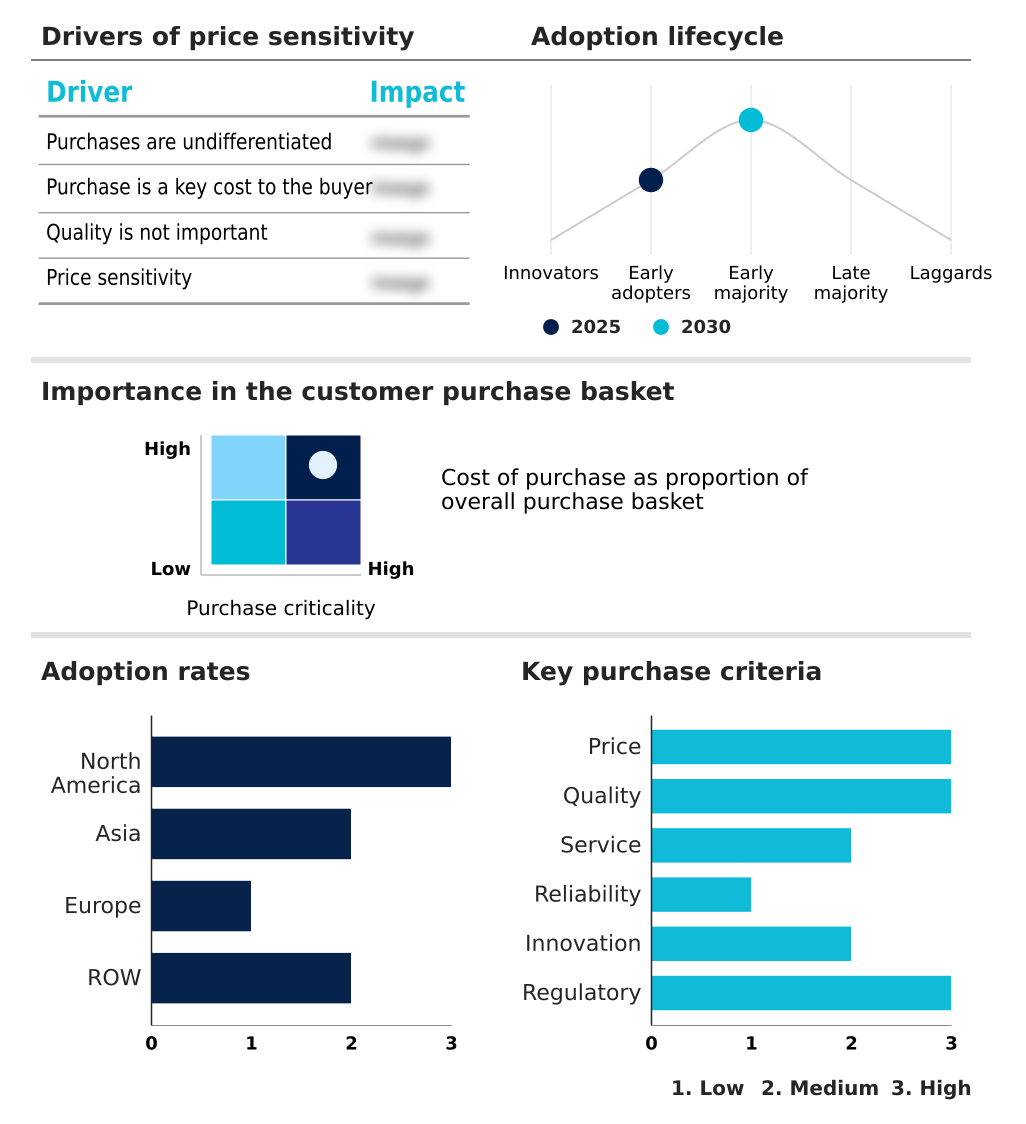
Customer Landscape of Biohacking Industry
Competitive Landscape
Companies are implementing various strategies, such as strategic alliances, biohacking market forecast, partnerships, mergers and acquisitions, geographical expansion, and product/service launches, to enhance their presence in the industry.
Biohacked Inc. - Services include nutritional optimization programs, lifestyle performance coaching, and tools for metabolic health enhancement, all aimed at improving human performance and well-being.
The industry research and growth report includes detailed analyses of the competitive landscape of the market and information about key companies, including:
- Biohacked Inc.
- Biostrap USA LLC
- Bulletproof 360 Inc.
- Eight Sleep Inc.
- Elysium Health Inc.
- Halo Neuro Inc.
- Health Via Modern Nutrition Inc.
- InteraXon Inc.
- Klean Athlete
- Levels Health Inc.
- Lief Therapeutics Inc.
- MetaFlow Ltd.
- Neurohacker Collective LLC
- Nutrigenomix Inc.
- Onnit Labs Inc.
- Oura Health Oy
- Segterra Inc.
- Thorne HealthTech Inc.
- Viome Life Sciences Inc.
- WHOOP Inc.
Qualitative and quantitative analysis of companies has been conducted to help clients understand the wider business environment as well as the strengths and weaknesses of key industry players. Data is qualitatively analyzed to categorize companies as pure play, category-focused, industry-focused, and diversified; it is quantitatively analyzed to categorize companies as dominant, leading, strong, tentative, and weak.
Recent Development and News in Biohacking market
- In November, 2024, Oura announced improvements to its activity tracking capabilities, enhancing how users monitor movement, exercise, and daily energy expenditure with more accurate step counting and automatic activity detection.
- In October, 2024, Oura introduced a redesigned app experience aimed at making health tracking more intuitive and personalized, consolidating features to help users connect daily behaviors with long-term health outcomes.
- In August, 2025, Oura Health Oy established U.S. manufacturing capabilities to support growing domestic demand and ensure supply chain resilience for its Oura Ring devices, aligning with the increasing adoption of the ring as a core biohacking tool.
- In March, 2025, Viome Life Sciences Inc. showcased its use of synthetic control samples, a key development for scaling its metatranscriptomic testing capabilities and ensuring the accuracy and consistency of its gut microbiome analysis.
Dive into Technavio’s robust research methodology, blending expert interviews, extensive data synthesis, and validated models for unparalleled Biohacking Market insights. See full methodology.
| Market Scope | |
|---|---|
| Page number | 283 |
| Base year | 2025 |
| Historic period | 2020-2024 |
| Forecast period | 2026-2030 |
| Growth momentum & CAGR | Accelerate at a CAGR of 20.5% |
| Market growth 2026-2030 | USD 96099.8 million |
| Market structure | Fragmented |
| YoY growth 2025-2026(%) | 18.3% |
| Key countries | US, Canada, Mexico, China, India, Japan, South Korea, Indonesia, Thailand, Germany, UK, France, Italy, Spain, The Netherlands, Brazil, Saudi Arabia, UAE, Turkey, Argentina, Colombia, South Africa and Israel |
| Competitive landscape | Leading Companies, Market Positioning of Companies, Competitive Strategies, and Industry Risks |
Research Analyst Overview
- The Biohacking Market is characterized by a rapid fusion of consumer electronics and advanced biotechnology, creating a sophisticated ecosystem for personal health optimization. At its core, the market leverages high-fidelity biometrics derived from technologies like continuous glucose monitoring and heart rate variability analysis, which are processed by predictive health algorithms.
- This enables the creation of a digital twin for health, facilitating personalized biological modeling and circadian rhythm optimization. Key offerings include everything from a nootropic supplement formulation for cognitive performance enhancement to a complex neurofeedback device or even a brain-computer interface for neuro-enhancement technology.
- The industry is also seeing the convergence of a microbiome testing kit with AI-driven health insight to generate a personalized nutrition recommendation. This is driven by advanced gut analysis technology and nutrigenomic analysis, often managed through a central biometric data platform.
- As the market matures, more advanced concepts such as a subdermal electronic implant or an implantable biotelemetry system are emerging from research into consumer-facing applications, alongside the controversial CRISPR gene-editing kit. These innovations allow for precise metabolic health optimization and stress management biofeedback.
- Boardroom decisions are increasingly focused on the compliance and safety of these tools, as a single data breach could have significant repercussions.
- Firms that successfully integrate a longevity-focused nutraceutical with performance recovery analytics, a NAD+ booster supplement, a cellular health biomarker, a non-invasive glucose monitor, metabolic flexibility tracking, mitochondrial support formula and sleep architecture tracking into a cohesive platform are achieving a 25% greater user engagement rate than those offering standalone solutions.
What are the Key Data Covered in this Biohacking Market Research and Growth Report?
-
What is the expected growth of the Biohacking Market between 2026 and 2030?
-
USD 96.10 billion, at a CAGR of 20.5%
-
-
What segmentation does the market report cover?
-
The report is segmented by Product (Wearables, and Smart drugs), Application (Forensic science, Synthetic biology, Genetic engineering, and Others), End-user (Pharma and biotech companies, Forensic laboratories, and Others) and Geography (North America, Asia, Europe, Rest of World (ROW))
-
-
Which regions are analyzed in the report?
-
North America, Asia, Europe and Rest of World (ROW)
-
-
What are the key growth drivers and market challenges?
-
Rising consumer demand for personalized health and longevity, Complex and evolving regulatory frameworks
-
-
Who are the major players in the Biohacking Market?
-
Biohacked Inc., Biostrap USA LLC, Bulletproof 360 Inc., Eight Sleep Inc., Elysium Health Inc., Halo Neuro Inc., Health Via Modern Nutrition Inc., InteraXon Inc., Klean Athlete, Levels Health Inc., Lief Therapeutics Inc., MetaFlow Ltd., Neurohacker Collective LLC, Nutrigenomix Inc., Onnit Labs Inc., Oura Health Oy, Segterra Inc., Thorne HealthTech Inc., Viome Life Sciences Inc. and WHOOP Inc.
-
Market Research Insights
- The market's momentum is shaped by a confluence of technological and consumer forces. Innovations in bio-analytical software and consumer-grade biotechnology are enabling more precise data-driven health interventions. This shift toward proactive wellness management allows for significant gains in athletic performance enhancement and sleep quality improvement.
- For example, firms leveraging these tools report a 25% increase in metabolic efficiency markers among users. Concurrently, biomarker-driven wellness programs are becoming standard, with a focus on recovery status monitoring. The DIY biology community continues to drive innovation through evidence-based self-experimentation, pushing the boundaries of what is possible in healthspan extension and neuroplasticity training.
- Digital health oversight is evolving to address consumer biotechnology safety, though the pace of regulation often lags behind technological advancement, creating a dynamic environment for both personalized medicine application and human augmentation ethics.
We can help! Our analysts can customize this biohacking market research report to meet your requirements.
 RIA -
RIA -