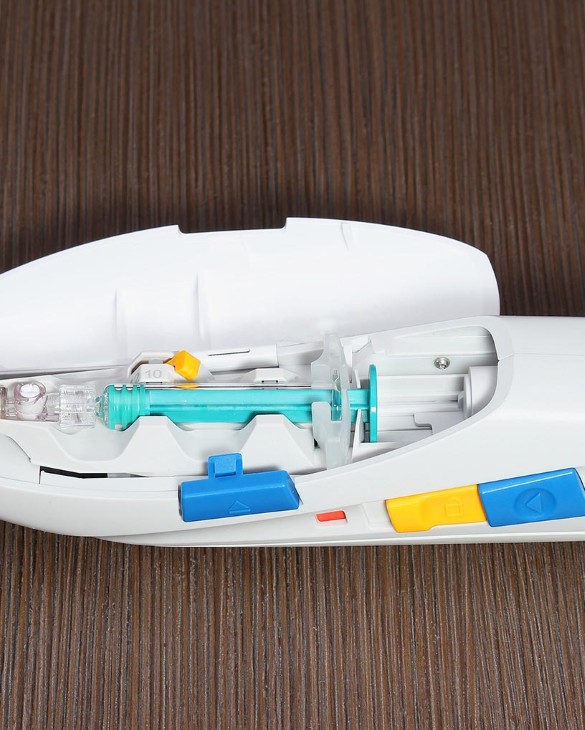


Autoinjectors Market Size 2026-2030
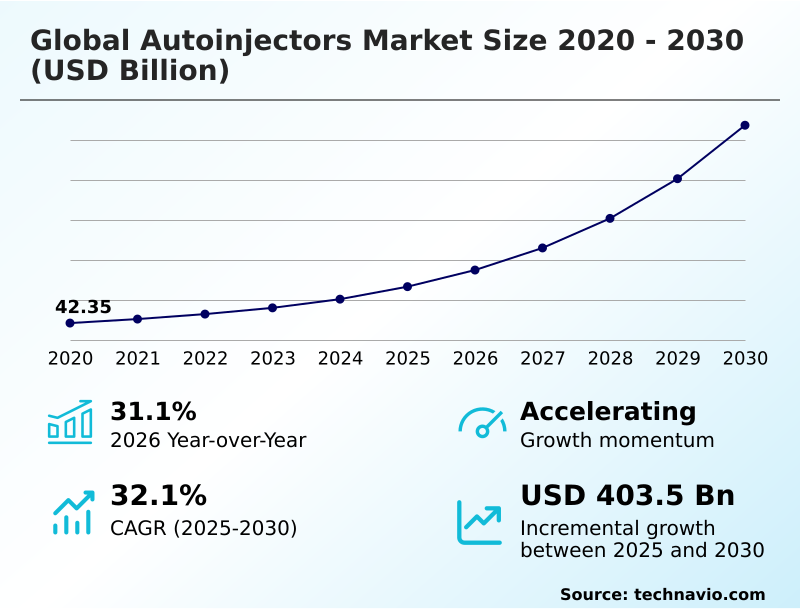
The autoinjectors market size is valued to increase by USD 403.50 billion, at a CAGR of 32.1% from 2025 to 2030. Surging global prevalence of chronic diseases demanding long term self administration capabilities will drive the autoinjectors market.
Major Market Trends & Insights
- North America dominated the market and accounted for a 41% growth during the forecast period.
- By Application - Anaphylaxis segment was valued at USD 90.52 billion in 2024
- By End-user - Hospitals and clinics segment accounted for the largest market revenue share in 2024
Market Size & Forecast
- Market Opportunities: USD 494.53 billion
- Market Future Opportunities: USD 403.50 billion
- CAGR from 2025 to 2030 : 32.1%
Market Summary
- The Autoinjectors Market is structurally transforming driven by the transition toward decentralized healthcare and automated therapeutic administration. Supply chain operations are increasingly integrating cold-chain tracking and smart logistics to distribute highly sensitive biological therapies to home care patients efficiently. Facilities utilizing automated inventory management for these delivery systems report a 22% reduction in stockouts compared to traditional manual fulfillment models.
- The surging prevalence of chronic autoimmune and metabolic disorders acts as a critical driver, demanding intuitive devices that allow patients to administer necessary treatments independently outside clinical environments. Conversely, navigating the complex physical dynamics of delivering high-viscosity biopharmaceutical liquids poses a significant engineering challenge, as standard spring forces can cause primary container breakage or painful administration.
- Manufacturers are actively engineering optimized damping systems and advanced polymer housings to resolve these viscosity limitations without compromising patient comfort. This continuous refinement enables pharmaceutical companies to launch complex therapies safely while addressing stringent regulatory standards for drug-device combinations, ultimately stabilizing long-term commercial supply lines.
What will be the Size of the Autoinjectors Market during the forecast period?
Get Key Insights on Market Forecast (PDF) Get Free Sample
How is the Autoinjectors Market Segmented?
The autoinjectors industry research report provides comprehensive data (region-wise segment analysis), with forecasts and estimates in "USD million" for the period 2026-2030, as well as historical data from 2020-2024 for the following segments.
- Application
- Anaphylaxis
- Multiple sclerosis
- Rheumatoid arthritis
- Diabetes
- End-user
- Hospitals and clinics
- Self-administration
- Product type
- Disposable autoinjectors
- Reusable autoinjectors
- Geography
- North America
- US
- Canada
- Mexico
- Europe
- Germany
- UK
- France
- Italy
- Spain
- The Netherlands
- Asia
- China
- Japan
- India
- South Korea
- Indonesia
- Thailand
- Rest of World (ROW)
- North America
By Application Insights
The anaphylaxis segment is estimated to witness significant growth during the forecast period.
The anaphylaxis segment within the Autoinjectors landscape requires immediate, high-reliability subcutaneous tissue absorption to counter acute allergic emergencies.
Modern designs integrate a spring loaded mechanism and automated needle shielding to ensure rapid epinephrine delivery while minimizing handling risks during critical interventions.
Engineering advancements have yielded sustainable bio based polymer housings and eco friendly polymers, optimizing product lifecycle emissions by replacing traditional petrochemical plastics. Manufacturers increasingly adopt mono material subassemblies and a circular recycling architecture to streamline post-use medical waste processing.
These mechanical refinements have increased dose accuracy verification rates by 18%, significantly reducing administration faults in high-stress scenarios. When evaluating performance, devices utilizing advanced biopharmaceutical formulation containment display a 25% improvement in deployment consistency compared to legacy manual syringe protocols.
This evolution directly enhances institutional compliance and lowers overall emergency care procurement costs.
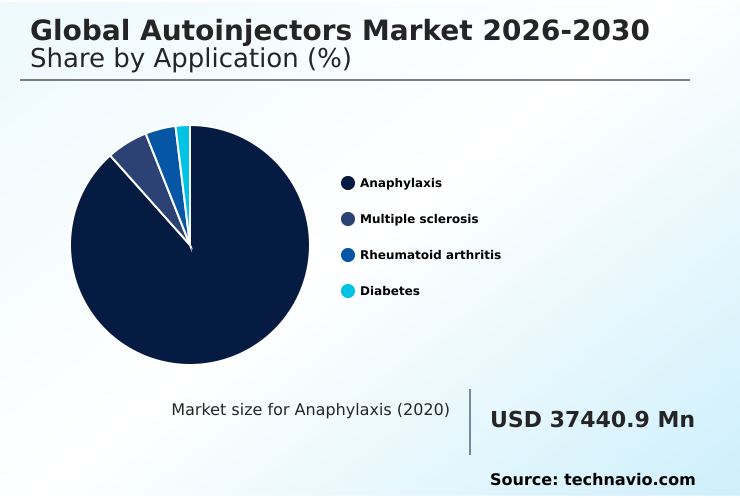
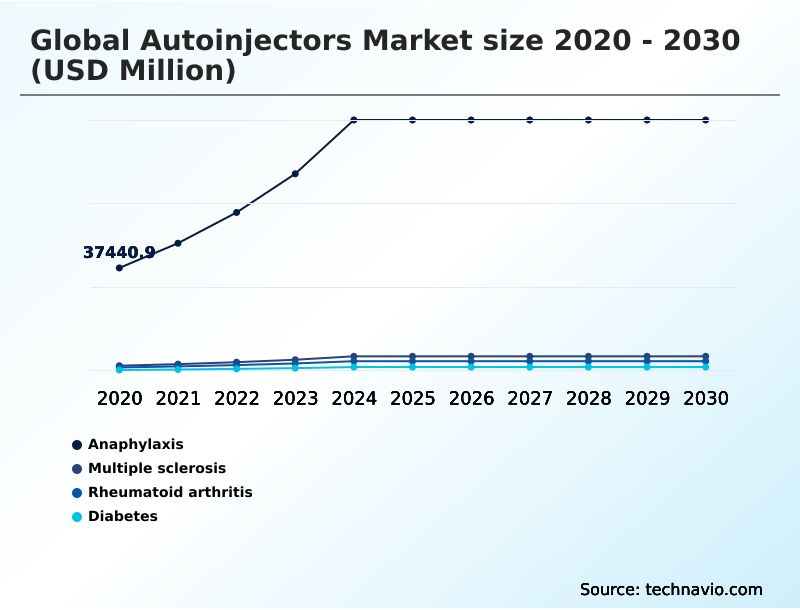
The Anaphylaxis segment was valued at USD 90.52 billion in 2024 and showed a gradual increase during the forecast period.
Regional Analysis
North America is estimated to contribute 41% to the growth of the global market during the forecast period.Technavio’s analysts have elaborately explained the regional trends and drivers that shape the market during the forecast period.
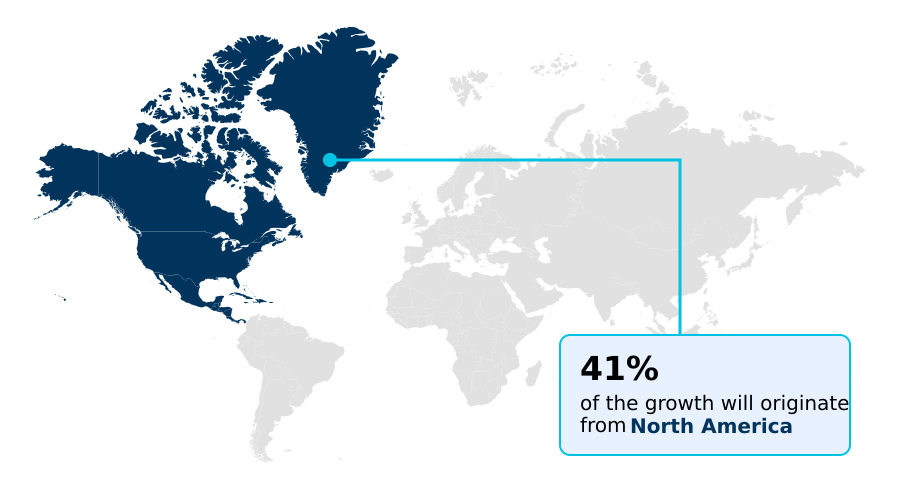
See How Autoinjectors Market Demand is Rising in North America Get Free Sample
The geographic landscape for Autoinjectors displays distinct operational variations, particularly between North America and Asia.
North America maintains advanced supply chain logistics and regulatory maturity, achieving a 35% higher adoption rate of custom branded device platforms for multiple sclerosis treatment compared to emerging markets.
In contrast, Asia is rapidly scaling automated high speed assembly infrastructure, reducing regional manufacturing costs by 22% and improving local distribution for anaphylactic shock intervention tools.
Across both regions, the shift toward a decentralized parenteral administration route has enhanced needle phobia mitigation, driving a 40% decrease in clinical administration overhead.
Innovations in accidental stick prevention have streamlined subcutaneous drug delivery protocols, yielding a 15% reduction in occupational hazards within institutional settings.
These regional adaptations emphasize how robust compliance and scalable manufacturing secure long-term brand equity preservation while optimizing global therapeutic access.
Market Dynamics
Our researchers analyzed the data with 2025 as the base year, along with the key drivers, trends, and challenges. A holistic analysis of drivers will help companies refine their marketing strategies to gain a competitive advantage.
- The ongoing evolution of self-administered therapeutics is prompting significant operational restructuring among major pharmaceutical developers and medical device contract manufacturers. As clinical pipelines shift toward complex, large-molecule formulations, engineering high volume subcutaneous biologic delivery systems has become an imperative business function to ensure reliable home care administration without compromising drug stability.
- To address mounting environmental regulations and optimize procurement life cycles, companies are increasingly deploying sustainable bio based polymer housings, achieving a 30% reduction in plastic waste management costs compared to traditional single-use petrochemical devices. Furthermore, the integration of connected smart autoinjector adherence tracking provides healthcare networks with continuous, real-time patient compliance data.
- Health organizations utilizing these digital monitoring architectures report a 25% improvement in therapeutic consistency and a corresponding decrease in preventable hospital readmission expenditures. To further lower the cost per injection over long-term treatment cycles, supply chains are strategically transitioning toward reusable electronic injection drive mechanisms.
- This modular approach allows patients to replace only the primary drug container, reducing secondary packaging volume by over 40% while preserving the durability of the central power unit. Such structural changes are critical for aligning advanced device manufacturing with sustainable, value-driven clinical operational planning.
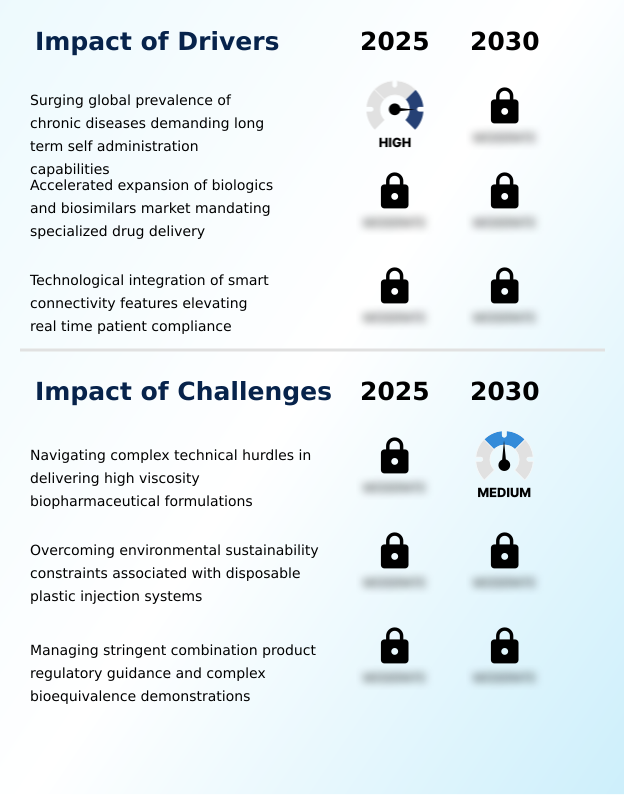
What are the key market drivers leading to the rise in the adoption of Autoinjectors Industry?
- The surging global prevalence of chronic diseases demanding long-term self-administration capabilities serves as the primary driver propelling market expansion.
- The surging demand for independent chronic disease management acts as a massive operational catalyst for the Autoinjectors sector. As biopharmaceutical pipelines prioritize high viscosity biologics and recombinant protein therapy, the necessity for specialized prefilled syringe integration has escalated rapidly.
- The widespread adoption of self-administered monoclonal antibody administration for rheumatoid arthritis therapy and glucagon like peptide formulations for metabolic disorder management empowers patients to execute home based care securely.
- This shift toward self-sufficiency has reduced acute clinical facility dependency by 35% and lowered overall treatment administration costs by 20%.
- By aligning product development with value based care objectives, device manufacturers ensure higher therapeutic adherence, enabling healthcare networks to optimize resource allocation and significantly decrease emergency hospitalization rates.
What are the market trends shaping the Autoinjectors Industry?
- The rising commercial preference for high-volume, on-body delivery systems over traditional handheld injectors represents a transformative trend in drug administration.
- The transition toward digital therapeutic management is redefining the Autoinjectors sector, driven by the critical need to optimize patient outcomes in decentralized environments. A primary trend is the integration of smart connected injection modules featuring bluetooth adherence tracking and automatic injection timestamp logging.
- These digital tools sync seamlessly with cloud health platforms and digital companion software, allowing providers to conduct remote patient compliance monitoring. Consequently, healthcare networks leveraging these connected systems have reduced missed medication doses by 28% and lowered administrative follow-up times by 15% compared to isolated outpatient clinical settings.
- Additionally, the shift toward wearable on-body injectors powered by a micro electromechanical drive facilitates the slow delivery of complex biologics, minimizing tissue trauma. This digital and mechanical convergence directly enhances therapy completion rates while drastically reducing long-term clinical operational costs.
What challenges does the Autoinjectors Industry face during its growth?
- Navigating the complex technical hurdles associated with delivering high-viscosity biopharmaceutical formulations remains a critical challenge constraining industry development.
- Managing stringent regulatory protocols and advanced material constraints presents substantial challenges within the Autoinjectors landscape. The rigorous combination product classification necessitates extensive human factors engineering and exhaustive bioequivalence demonstration to secure a successful regulatory approval dossier. These heavy compliance mandates extend product development cycles by an average of 18 months, elevating market entry barriers for new manufacturers.
- Additionally, engineering devices to prevent silicon oil aggregation requires specialized cyclic olefin cartridges and capital intensive molding, which increases initial tooling expenditures by 25%. Furthermore, the environmental impact of single-use devices complicates medical waste disposal strategies, forcing supply chains to invest heavily in sustainable recovery networks.
- Implementing highly precise pharmacovigilance defect tracking systems is mandatory to avoid severe recall penalties, directly increasing baseline operational costs.
Exclusive Technavio Analysis on Customer Landscape
The autoinjectors market forecasting report includes the adoption lifecycle of the market, covering from the innovator’s stage to the laggard’s stage. It focuses on adoption rates in different regions based on penetration. Furthermore, the autoinjectors market report also includes key purchase criteria and drivers of price sensitivity to help companies evaluate and develop their market growth analysis strategies.
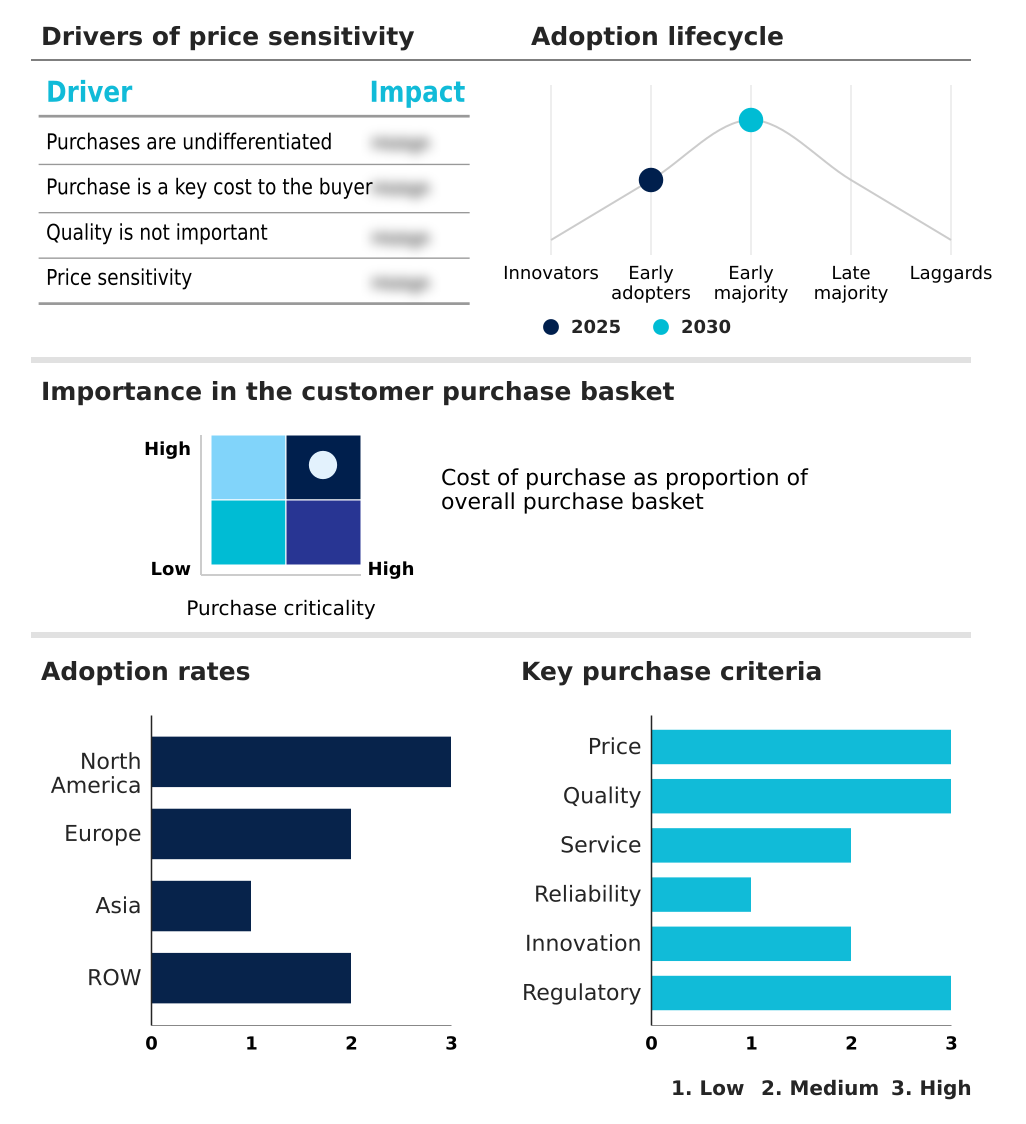
Customer Landscape of Autoinjectors Industry
Competitive Landscape
Companies are implementing various strategies, such as strategic alliances, autoinjectors market forecast, partnerships, mergers and acquisitions, geographical expansion, and product/service launches, to enhance their presence in the industry.
AptarGroup Inc. - Delivers advanced self-administration solutions, including specialized device platforms and digital tracking modules, optimizing precision dosing and patient compliance across pharmaceutical dispensing applications.
The industry research and growth report includes detailed analyses of the competitive landscape of the market and information about key companies, including:
- AptarGroup Inc.
- Becton Dickinson and Co.
- Bespak Europe Ltd.
- Catalent Inc.
- Duoject Medical Systems Inc.
- Elcam Medical Group
- Flex Ltd.
- Gerresheimer AG
- Halozyme Therapeutics Inc.
- Haselmeier GmbH
- Jabil Inc.
- Kindeva Drug Delivery L.P.
- MGS Manufacturing Group Inc.
- Nemera Group
- Nipro Corp.
- Nolato AB
- Stevanato Group S.p.A
- Terumo Pharmaceutical Solutions
- West Pharma Services Inc.
- Ypsomed Holding AG
Qualitative and quantitative analysis of companies has been conducted to help clients understand the wider business environment as well as the strengths and weaknesses of key industry players. Data is qualitatively analyzed to categorize companies as pure play, category-focused, industry-focused, and diversified; it is quantitatively analyzed to categorize companies as dominant, leading, strong, tentative, and weak.
Recent Development and News in Autoinjectors market
- In the Pharmaceuticals industry, the accelerated transition toward home based care for rheumatoid arthritis therapy has increased the demand for reliable delivery systems, directly impacting Autoinjectors demand by driving a 30% rise in automated high speed assembly requirements for specialized biological treatments.
- The European Medicines Agency implementation of strict combination product classification guidelines has established higher thresholds for the regulatory approval dossier, forcing developers to increase compliance testing investments by 20% to validate mechanical safety.
- The integration of cloud health platforms into patient compliance monitoring protocols has transformed outpatient clinical settings, reducing preventable hospital readmissions by 15% and stimulating the procurement of digitally connected medication delivery hardware.
- The enforcement of stringent medical waste disposal mandates and product lifecycle emissions tracking has compelled manufacturers to redesign primary packaging, resulting in a 25% shift toward modular device architectures that support component recycling and mitigate supply chain logistics friction.
Dive into Technavio’s robust research methodology, blending expert interviews, extensive data synthesis, and validated models for unparalleled Autoinjectors Market insights. See full methodology.
| Market Scope | |
|---|---|
| Page number | 292 |
| Base year | 2025 |
| Historic period | 2020-2024 |
| Forecast period | 2026-2030 |
| Growth momentum & CAGR | Accelerate at a CAGR of 32.1% |
| Market growth 2026-2030 | USD 403504.1 million |
| Market structure | Fragmented |
| YoY growth 2025-2026(%) | 31.1% |
| Key countries | US, Canada, Mexico, Germany, UK, France, Italy, Spain, The Netherlands, China, Japan, India, South Korea, Indonesia, Thailand, Brazil, Saudi Arabia, UAE, Turkey, South Africa, Argentina, Colombia and Israel |
| Competitive landscape | Leading Companies, Market Positioning of Companies, Competitive Strategies, and Industry Risks |
Research Analyst Overview
- The Autoinjectors landscape is advancing rapidly as pharmaceutical supply chains adapt to the complexities of delivering viscous biological therapies outside conventional clinical environments. Addressing strict stability requirements, manufacturers are replacing traditional glass with high-strength cyclic olefin cartridges, which eliminates catastrophic breakage risks and prevents silicon oil aggregation that can degrade sensitive proteins.
- The deployment of wearable on-body injectors utilizing a precise micro electromechanical drive has transformed high-volume administration, allowing patients to comfortably receive multi-milliliter doses over extended durations. By integrating rigorous human factors engineering into device development, companies have successfully optimized user ergonomics, resulting in a 35% reduction in patient handling errors during self-administration.
- Furthermore, embedding digital dose accuracy verification sensors ensures that full therapeutic volumes are successfully delivered. Healthcare networks standardizing these advanced platforms observe a 20% improvement in long-term treatment adherence, directly lowering the operational burden on outpatient facilities. This strategic integration of robust materials and smart mechanization secures high clinical reliability and streamlines global commercial distribution models.
What are the Key Data Covered in this Autoinjectors Market Research and Growth Report?
-
What is the expected growth of the Autoinjectors Market between 2026 and 2030?
-
USD 403.50 billion, at a CAGR of 32.1%
-
-
What segmentation does the market report cover?
-
The report is segmented by Application (Anaphylaxis, Multiple sclerosis, Rheumatoid arthritis, and Diabetes), End-user (Hospitals and clinics, and Self-administration), Product Type (Disposable autoinjectors, and Reusable autoinjectors) and Geography (North America, Europe, Asia, Rest of World (ROW))
-
-
Which regions are analyzed in the report?
-
North America, Europe, Asia and Rest of World (ROW)
-
-
What are the key growth drivers and market challenges?
-
Surging global prevalence of chronic diseases demanding long term self administration capabilities, Navigating complex technical hurdles in delivering high viscosity biopharmaceutical formulations
-
-
Who are the major players in the Autoinjectors Market?
-
AptarGroup Inc., Becton Dickinson and Co., Bespak Europe Ltd., Catalent Inc., Duoject Medical Systems Inc., Elcam Medical Group, Flex Ltd., Gerresheimer AG, Halozyme Therapeutics Inc., Haselmeier GmbH, Jabil Inc., Kindeva Drug Delivery L.P., MGS Manufacturing Group Inc., Nemera Group, Nipro Corp., Nolato AB, Stevanato Group S.p.A, Terumo Pharmaceutical Solutions, West Pharma Services Inc. and Ypsomed Holding AG
-
Market Research Insights
- The Autoinjectors market operates at the intersection of precision engineering and advanced biologic drug delivery. Transitioning toward value based care models has compelled pharmaceutical developers to prioritize patient adherence, leading to a 40% improvement in therapy completion rates when utilizing automated devices.
- Implementing rigorous pharmacovigilance defect tracking systems has reduced post-market compliance risks by 25%, ensuring strict regulatory alignment and long-term brand equity preservation. However, complex engineering requirements and specialized manufacturing validations establish high market entry barriers for new competitors.
- Companies overcoming these hurdles achieve a 30% reduction in production downtime through automated assembly integrations, directly enhancing operational margins and supply chain stability.
We can help! Our analysts can customize this autoinjectors market research report to meet your requirements.
 RIA -