



Antigen Market Size 2026-2030
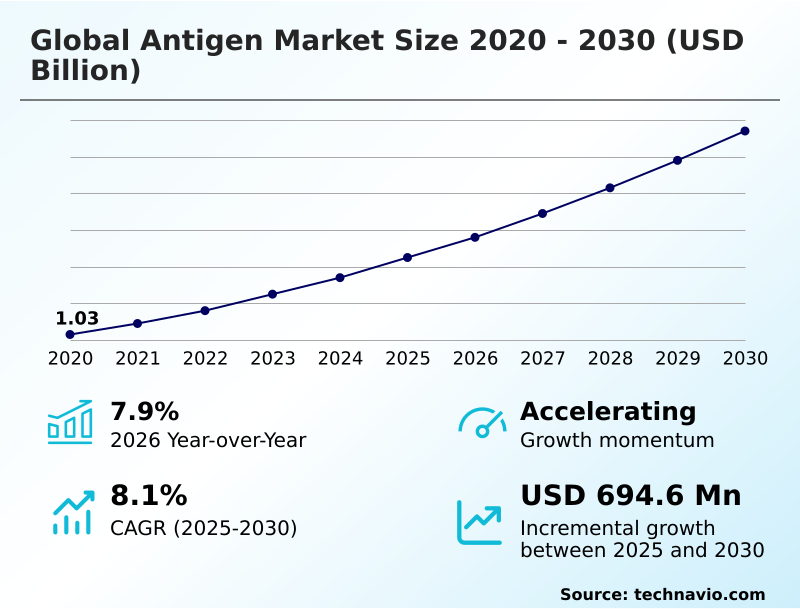
The antigen market size is valued to increase by USD 694.6 million, at a CAGR of 8.1% from 2025 to 2030. Increasing global burden of infectious and chronic diseases will drive the antigen market.
Major Market Trends & Insights
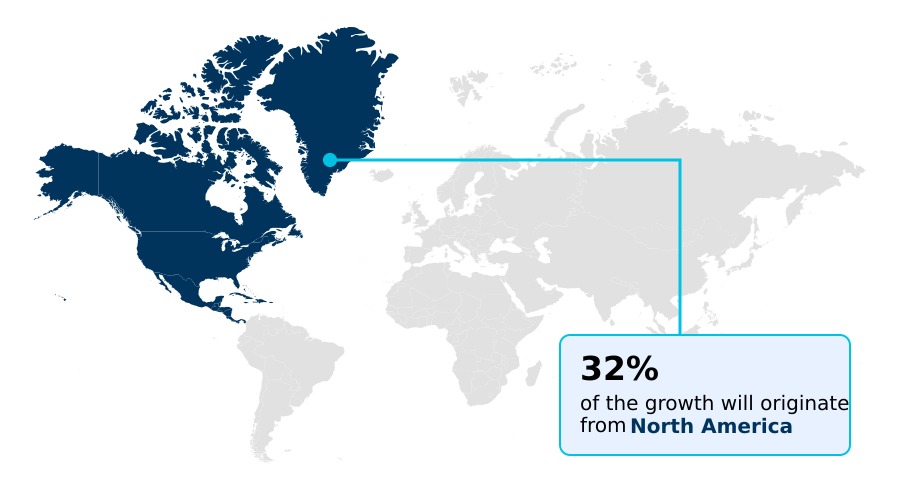
- North America dominated the market and accounted for a 31.7% growth during the forecast period.
- By Type - Viral antigens segment was valued at USD 718.7 million in 2024
- By Application - Medical diagnostic segment accounted for the largest market revenue share in 2024
Market Size & Forecast
- Market Opportunities: USD 1.11 billion
- Market Future Opportunities: USD 694.6 million
- CAGR from 2025 to 2030 : 8.1%
Market Summary
- The antigen market is expanding due to the persistent need for better diagnostic and preventative tools against infectious and chronic diseases. Key trends, such as the rise of personalized oncology and the demand for neoantigens, are transforming the cancer treatment landscape. This shift toward patient-specific therapies requires a hyper-localized approach to manufacturing, driving the development of small-scale automated production units.
- A significant business challenge arises for manufacturers in this space, as they must ensure batch-to-batch consistency and navigate complex regulatory frameworks while managing intense price competition in commoditized segments.
- For instance, a contract development organization must balance investment in advanced protein purification technologies to maintain quality with the need for process intensification to control costs, all while adhering to evolving GMP standards to avoid costly product recalls and maintain market access across different regions.
What will be the Size of the Antigen Market during the forecast period?
Get Key Insights on Market Forecast (PDF) Request Free Sample
How is the Antigen Market Segmented?
The antigen industry research report provides comprehensive data (region-wise segment analysis), with forecasts and estimates in "USD million" for the period 2026-2030, as well as historical data from 2020-2024 for the following segments.
- Type
- Viral antigens
- Bacterial antigens
- Others
- Application
- Medical diagnostic
- Vaccine development
- Others
- End-user
- Manufacturers
- Diagnostic centers
- Hospitals
- Research institutes
- Geography
- North America
- US
- Canada
- Mexico
- Europe
- Germany
- UK
- France
- Asia
- Rest of World (ROW)
- North America
By Type Insights
The viral antigens segment is estimated to witness significant growth during the forecast period.
The viral antigens segment leads the industry, driven by frequent respiratory and zoonotic outbreaks. These biological components are critical for producing seasonal vaccines and developing rapid diagnostic tests.
Manufacturers use advanced recombinant DNA technology and gene editing to produce viral proteins mimicking pathogens like influenza and coronaviruses. This focus on high-purity recombinant protein antigens ensures vaccines are both safe and highly immunogenic.
The demand for these components is also fueled by surveillance programs monitoring viral drift.
Adherence to strict quality assurance protocols and high-throughput screening methods has improved production yields by over 40%, ensuring supply chain resilience for both routine immunizations and pandemic response efforts.
This technical focus on immunogenicity and protein purification remains paramount for global health stability.
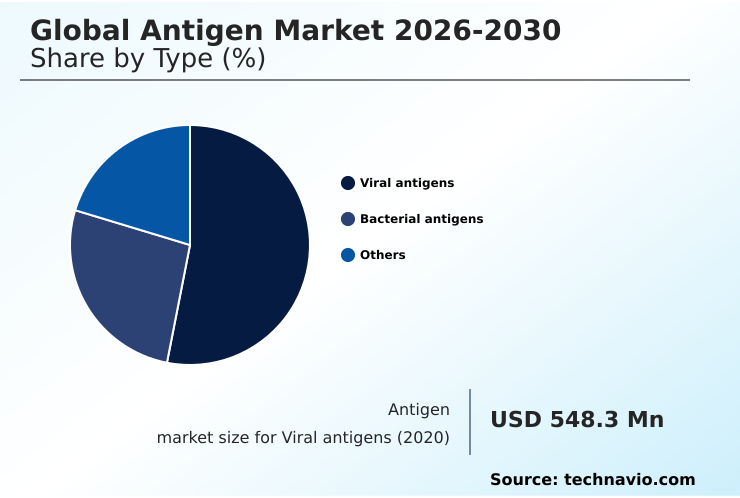
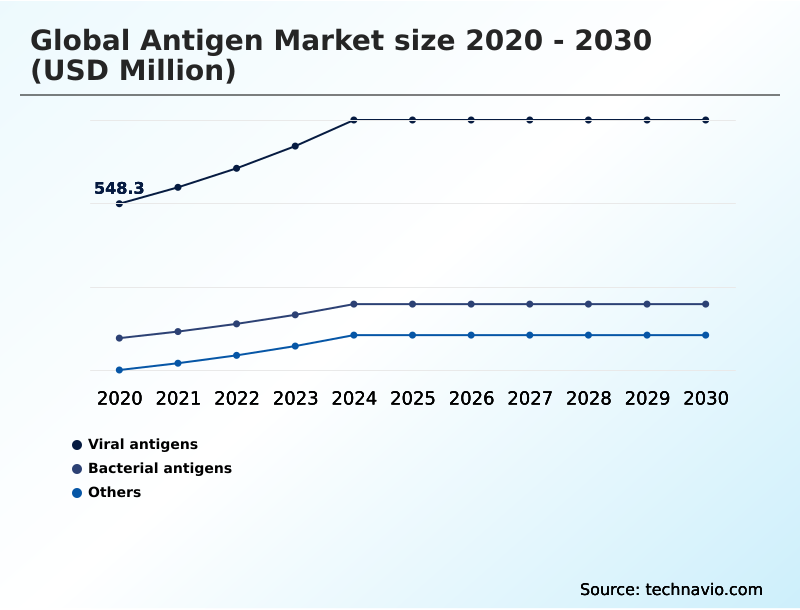
The Viral antigens segment was valued at USD 718.7 million in 2024 and showed a gradual increase during the forecast period.
Regional Analysis
North America is estimated to contribute 31.7% to the growth of the global market during the forecast period.Technavio’s analysts have elaborately explained the regional trends and drivers that shape the market during the forecast period.
See How Antigen Market Demand is Rising in North America Request Free Sample
The geographic landscape of the market is characterized by distinct regional strengths and growth trajectories.
Asia is emerging as a high-growth region, propelled by expanding healthcare infrastructure and a focus on cost-effective manufacturing of bacterial antigens, which now accounts for a significant portion of regional output.
North America, contributing over 31% of the global market opportunity, continues to lead in innovation, particularly in the development of monoclonal antibodies and CAR-T cells. This is supported by a robust ecosystem of biotechnology firms and research institutions.
European markets are defined by stringent regulatory standards and a strong emphasis on clinical validation for new diagnostic biomarkers.
This focus on quality has led to advancements in mass spectrometry techniques that improve batch-to-batch consistency by up to 15%, reducing waste in production.
Market Dynamics
Our researchers analyzed the data with 2025 as the base year, along with the key drivers, trends, and challenges. A holistic analysis of drivers will help companies refine their marketing strategies to gain a competitive advantage.
- The Global Antigen Market 2026-2030 is evolving through specialization, with distinct strategies for different applications. The use of the Global Antigen Market 2026-2030 for cancer immunotherapy is pioneering personalized medicine, while the Global Antigen Market 2026-2030 in infectious disease diagnostics focuses on speed and accessibility.
- Concurrently, the Global Antigen Market 2026-2030 for autoimmune disorder screening demands high specificity to avoid misdiagnosis. Technologically, the field is advancing rapidly; the Global Antigen Market 2026-2030 using recombinant DNA technology remains a cornerstone, but innovations like the Global Antigen Market 2026-2030 for cell-free protein synthesis are enabling faster development.
- This progress directly supports the Global Antigen Market 2026-2030 for rapid point-of-care tests and is crucial for the Global Antigen Market 2026-2030 and nucleic acid vaccine validation. The complex demands of the Global Antigen Market 2026-2030 for personalized neoantigen production are driving new manufacturing paradigms. In diagnostics, the Global Antigen Market 2026-2030 in multiplex diagnostic panels offers comprehensive screening.
- Production efficiency is being transformed by the Global Antigen Market 2026-2030 with AI-driven bioreactor monitoring and Global Antigen Market 2026-2030 and chromatography resin innovation. The Global Antigen Market 2026-2030 for high-throughput screening platforms accelerates discovery, while a key industry challenge remains the Global Antigen Market 2026-2030 ensuring protein folding consistency.
- Adherence to the Global Antigen Market 2026-2030 and Good Manufacturing Practice compliance is non-negotiable. Strategically, the Global Antigen Market 2026-2030 for decentralized manufacturing hubs and the Global Antigen Market 2026-2030 and pandemic preparedness stockpiling enhance global health security.
- These efforts also support the Global Antigen Market 2026-2030 to counter antimicrobial resistance and improve the Global Antigen Market 2026-2030 in public health surveillance systems. Finally, the development of the Global Antigen Market 2026-2030 for CAR-T cell therapy targets and the Global Antigen Market 2026-2030 for liquid biopsy tumor markers points to a future of highly targeted therapies.
- Companies leveraging AI-driven bioreactor controls have demonstrated a twofold improvement in maintaining protein folding consistency compared to manual methods, directly impacting product efficacy.
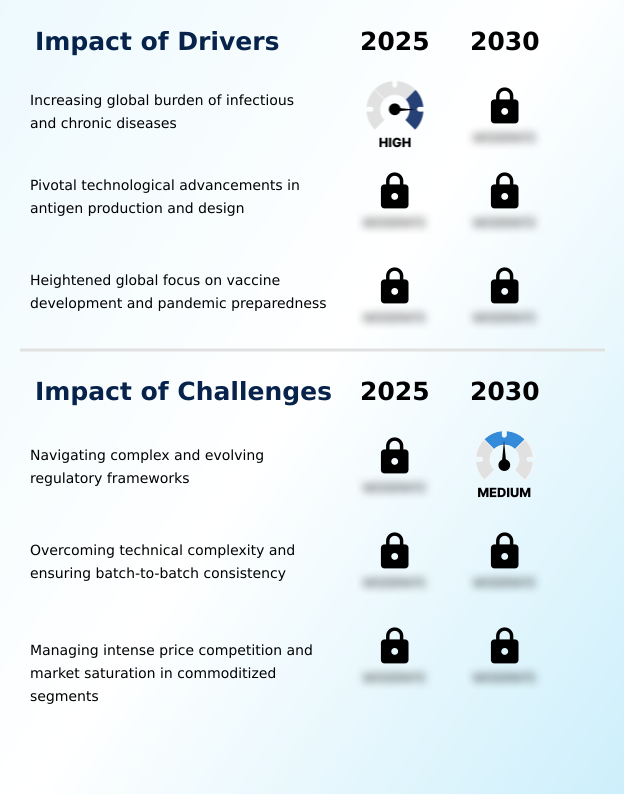
What are the key market drivers leading to the rise in the adoption of Antigen Industry?
- The increasing global burden of infectious and chronic diseases stands as a key driver for market growth.
- Market growth is fundamentally driven by technological advancements in antigen production and a heightened focus on pandemic preparedness.
- Innovations in cell-free protein synthesis and computational biology are accelerating development timelines, with some firms reporting a 25% reduction in the time from antigen design to clinical candidate selection. This efficiency is attracting significant investment.
- Concurrently, the global push for vaccine self-sufficiency has led to the establishment of regional manufacturing hubs and the expansion of warm manufacturing capacity.
- These facilities not only enhance supply chain resilience but also support the development of prototype vaccines for strategic stockpiling, ensuring a steady demand for high-purity antigens. This public-private alignment reduces investment risk for manufacturers by an estimated 15%.
What are the market trends shaping the Antigen Industry?
- A key market trend is the shifting role of antigens, which are evolving from primary vaccine components to critical validation and boosting tools in the era of nucleic acid platforms.
- Key trends are reshaping the market's structure, driven by the expansion of multiplexing in diagnostics and the rise of personalized medicine. The demand for neoantigens in oncology is creating a new segment focused on small-scale automated production, a stark contrast to high-volume viral antigen manufacturing.
- This has led to the adoption of advanced bioinformatics services capable of identifying patient-specific tumor antigens with over 95% accuracy. Furthermore, the use of antibody-antigen complexes is evolving, with hybrid platforms combining nucleic acid instructions and protein-based prime-boost agents to enhance immunogenicity.
- This synergy is critical, as data indicates that hybrid vaccine strategies can increase the durability of immune responses by up to 30% compared to single-platform approaches.
What challenges does the Antigen Industry face during its growth?
- Navigating complex and evolving regulatory frameworks presents a key challenge that affects industry growth.
- Navigating complex regulatory frameworks and ensuring high technical proficiency remain significant challenges. Manufacturers face a fragmented global landscape, where compliance with standards like the In Vitro Diagnostic Regulation (IVDR) and GMP requires substantial investment, increasing documentation overhead by up to 30%. This is compounded by the technical difficulty of maintaining batch-to-batch consistency in biological production.
- Slight variations in glycosylation patterns or protein folding can lead to batch failure rates that exceed 10% without advanced bioreactor monitoring and post-market surveillance. Furthermore, intense price competition in commoditized segments, such as standard viral antigens for lateral flow devices, forces companies to pursue process intensification to protect margins.
Exclusive Technavio Analysis on Customer Landscape
The antigen market forecasting report includes the adoption lifecycle of the market, covering from the innovator’s stage to the laggard’s stage. It focuses on adoption rates in different regions based on penetration. Furthermore, the antigen market report also includes key purchase criteria and drivers of price sensitivity to help companies evaluate and develop their market growth analysis strategies.
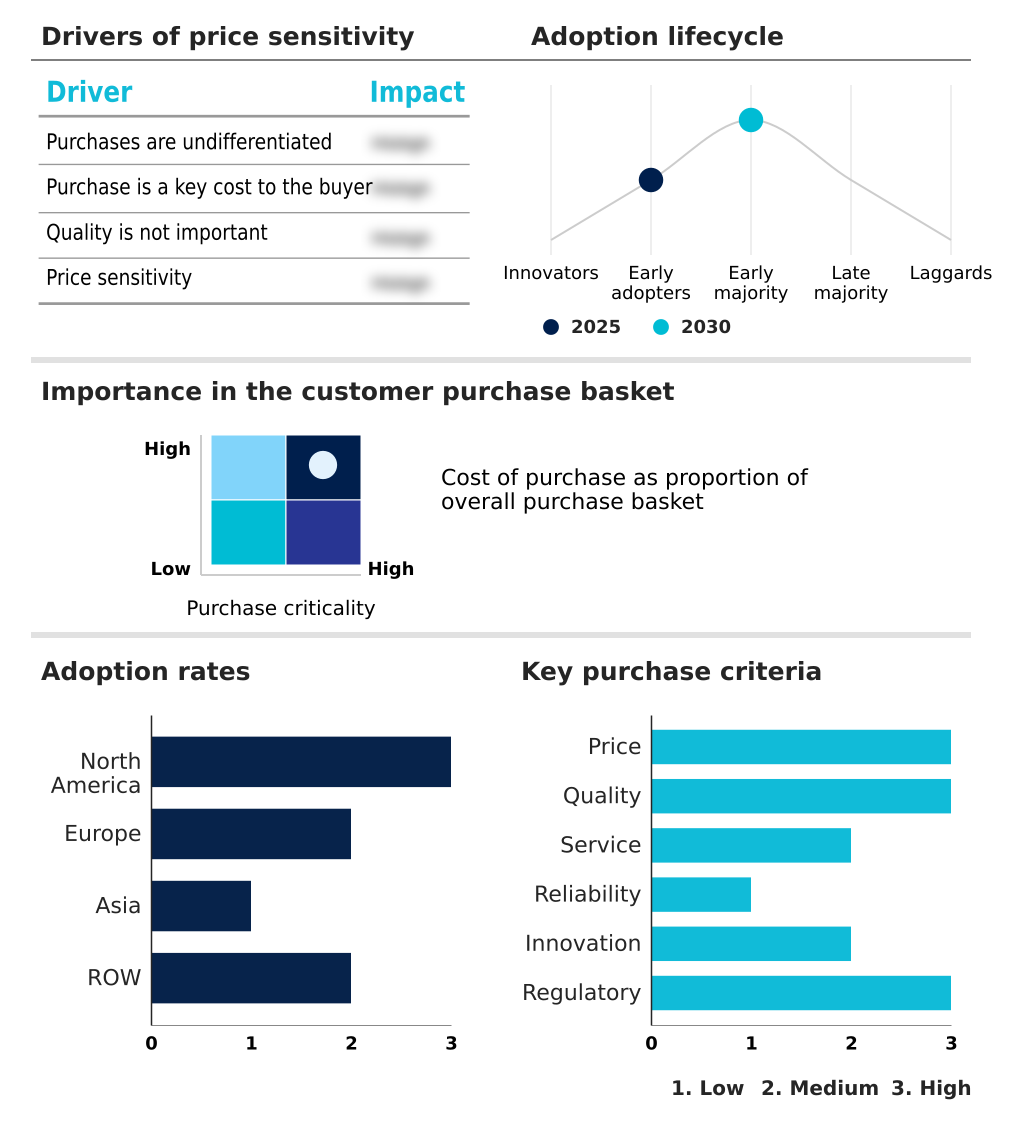
Customer Landscape of Antigen Industry
Competitive Landscape
Companies are implementing various strategies, such as strategic alliances, antigen market forecast, partnerships, mergers and acquisitions, geographical expansion, and product/service launches, to enhance their presence in the industry.
Abcam plc - Providing high-purity recombinant proteins, native proteins, and peptide antigens for advanced immunoassay applications and critical immunological research.
The industry research and growth report includes detailed analyses of the competitive landscape of the market and information about key companies, including:
- Abcam plc
- Agilent Technologies Inc.
- Bio Rad Laboratories Inc.
- Bio Techne Corp.
- BioMerieux SA
- Creative Diagnostics
- Danaher Corp.
- DiaSorin SpA
- Fapon Biotech
- GenScript Biotech Corp.
- Hologic Inc.
- ImmunoDX LLC
- LGC Ltd.
- Merck KGaA
- RayBiotech Life Inc.
- Sd Biosensor Inc.
- Siemens Healthineers AG
- Sino Biological Inc.
- Sysmex Corp.
- Thermo Fisher Scientific Inc.
Qualitative and quantitative analysis of companies has been conducted to help clients understand the wider business environment as well as the strengths and weaknesses of key industry players. Data is qualitatively analyzed to categorize companies as pure play, category-focused, industry-focused, and diversified; it is quantitatively analyzed to categorize companies as dominant, leading, strong, tentative, and weak.
Recent Development and News in Antigen market
- In March 2025, Sanofi will increase its capital investment in recombinant protein antigen production by twenty percent to meet the soaring global demand for RSV preventative treatments for pediatric populations.
- In June 2025, Thermo Fisher Scientific will launch its next generation protein purification platform designed to enhance the yield of complex viral antigens by forty percent using advanced chromatography resins.
- In September 2025, Gritstone Bio is scheduled to release pivotal Phase 2 data for its personalized neoantigen immunotherapy which utilizes patient specific tumor antigens to target metastatic solid cancers.
- In December 2025, Roche Diagnostics will introduce a new high throughput multiplex antigen panel capable of detecting up to twelve different respiratory pathogens simultaneously in point of care settings.
Dive into Technavio’s robust research methodology, blending expert interviews, extensive data synthesis, and validated models for unparalleled Antigen Market insights. See full methodology.
| Market Scope | |
|---|---|
| Page number | 297 |
| Base year | 2025 |
| Historic period | 2020-2024 |
| Forecast period | 2026-2030 |
| Growth momentum & CAGR | Accelerate at a CAGR of 8.1% |
| Market growth 2026-2030 | USD 694.6 million |
| Market structure | Fragmented |
| YoY growth 2025-2026(%) | 7.9% |
| Key countries | US, Canada, Mexico, Germany, UK, France, Italy, Spain, The Netherlands, China, India, Japan, South Korea, Thailand, Indonesia, Brazil, Saudi Arabia, UAE, Turkey, Argentina, Colombia, South Africa and Israel |
| Competitive landscape | Leading Companies, Market Positioning of Companies, Competitive Strategies, and Industry Risks |
Research Analyst Overview
- The antigen market's trajectory is defined by a convergence of advanced production technologies and escalating diagnostic demands. Core to this is the manufacturing of recombinant protein antigens and synthetic antigens, where innovations in cell free protein synthesis, gene editing, and computational biology are pivotal.
- The precision required for vaccine development and point-of-care testing makes protein folding consistency and batch-to-batch consistency paramount. To meet these standards, firms rely on high throughput screening, mass spectrometry, and advanced chromatography resins. The market is segmented by viral antigens, bacterial antigens, and high-value neoantigens for personalized medicine.
- These components are essential for immunoassay techniques, molecular testing, and the creation of monoclonal antibodies and CAR-T cells. The increasing use of multiplexing in diagnostic biomarkers has led to boardroom-level decisions to invest in microfluidics and surface chemistry R&D.
- For instance, platforms integrating these technologies can process samples up to 60% faster, a critical advantage in a competitive landscape where immunogenicity and purity are key differentiators.
What are the Key Data Covered in this Antigen Market Research and Growth Report?
-
What is the expected growth of the Antigen Market between 2026 and 2030?
-
USD 694.6 million, at a CAGR of 8.1%
-
-
What segmentation does the market report cover?
-
The report is segmented by Type (Viral antigens, Bacterial antigens, and Others), Application (Medical diagnostic, Vaccine development, and Others), End-user (Manufacturers, Diagnostic centers, Hospitals, and Research institutes) and Geography (North America, Europe, Asia, Rest of World (ROW))
-
-
Which regions are analyzed in the report?
-
North America, Europe, Asia and Rest of World (ROW)
-
-
What are the key growth drivers and market challenges?
-
Increasing global burden of infectious and chronic diseases, Navigating complex and evolving regulatory frameworks
-
-
Who are the major players in the Antigen Market?
-
Abcam plc, Agilent Technologies Inc., Bio Rad Laboratories Inc., Bio Techne Corp., BioMerieux SA, Creative Diagnostics, Danaher Corp., DiaSorin SpA, Fapon Biotech, GenScript Biotech Corp., Hologic Inc., ImmunoDX LLC, LGC Ltd., Merck KGaA, RayBiotech Life Inc., Sd Biosensor Inc., Siemens Healthineers AG, Sino Biological Inc., Sysmex Corp. and Thermo Fisher Scientific Inc.
-
Market Research Insights
- Market dynamics are increasingly shaped by efforts to enhance operational efficiency and supply chain resilience. Strategic investments in decentralized manufacturing hubs are showing a 15% reduction in cross-border logistical hurdles, while the adoption of warm manufacturing capacity ensures readiness without the full cost of idle facilities.
- The application of bioinformatics services is accelerating research, with some labs reporting a 40% decrease in the time required for neoantigen identification in personalized oncology. Furthermore, adherence to stringent regulatory frameworks like the In Vitro Diagnostic Regulation is being streamlined through digital platforms, which have demonstrated a 20% improvement in compliance documentation efficiency.
- This focus on technological and strategic optimization is critical for navigating the competitive landscape.
We can help! Our analysts can customize this antigen market research report to meet your requirements.
 RIA -
RIA -